
For most brands, paid media commands one of the largest line items in the marketing budget. Companies invest heavily in Google Ads, Meta Ads, and more — all in pursuit of showing the right product, to the right audience, at the right time.
But for all that spend, most teams overlook a critical opportunity: using the rest of the customer journey to make their ad targeting smarter.
The actions that customers take as they shop your site — viewing products, browsing categories, and adding items to their cart — are valuable data points for paid media strategies. They tell you who to target, exclude, and prioritize for ad campaigns, so you can stop guessing and start maximizing your spend.
You just need the right tool to put those signals to work.
Why Paid Media Underperforms in Isolation
For most organizations, paid media and on-site engagement live in separate worlds.
Paid media teams optimize for clicks, impressions, and ROAS inside ad platforms, relying on a closed loop of signals from campaign performance.
Meanwhile, CRM and ecommerce teams focus on owned channels and target their own set of KPIs. These teams leverage rich behavioral data from on-site sessions, like a customer’s product affinity, category interest, cart activity, and purchase intent, to personalize campaigns based on real-time data.
But keeping all this data separate is a huge disadvantage. On-site behavior can and should be used to shape paid media strategies.
Without it, paid media teams don’t have the full context of customer relationships. Retargeting efforts and lookalike audiences are built on incomplete data, leading to generic, inefficient campaigns:
- Retargeting people who already converted. Without knowing if and when a customer converts, your ad budget is wasted on customers who have already purchased.
- Promoting the wrong products. Generic retargeting campaigns show your best-selling products to everyone, regardless of what a visitor actually browsed.
- Building lookalikes from weak seed audiences. If your seed list is “everyone who visited the site,” your lookalike model has nothing meaningful to learn from.
- Missing high-intent shoppers. Someone who visited your site, explored a specific product category, and added items to their cart is telling you exactly what they want. But if that signal never reaches your ad platform, they get the same generic campaign as everyone else.
Using Your Website as an Audience Intelligence Engine
Every session on your website can inform and optimize your ad campaigns. The products a visitor views, the categories they explore, how many times they’ve returned, whether they’ve added items to cart — it all reveals your customer’s real-time intent.
That’s what your ads need to target, and that’s why connecting on-site behavior to paid media is crucial for modern brands. When paid media leverages real-time intent signals, you can unlock smarter targeting at every stage of the customer journey:
Retarget Based on Product or Category Interest
A visitor who spends time browsing a specific category and viewing multiple SKUs is revealing a clear preference. These signals can power retargeting campaigns focused on exactly what they care about, rather than your generic best-sellers.
Personalize Abandoned Cart Campaigns
Shoppers abandoning their carts is one of the highest-intent signals you can act on. Retargeting them with ads that showcase the exact products they left behind is far more powerful than a generic “you left something in your cart” message.
Drive Conversions From Repeat Visitors
A visitor who returns to your site multiple times without purchasing is actively considering a purchase. That pattern should trigger a different paid strategy than a first-time visitor: a more specific offer, a different message, and a greater sense of urgency.
Act on Preferences for Premium or High-Margin Products
When a visitor gravitates toward your highest-value products, that’s a signal worth acting on — both for retargeting and for prioritizing products to feature in prospecting campaigns.
Identify and Nurture High-Value Customers
Your best customers share common on-site patterns. When you can identify those patterns and use them to build seed audiences, your lookalike campaigns get dramatically more effective.
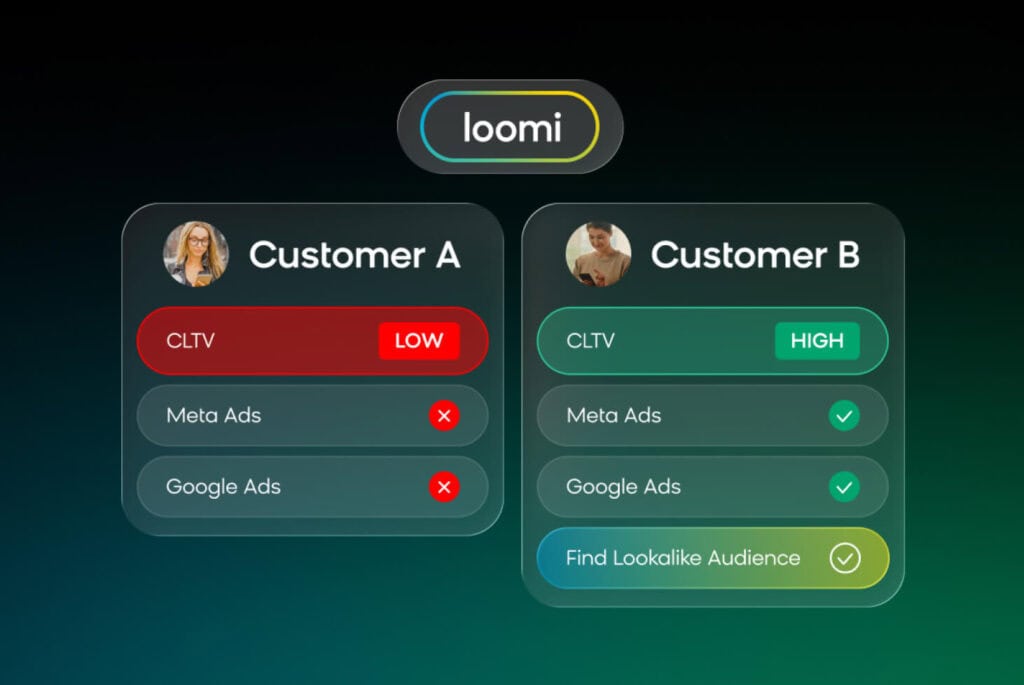
How Loomi Turns On-Site Intent Into Paid Media Audiences
The key to smarter ad spend is connecting your on-site signals to your ad platforms in real time — not in a weekly CSV export, but through live, continuously updated audiences that reflect what’s actually happening on your site right now.
Bloomreach’s personalization platform, Loomi, seamlessly connects on-site sessions and paid media campaigns, making intent-driven ad targeting possible. It unifies data from every customer interaction and proactively puts your insights to work.
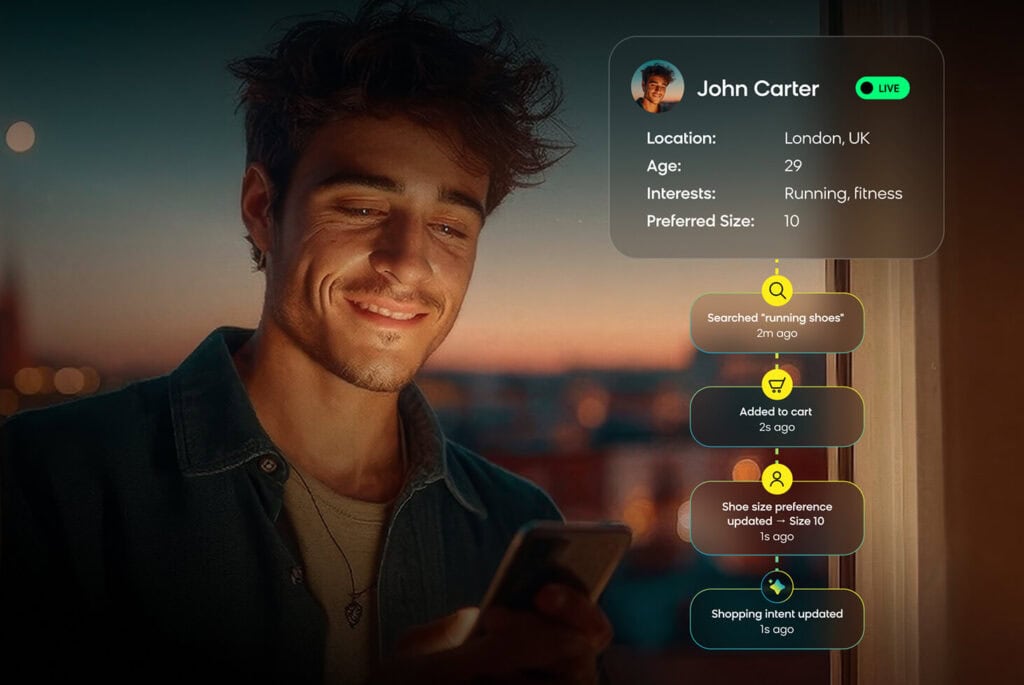
Loomi activates behavioral signals like product views, purchase history, and engagement patterns instantly, building and updating ad audiences as customer behavior evolves.
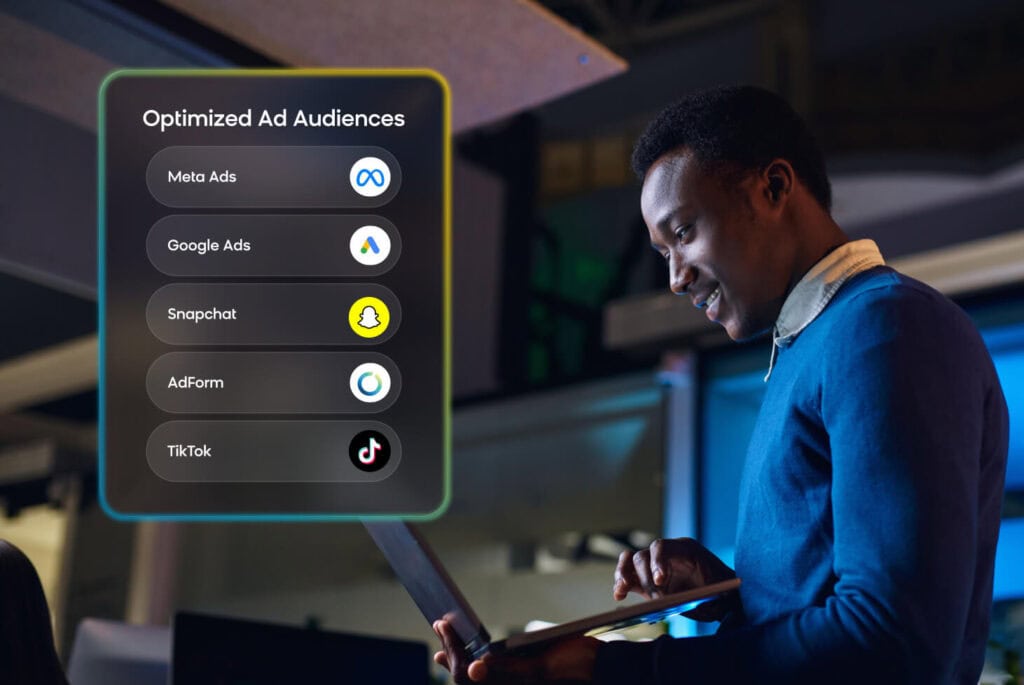
Segments are continuously refined and synced to platforms like Google Ads, Facebook, and Snapchat within milliseconds — so your paid media team or agency can act on precise, behavior-driven audiences without waiting on manual exports.
What Smarter Paid Media Looks Like in Practice
Brands using Loomi to put this intent-driven strategy into practice are seeing more value from every ad dollar they spend. Here’s how:
Turning Real-Time Insights Into ROAS
Arena, a competitive swimwear brand, needed their ad campaigns to reflect actual buyer behavior. Using Loomi to sync on-site signals to their ad platforms in real time, Arena replaced assumption-based targeting with dynamic, data-driven audiences.
The impact was immediate, with the brand achieving a 79% Google Ads audience match rate and a 71% increase in ROAS during their Winter Sale campaign.
Lowering Acquisition Costs With Smarter Seed Audiences
O2 Slovakia was building lookalike audiences directly in Google and Facebook’s audience builders, but the targeting wasn’t precise enough. With Loomi, the telecom brand now leverages its first-party data to create richer seed audiences.
A/B testing told a clear story: Loomi-powered lookalikes reduced cost per conversion by 37% on responsive Google Ads and cut cost per page visit by 60% on Facebook, compared to platform-built audiences.
Discovering Valuable Segments for Peak Ad Performance
The British music and entertainment retailer HMV sought a better way to get the most out of their Google Ads Performance Max campaigns. The brand had a wealth of behavioral data to inform their strategy, but too many variables to manually analyze and translate into smarter segments.
Loomi’s Autosegments did so automatically, combing through millions of customer attribute combinations to surface high-value audiences that HMV’s team hadn’t identified — including their most valuable segment, with a revenue per visitor over 2,800% higher than the site average.
With Loomi creating and executing these segments automatically, HMV has seen incredible results: a 14% lift in campaign revenue, a 34% increase in impressions, and a 425% increase in landing page views.
The ROI of Data-Driven Ad Audiences
As paid media costs continue to rise and privacy changes make third-party targeting less reliable, brands are recognizing just how valuable their customer data can be.
When it’s consolidated, activation-ready, and accessible in real time, your proprietary data is your biggest competitive advantage. The insights you gain from every customer interaction, on every channel, can help shape future touchpoints — and with Loomi translating those insights into precise audiences, you can improve ad performance across the board:
- Better suppression reduces wasted spend. When you can reliably exclude recent purchasers, engaged email subscribers, and customers who don’t need paid media support to convert, every ad dollar goes further.
- Better retargeting improves relevance. Ads that reflect a visitor’s individual site behavior convert at higher rates than generic campaigns, and they create a better brand experience in the process.
- Better seed audiences improve lookalikes. When your lookalike models are built from behaviorally rich segments rather than broad site visitors, your prospecting campaigns find higher-quality audiences from the start.
- Better timing improves conversion efficiency. When audiences update in real time based on shopping behavior, your paid media can reach people at the moment their intent is highest.
Build Better Paid Media Audiences With Loomi
Paid media doesn’t have to be a guessing game. The signals you need to build high-performing ad audiences are already on your website — in every product view, category browse, cart addition, and repeat visit.
With Loomi, your on-site shopping journeys translate into ad audiences in real time. Your segments adapt to customer behavior, your strategy sharpens with every session, and every ad dollar finds the right audience.
Ready to turn your site data into smarter ad spend? Schedule a personalized demo to see Loomi in action.