
Migrating from one marketing platform to another isn’t just a technical project — it’s a strategic business transformation. For brands currently using Salesforce Marketing Cloud (SFMC), the move to Bloomreach represents more than switching vendors; it’s about unlocking new levels of marketing automation, personalization, and revenue growth that simply aren’t possible with fragmented, channel-siloed approaches.
Brands that make this transition save time, scale faster, and see better performance. This unified customer experience is what effectively turns browsers into buyers (and buyers into advocates).
Here’s what every marketing leader needs to understand: migration success isn’t about perfectly replicating what you have today. It’s about reimagining what’s possible when your marketing technology actually works as an integrated system rather than a collection of disconnected tools. Learn why Bloomreach empowers brands to better engage their customers.
Why Migration Matters More Than Ever
Nowadays, surface-level personalization no longer cuts it. Customers expect personalized experiences across every touchpoint, from the first email they receive to the product recommendations they see on your website. They want conversations, not campaigns. They want experiences that feel tailored specifically to them, not to broad demographic segments.
Today’s most successful brands operate with real-time personalization, AI-driven journey orchestration, and seamless omnichannel experiences that adapt to customer behavior as it happens.
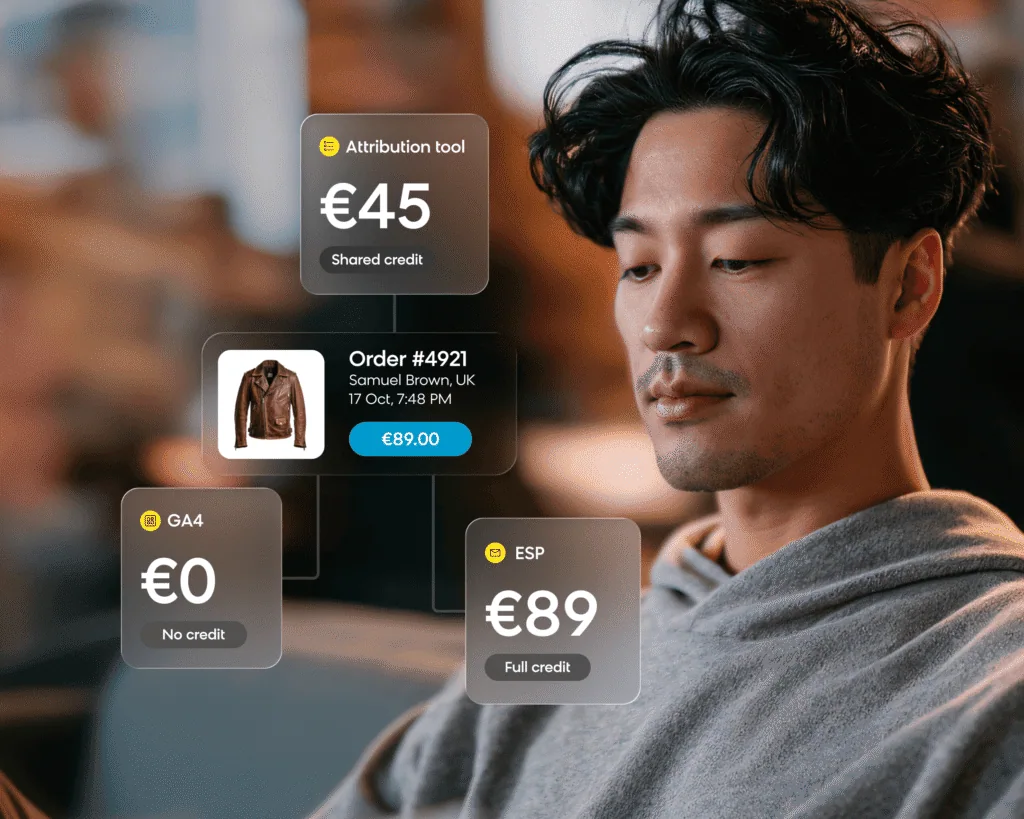
While SFMC often stores separate customer profiles for each channel (creating the data silos that plague so many marketing teams), Bloomreach operates from a unified customer view that enables true cross-channel personalization. Instead of jumping between disconnected systems to understand your customer journey, you get a single platform that automatically tracks every interaction and optimizes every touchpoint.
The migration isn’t just about better technology — it’s about better business outcomes. Companies making this transition consistently report not only improved efficiency, but also greater revenue acceleration and better customer experiences.

The Technology Differences That Drive Business Impact
From Channel Silos to Unified Customer Experience
Historically, SFMC’s architecture often creates separate customer profiles for each communication channel, forcing marketing teams to manage fragmented customer data across email, SMS, mobile, and web touchpoints. This fragmentation makes true personalization and cross-channel journey orchestration extremely difficult to achieve.
Bloomreach operates from a fundamentally different architectural philosophy: unified customer profiles that consolidate data from all touchpoints into a single, real-time view. Personalization decisions made in email campaigns automatically inform website experiences, SMS messaging, and mobile app interactions.
This means that customers receive consistent, personalized experiences regardless of how they interact with your brand, leading to higher engagement rates and increased lifetime value.
From Batch Processing to Real-Time Responsiveness
Traditional email marketing platforms, including SFMC, often rely on operating on batch processing cycles — campaigns are planned, built, and sent according to predetermined schedules. While this approach works for basic newsletter programs, it fails to capitalize on real-time customer behavior signals that indicate purchase intent or engagement opportunities.
Bloomreach processes customer behavior signals in real time, enabling immediate response to customer actions. When a customer abandons a cart, browses specific product categories, or demonstrates purchase intent, the platform can trigger relevant communications within minutes rather than waiting for the next scheduled campaign cycle.
This real-time responsiveness enables sophisticated lifecycle marketing programs that significantly outperform traditional scheduled campaigns, contributing directly to the revenue acceleration that migrated companies experience.
From Manual Campaign Building to AI-Driven Automation
Creating sophisticated, personalized campaigns in SFMC typically requires significant manual configuration and ongoing optimization. Marketing teams spend substantial time building campaign logic, setting up segmentation rules, and manually adjusting campaigns based on performance data.
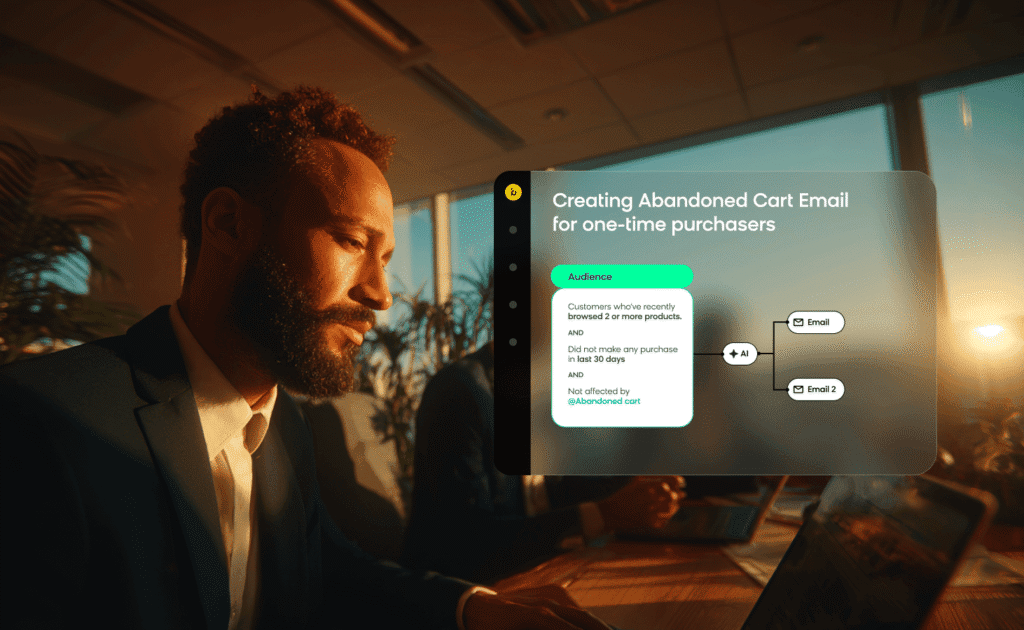
Bloomreach’s Loomi AI enables sophisticated campaigns built from simple prompts that leverage proven strategies. This doesn’t just save time; it enables marketing teams to implement best-practice campaigns that might have taken months to develop and optimize manually.
Overcoming Common Migration Concerns
Of course, migrating to a new platform isn’t always an easy task. Brands (rightly) have concerns and questions that they want to square away before committing to a transition. Here are some common migration concerns and how you can overcome them:
“We’re Concerned About Deliverability During Transition”
This is the most common — and legitimate — concern about email platform migration. Your sending reputation is tied to your current IP addresses and domain authentication, and any disruption could impact email deliverability and revenue.
The solution is a systematic IP warm-up with dual-run protection. By gradually ramping up your sending volume on Bloomreach while maintaining your current SFMC operations, you can establish strong deliverability on the new platform without risking business continuity. Most companies typically complete a successful IP warm-up within 14-30 days, depending on their audience size and engagement levels.
“Our Team Doesn’t Have Time for a Major Technology Project”
Migration projects fail when they’re treated as “big bang” implementations that require massive upfront investment and disruption. The most successful migrations use phased approaches that minimize business disruption while delivering incremental value throughout the process.
The phased approach actually reduces total project time and risk. Rather than trying to replicate every existing campaign before launch, successful migrations focus on the 20% of use cases that drive 80% of business value. Additional functionality is layered in during the scale phase, after basic operations are stable and performing.
“We’re Worried About Learning New Technology”
Many companies find that Bloomreach’s more intuitive interface and AI-driven automation actually reduce the technical complexity their teams need to manage. Rather than increasing team workload, most companies find that migration to Bloomreach enables their marketing teams to focus on strategy and creative development rather than technical campaign management.
The Four-Phase Migration Framework That Drives Success
Phase 1: Preparation and Prioritization
The most successful migrations begin with strategic clarity about what you’re trying to achieve. This preparation phase is where you identify your highest-impact use cases, audit your current data quality, and align stakeholders around realistic timelines and expectations.
The critical insight: Don’t try to rebuild everything you have today. Focus on what drives revenue and customer engagement. Migration is the perfect opportunity to eliminate complexity that doesn’t serve your business goals.
During preparation, successful companies:
- Conduct comprehensive data audits to identify their most engaged customer segments
- Map integration dependencies to understand which data feeds are critical for day-one functionality
- Align internal teams around shared definitions of success and realistic timelines
Phase 2: Build and IP Warm-Up
You can’t simply switch from SFMC to Bloomreach overnight without risking deliverability issues and revenue disruption. The most successful migrations use a careful IP warm-up process that gradually ramps sending volume on Bloomreach while maintaining business-as-usual operations on SFMC.
As part of the warm-up process, you start with your most engaged audiences (those most likely to interact positively with your emails), then gradually expand to broader segments as you establish your sending reputation. This typically takes 14-30 days depending on your audience size, but the careful approach protects both email deliverability and revenue during the transition.
Smart migration teams use this phase to implement template translations from SFMC’s AMPScript to Bloomreach’s more intuitive Jinja templating system. Jinja is not only more powerful and flexible than AMPScript, but it’s also more user-friendly, enabling business users to make template modifications without requiring IT assistance.
Phase 3: Dual-Run and Validation
During the dual-run phase, you’re operating campaigns simultaneously on both platforms, creating the perfect opportunity to validate performance and ensure that Bloomreach is delivering equivalent or improved results before you fully transition from SFMC.
This phase requires careful performance monitoring and quality assurance, but provides invaluable confidence that your migration is succeeding. You can compare email performance metrics side-by-side, validate that personalization logic is working correctly, and ensure that all integrations are functioning as expected.
The dual-run approach also creates business insurance. If unexpected issues arise during the transition, you can temporarily scale back Bloomreach sending while troubleshooting without losing revenue or continuity in your customer communications.
Phase 4: Cutover and Scale
Once your dual-run validation confirms that Bloomreach is performing at or above SFMC levels, you can complete the cutover and begin expanding into new use cases and advanced functionality that weren’t practical with your previous setup.
This is where companies typically see the most dramatic business impact. With unified customer data, real-time personalization capabilities, and AI-driven journey orchestration, brands can implement sophisticated lifecycle marketing programs, predictive send-time optimization, and cross-channel experiences that drive significant revenue acceleration.
Working with Migration Partners
While it’s technically possible to manage the SFMC to Bloomreach migration internally, the most successful transitions leverage experienced migration partners who understand the common pitfalls, optimal sequencing, and risk mitigation strategies that ensure smooth transitions.
Migration partners bring proven processes and industry expertise. They’ve handled multiple migrations across different company sizes and industries, giving them insights into what works, what doesn’t, and how to adapt migration strategies to different business contexts. They also provide escalation paths for technical issues and can often resolve problems in days rather than weeks.
Bloomreach maintains strategic partnerships with migration specialists around the world who have proven track records of successful SFMC to Bloomreach transitions. These partners combine technical migration expertise with a deep understanding of Bloomreach’s platform capabilities, ensuring that migrations not only preserve your current functionality but also unlock new growth opportunities.
Many companies continue working with these partners post-migration for ongoing optimization, advanced feature implementation, and strategic roadmap execution.

What Real Migration Success Looks Like
Motorpoint Boosts Email Efficiency by Switching to Bloomreach
UK car retailer Motorpoint needed a more sophisticated way to track customer journeys and create timely nurture campaigns. After transitioning from SFMC to Bloomreach, the brand was able to easily deploy automated journeys without developer support.
Bloomreach’s unified customer view also empowered Motorpoint to fully understand its customers and deliver personalized follow-ups and recommendations — powered by Loomi AI — based on real-time preferences.
As a result of the switch, Motorpoint was able to save 40% of its time per week in manual campaign work — time the brand could now spend on strategy, testing, and creating new journeys. Additionally, Motorpoint saw a 50% uplift in email performance thanks to Bloomreach’s AI-powered recommendations.
Havaianas Scales Its Email Program With Bloomreach
Footwear brand Havaianas faced a critical deliverability issue that was directly impacting business revenue. In transitioning from SFMC to Bloomreach, the brand wanted to get more flexibility and give its team greater control over its email marketing strategies.
Together with Bloomreach and partner Scalero, Havaianas was able to seamlessly transition to Bloomreach, simplifying list creation, optimizing deliverability, and improving sender reputation in the process.
After the migration, Havaianas set up eight new email scenarios that drive revenue from lifecycle marketing. This flexibility and scale have set the brand up for ongoing success with its revamped email program.
Take Your Next Step Toward Growth With Bloomreach
If you’re currently using SFMC and are experiencing limitations around personalization at scale, cross-channel integration, or real-time marketing responsiveness, migrating to Bloomreach is the next logical step to help your business grow.
Start with an honest assessment of your current marketing technology ROI. Are you achieving the customer experience quality and revenue impact you need from your current platform? Are manual processes and technical limitations preventing your marketing team from implementing strategies you know would drive business results?
Migrating platforms may seem like a big task, but with the right partners, the entire process can be seamless and reap big benefits for your bottom line. If you’re ready to take your business to the next level, schedule your personalized demo with Bloomreach today to see how it can grow your business.