For three years, almost everything Priya has bought from her favorite outdoor brand has been for her kids: rain boots, fleece jackets, and a sled one December.
So when she needs to find a winter coat of her own, she visits the brand’s site — but the brand doesn’t know what to do with her. She browses the women’s category and searches “insulated parka,” but the homepage keeps pushing toddler snowsuits and her search returns children’s sizes first.
She closes her computer without finding what she’s looking for, and gets an email the next morning recommending easy on-off snow boots for kids. Shopping for herself proves to be too difficult, so she deletes the email and looks elsewhere.
Every signal Priya sent pointed in one direction. But her favorite brand was still working from yesterday’s version of her: a customer who had spent three years shopping for someone else.
It had a chance to recognize a new need, make a busy mom feel seen, and earn her loyalty in a new category. Instead, Priya became another abandoned-browse session — not because the brand lacked data, but because it couldn’t act on the data that mattered in the moment.
Where Data Strategies Break Down
Collecting data isn’t a problem for modern brands. The challenge is recognizing which signals matter, understanding their value, and acting on them before the opportunity disappears.
While it’s never been easier for brands to know their customers, it’s still difficult to identify which data points matter most — and to use them when and where they can make the biggest difference.
The insights you gain from a customer’s search query, product page visit, or abandoned cart reveal their current needs and intent, but only for a limited time. If those insights take hours to reach the system that can act on them, the customer has likely moved on.
That’s why brands need intelligence at the edge: the ability to interpret in-session behavior, place it in the context of a customer’s history, and respond with a personalized experience in real time. It means using AI to turn live signals into real-time decisions that strengthen relationships and move the business forward.
How Loomi Delivers Intelligence at the Edge
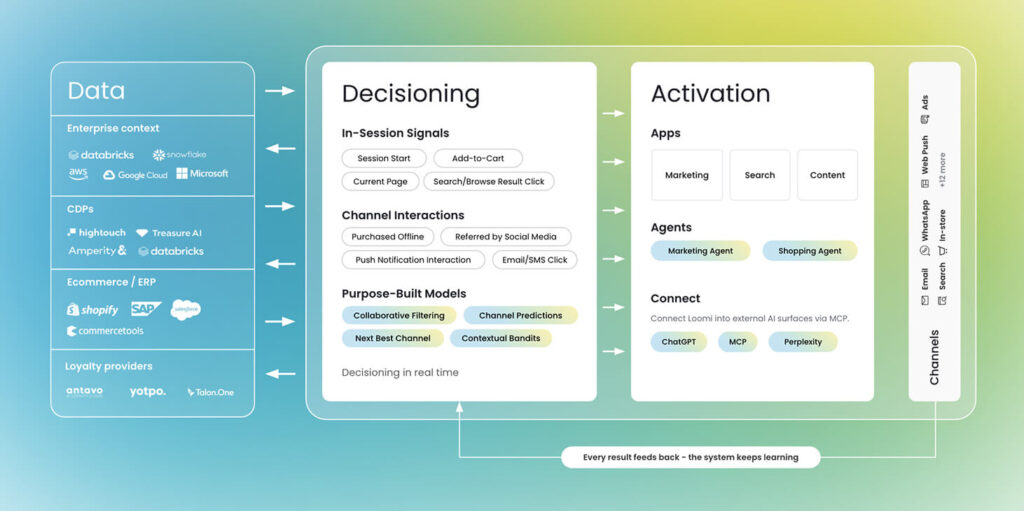
Loomi, Bloomreach’s AI for customer engagement, brings real-time customer data, decisioning, and execution together so brands can respond intelligently when a customer interacts.
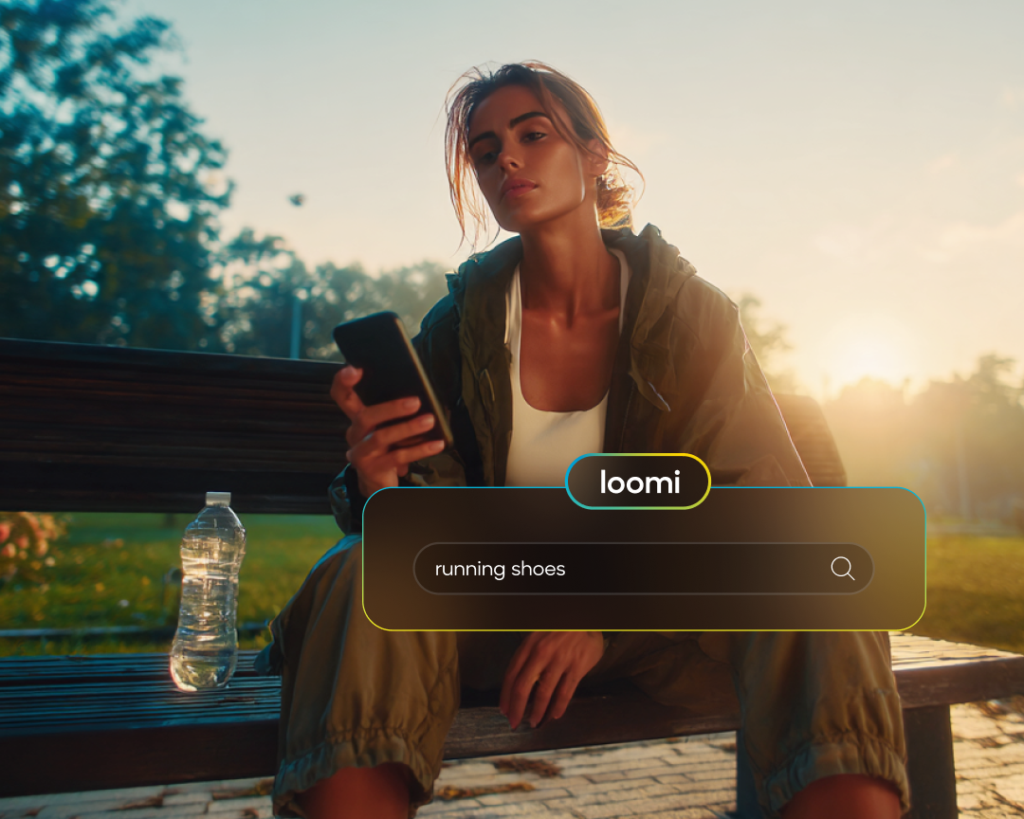
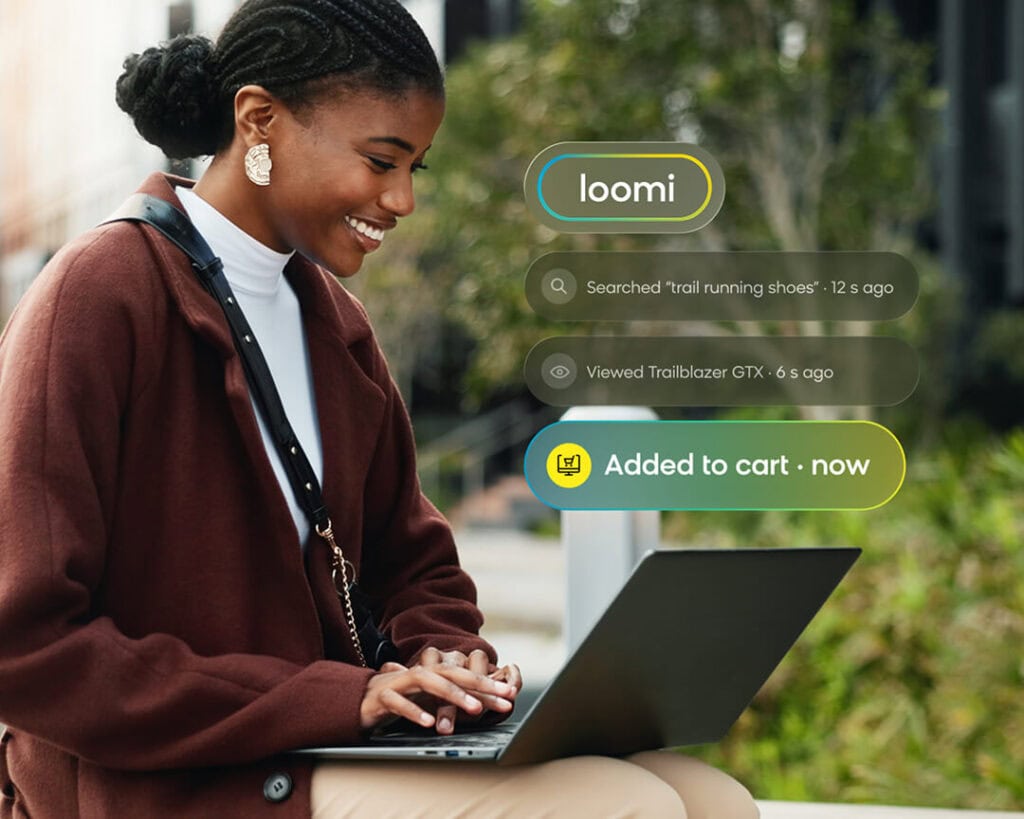
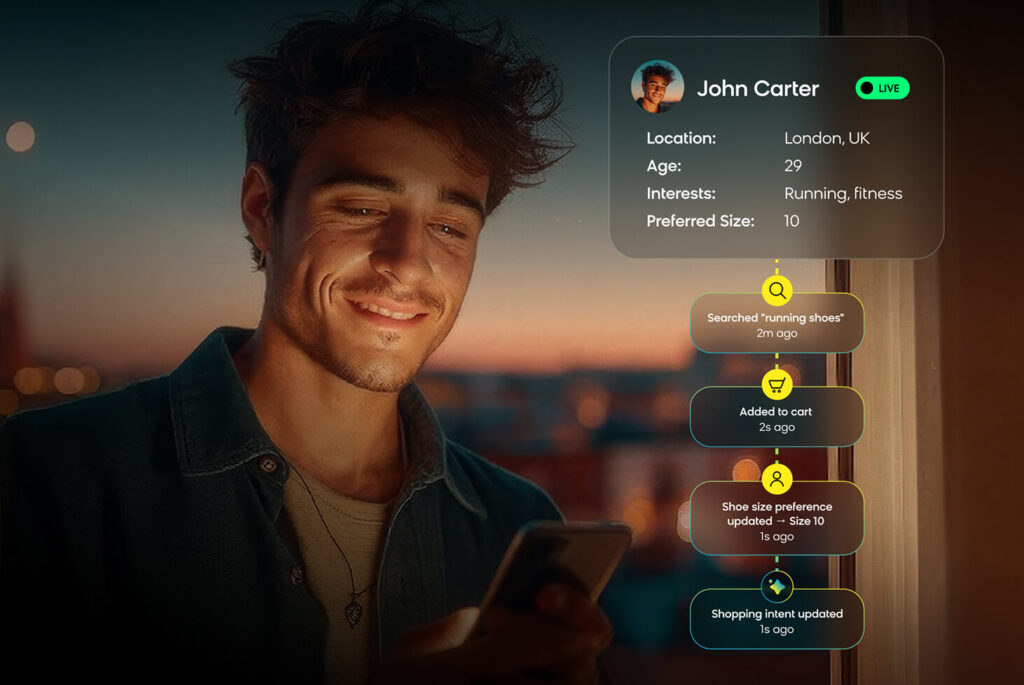
Rather than relying only on batch-synced data that arrives after the fact, Loomi pairs a customer’s historical context with the choices they make in real time. A search, product-page view, cart update, email click-through, or SMS open can become a live decision point — one that informs what happens next across the customer journey.
The result is bigger than engagement alone. Intelligence at the edge connects personalized journeys to the outcomes that matter most: more revenue, greater customer lifetime value, healthier margins, and stronger retention. And because each interaction informs the next, the impact improves over time.
Here’s how Loomi makes that possible — and how brands are putting it into practice.
Loomi Understands Individual Customers
Customer segmentation helps teams plan, but customers don’t shop as a segment. Two people in the same “churn risk” audience might have very different reasons for drifting away, different products in mind, and different chances of coming back.
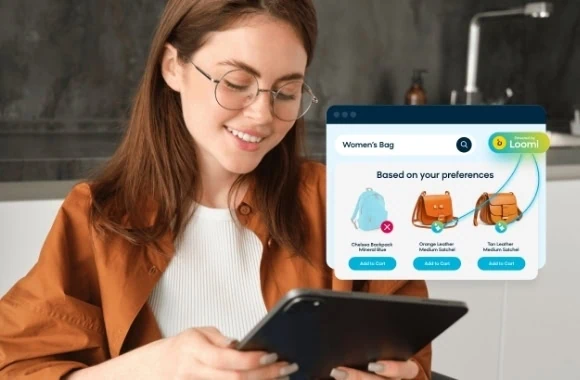
Loomi treats each customer individually, evaluating their purchase history, browsing patterns, preferences, and in-session behavior to understand what they need. It then factors in your business context, such as margin goals, inventory levels, and strategic priorities, so the experience served is right for the customer and responsible for the brand.
Every recommendation, product ranking, and suppression decision is made for one person, at one moment, with the full story taken into account.
Insights Are Synced in Real Time
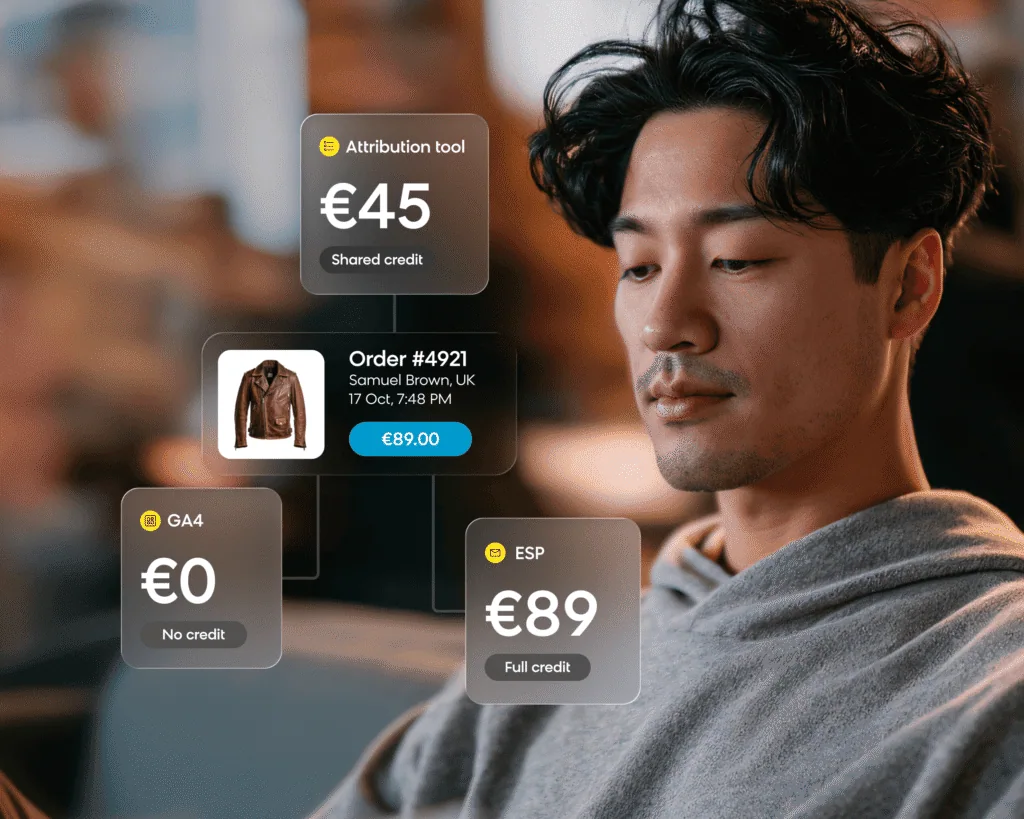
Some decisions lose their value within minutes, like removing a customer from a promotion because they’re already about to buy, or sending an SMS alert for a last-minute reservation opening to restaurant patrons. When customer data moves from a data warehouse to an execution layer on a batch-sync schedule, those decisions arrive too late.
Loomi connects a live view of each customer with the channels that reach them, so decisions happen where interactions happen. Data, decisioning, and execution work as one continuous loop. Each new signal shapes the next action, and each outcome feeds straight back into Loomi’s intelligence, without waiting for the next sync cycle.
The Right AI Drives the Best Results
Not every decision needs a large language model. Checking consent before a message goes out is a different job from predicting who’s about to churn, and both are different from writing a subject line.
Loomi combines three kinds of AI, each suited to a different job:
- Rules-based logic for control, such as consent, compliance, and business guardrails
- Machine learning for precision, such as churn prediction, product affinity, and send-time optimization
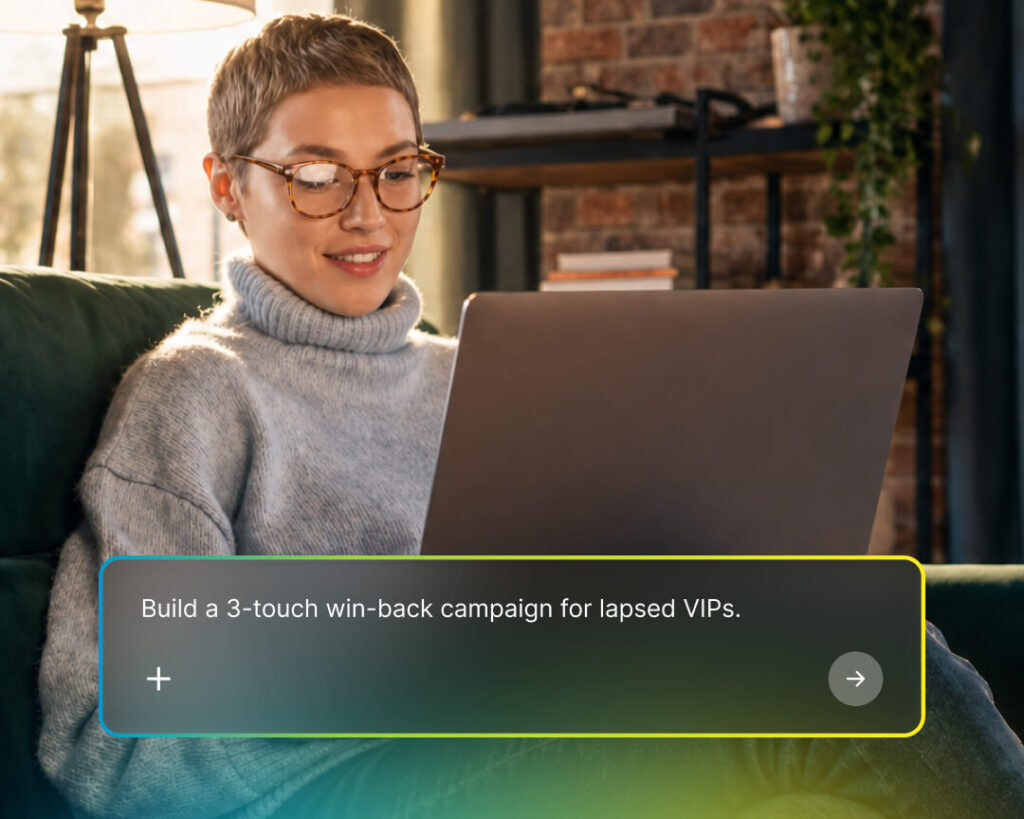
- Generative AI for creativity, such as copy, campaign building, and turning plain-language goals into action
All three work from the same customer data, so each decision gets the right mix of control, accuracy, and creativity, without paying for computing power that the task doesn’t need.
Channel Governance Is Built In
When every channel is optimized for its own performance, customers feel it. An email, a text, a push notification, and a retargeting ad can all successfully reach the same person on the same day, but when sent together, they can overwhelm your audience and discourage engagement.
Loomi coordinates all your channels — email, SMS, push, app, web, ads, and more — to orchestrate the ideal omnichannel experience. Frequency policies, suppression logic, and live engagement signals help decide when to reach someone, which channel is most likely to land, and when to hold back entirely.
With every channel’s performance considered in each new decision, Loomi protects your customer’s relationship while prioritizing the next best step in their journey.
Intelligence Evolves With Every Interaction
With Loomi, every customer interaction updates their profile in real time, creating an insight that can be used immediately across every channel.
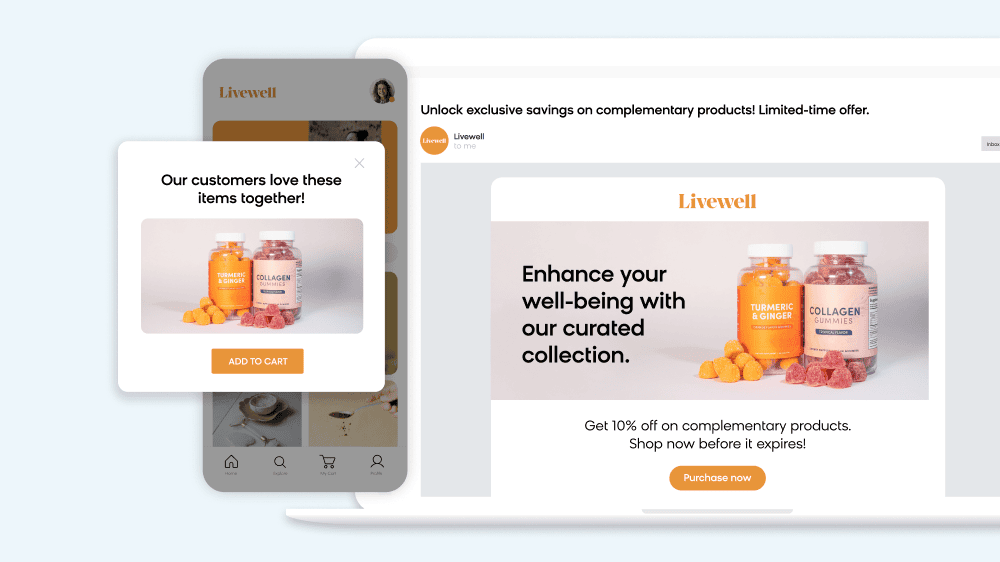
A product a customer browses can inform the recommendations in their next email. A purchase can reshape the results they see when they search on your site. An unopened push notification can influence whether Loomi reaches them through another channel, or decides to hold back entirely.
This creates a compounding intelligence loop. Every touchpoint makes the next interaction more relevant, helping brands build stronger, longer-lasting customer relationships over time.
Leveraging Intelligence at the Edge for Your Business Goals
Intelligence at the edge isn’t a single feature or campaign type. It’s a way of making decisions that strengthens your customer interactions and supports your business’s bottom line.
Here are some Loomi-powered use cases brands are running to put intelligence at the edge into practice, and the outcomes each one is built to deliver.
Increase Revenue
When customer intent is fresh, the path to revenue is clearer. Loomi helps brands recognize and act on that intent before the moment passes.
Tailor Journeys for Unknown Visitors
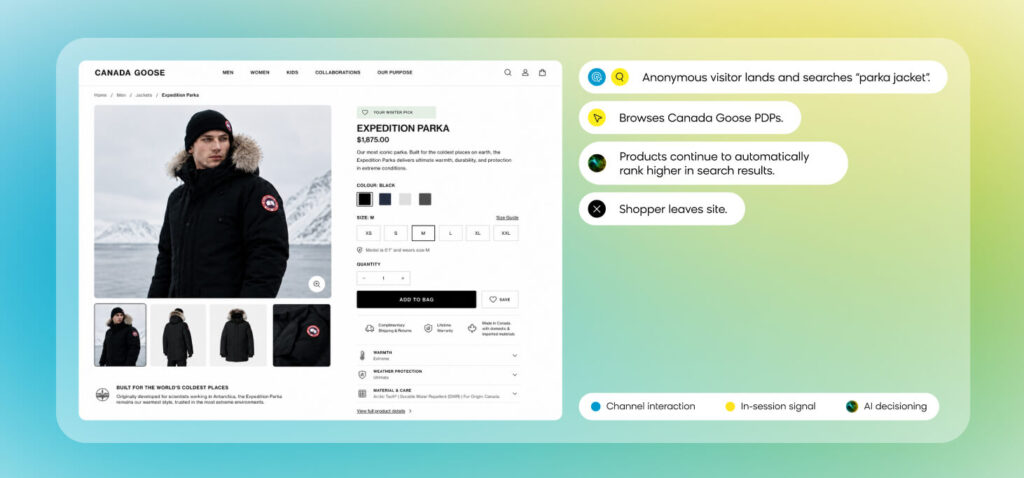
When a first-time visitor arrives on your site with no login, no history, and no profile on file, they don’t have to be treated like a blank slate. The ad they clicked, the page they landed on, and the first thing they searched for all reveal what they’re looking for.
Loomi starts personalizing from those early clues. Someone who clicked on a paid-search link for trail gear will receive a different site experience from someone who came in through a marathon-training guide. Each click sharpens the picture, so within a few interactions the visitor is being treated as an individual rather than an average of all newcomers.
Beauty brand Yves Rocher personalizes product recommendations for anonymous visitors with Loomi, creating a profile the moment they view a product and serving recommendations within 0.1 seconds. Compared with generic top-seller recommendations, the brand saw 11x higher purchase rates and 17.5x more clicks on recommended products.
Drive Demand With Tiered Restock Alerts
Inventory is always moving, so the right message depends on what is true right now. When a sought-after item returns to stock, Loomi can notify shoppers in stages, giving loyal customers early access before expanding the offer to a wider audience.
Throughout the alert process, Loomi weighs two live inputs: who the customer is to your business and how much inventory remains. If an item sells out during an early-access window, later audiences never receive an offer for something they can no longer buy. The result is a more relevant experience for customers, while helping brands prioritize high-value shoppers and protect margin.
Personalize Black Friday Price-Drop Alerts
An email promoting a sitewide sale treats every subscriber the same. A smarter approach waits for a meaningful overlap: the price falls on something a Black Friday shopper has already shown interest in (e.g., by saving it to a wishlist or leaving it in their cart) and they haven’t purchased yet.
Loomi can reconcile these signals in real time, checking a price change against a customer’s wishlist status, cart status, and purchase history. The result is an email that reaches only the people for whom that price drop is timely and actionable, which makes all the difference in crowded peak-season inboxes.
Loomi-powered price drop emails quickly became the most lucrative campaigns for clothing brand Weird Fish, generating over £500K in revenue.
Reach Customers When It Counts With Optimized Send Times
Most campaigns run on a default send time, but customer behavior can tell you when a recipient is most likely to engage with your brand.
Loomi learns from each subscriber’s own open and click history to determine the best time to send each message. Instead of asking every customer to fit the campaign schedule, the campaign adjusts to the customer’s own preferences.
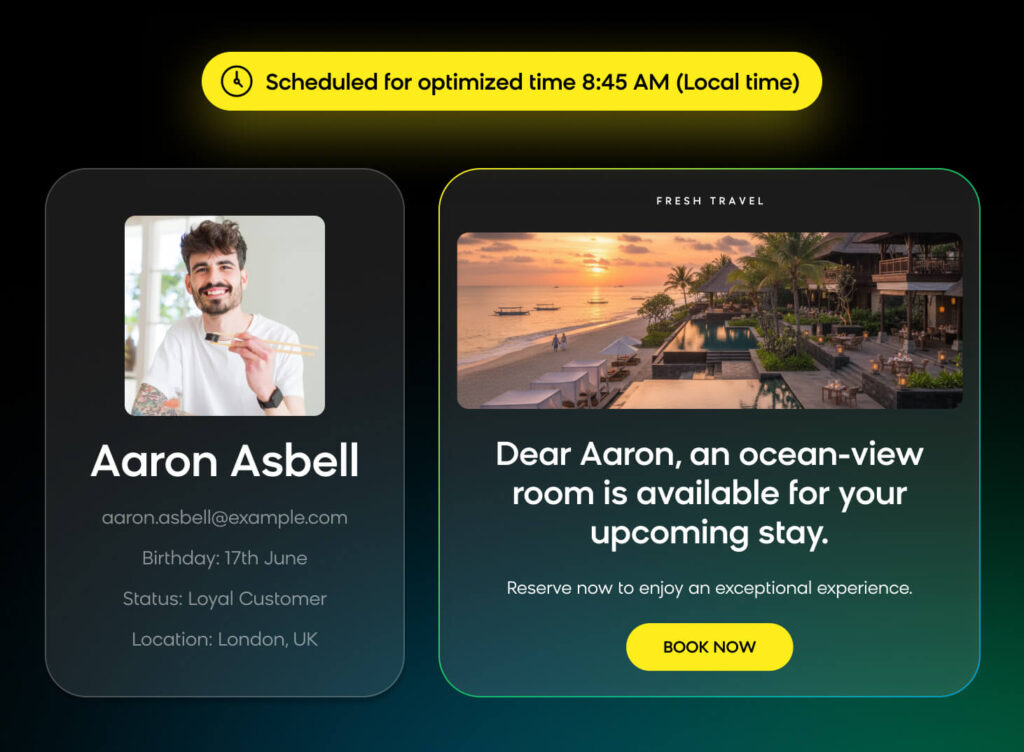
That timing also helps preserve relevance. When the message arrives at the moment a customer is most likely to pay attention, its content and recommendations can reflect their most recent behavior — not a static picture from the night before.
Spend Efficiently
Every message, discount, and hour of effort comes at a cost. Loomi helps brands direct those resources toward what customers are doing now, rather than what a batch-based model predicted yesterday.
Prioritize High-Intent Leads With a Real-Time Call Queue
For businesses where a sale starts with a quote request and ends with a conversation, speed matters. A car retailer, for example, may receive more inbound inquiries than its agents can return in a day. When the queue is handled first come, first served, a customer ready to buy can end up waiting behind someone who’s only browsing.
Loomi can use a purchase-probability model to evaluate each lead as it arrives and prioritize the queue accordingly. Customers showing stronger buying signals move to the top, helping teams focus their limited time where it’s most likely to convert.
The team, the number of hours, and the volume of requests stay the same. What changes is how intelligently those resources are used.
Adapt Channel Strategy With Live Signals
A channel preference is useful, but it’s still a forecast based on the past. What a customer is doing right now can be a much stronger signal.
Before a message goes out, Loomi can assess live customer engagement: Have they recently clicked an SMS? Are they browsing your site on a mobile device? Did they ignore a push notification earlier in the day? When a current signal is strong enough, Loomi can override the customer’s typical channel preference and reach them where they’re most likely to respond.
With Loomi incorporating real-time signals, brands spend less on messages that go unnoticed and create experiences that feel better timed and more relevant to the customer.
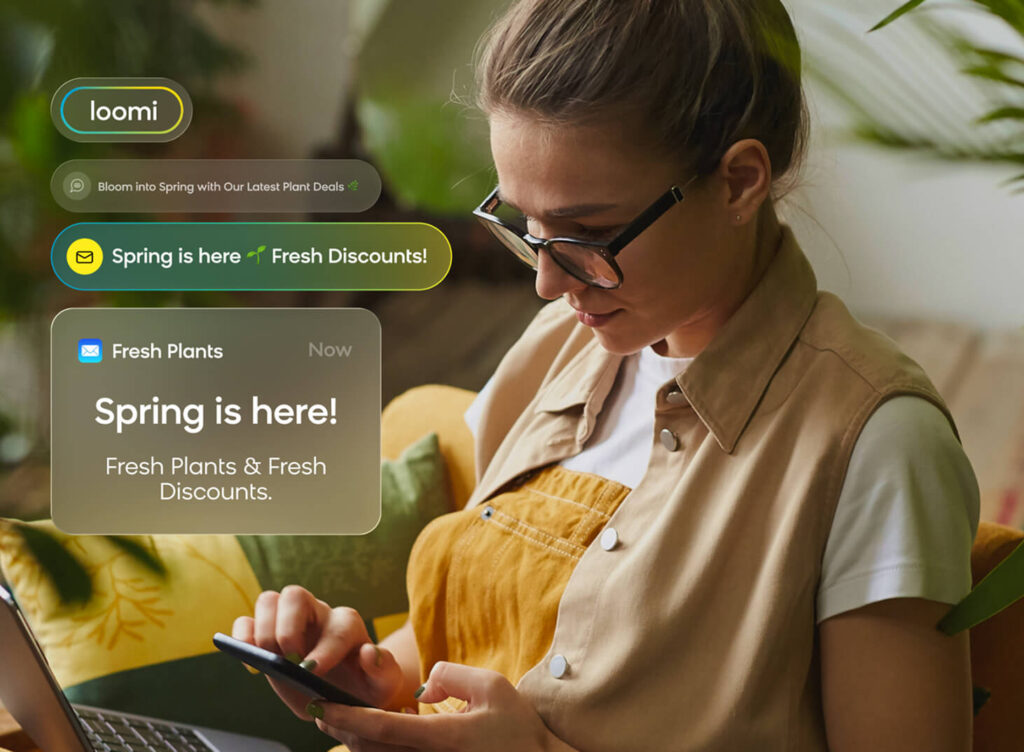
Sports retailer Arena employed this tactic with behavior-triggered weblayers, using Loomi to reach high-intent shoppers while they were browsing. The effort delivered a 3.5x higher purchase rate than email.
Protect Margin With Smarter Frequency Policies
Not every customer needs a promotion to convert. When full-price shoppers repeatedly receive the same discount emails as everyone else, brands can unintentionally teach their most valuable customers to wait for a sale.
Loomi helps brands personalize both the content and cadence of their communications. A customer who regularly purchases at full price can be excluded from markdown messages, while a customer who is more responsive to offers can receive the incentive most likely to encourage action.
While it may sound counterintuitive, sending fewer promotional emails leads to stronger engagement, healthier margins, and a customer experience that protects the premium value of the brand.
The Nordic brand Proffsmagasinet uses Loomi to personalize the content, cadence, and timing of every email. The brand now sends 33% fewer emails, has a 65% lower unsubscribe rate, and has doubled its email conversion rate.
Nurture Loyalty
Loyalty grows in the small moments when a brand shows it’s paying attention. Responding to a customer’s current needs, rather than their past behavior, is what makes interactions feel personal.
Close the Loop With a Feedback Request
For service brands, an appointment doesn’t end when a specialist or technician leaves. The moments immediately afterward can determine whether a customer feels cared for or overlooked.
Loomi empowers brands to automate follow-up interactions that feel personal and productive. A feedback request can be triggered as soon as a service visit is complete, and if the response signals dissatisfaction, Loomi can route that feedback directly to the right support team while the experience is still fresh.
Instead of discovering an unhappy customer after they have disengaged, brands have an opportunity to respond quickly, resolve the issue, and protect the relationship before frustration turns into churn.
Recognize Multi-Journey Shoppers
Customers don’t always shop with the same goal in mind. The same person may buy for their child one week, shop for a partner the next, and return later to purchase something for themselves.
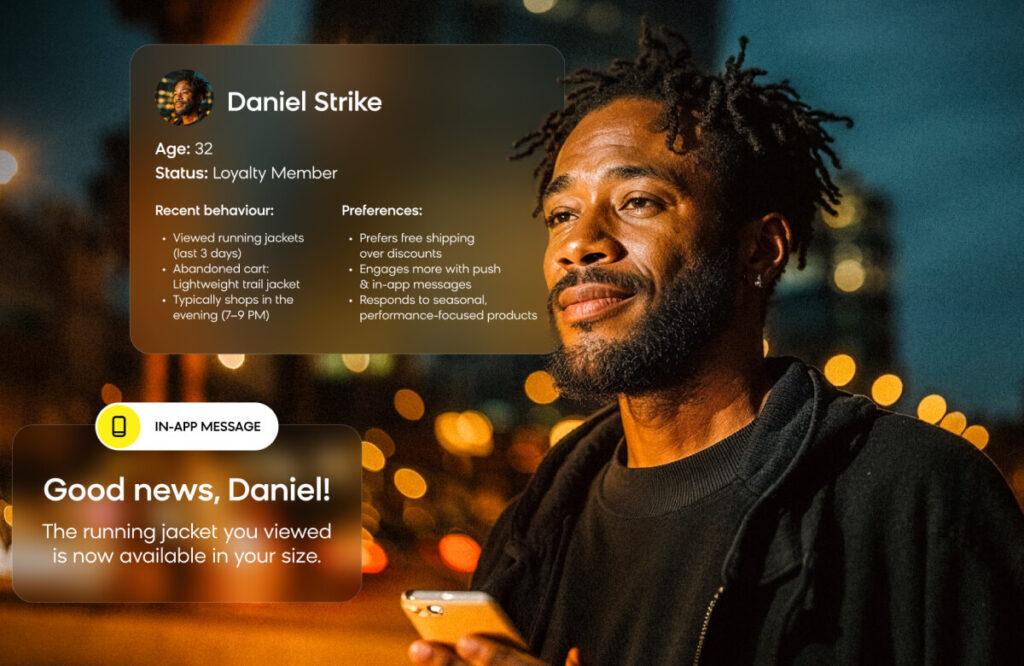
A customer model based only on long-term history can blend those different journeys into one generic picture, but Loomi pays attention to what the customer is doing in their current session. If someone who usually browses children’s clothing is now exploring adult outerwear, that live behavior can shape the products, recommendations, and messages they see next.
The result is a journey that reflects what the customer wants today, rather than an average of everything they have wanted before.
Outdoor retailer Regatta uses Loomi to rank search results and category pages for each visitor, adapting them with every click. In a 54-day test, the brand saw a 4.04% lift in revenue per visitor, a 4.82% lift in add-to-cart rate, and a 2.78% lift in conversion rate.
Catch Frustrated Customers in the Moment
A delayed delivery, failed payment, or service issue can become a defining customer moment. The right response depends not only on what happened, but also on who it happened to.
When a delivery delay is logged, Loomi can combine that event with customer context such as purchase history, loyalty status, and lifetime value. A first-time buyer might receive a proactive apology email and status update, while a high-value repeat customer could be removed from the automated queue and routed to a human team member for more personal follow-up.
The same event does not require the same response for every customer. Intelligence at the edge helps brands respond in a way that acknowledges both the problem and the relationship, keeping customer loyalty intact.
Turn Live Availability Into a Timely Invitation
For hospitality brands, availability can disappear quickly. An open table, unbooked room, or last-minute appointment is only valuable while it’s still available.
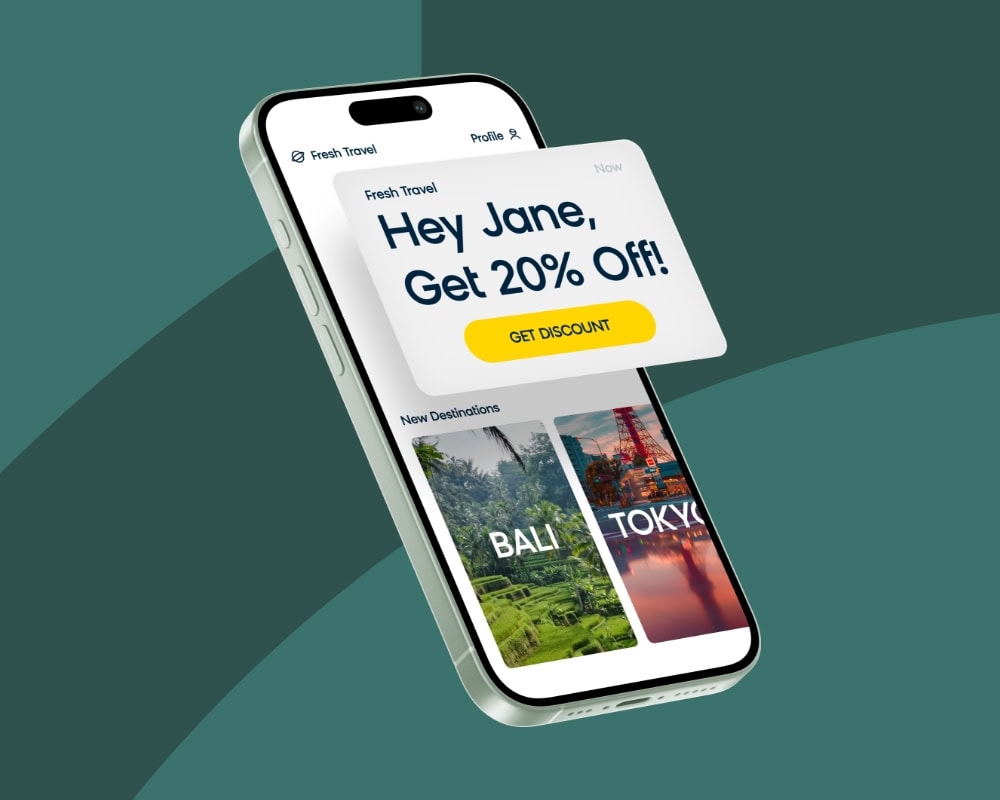
Loomi can match real-time inventory or availability data with a customer’s saved preferences, such as a favorite restaurant, destination, venue, or property. When an opening appears, the customer can receive a timely, personalized invitation while there is still time to act.
Once the availability is gone, the message stops. That makes the offer feel useful rather than promotional, and turns a fleeting operational event into an opportunity to deepen loyalty.
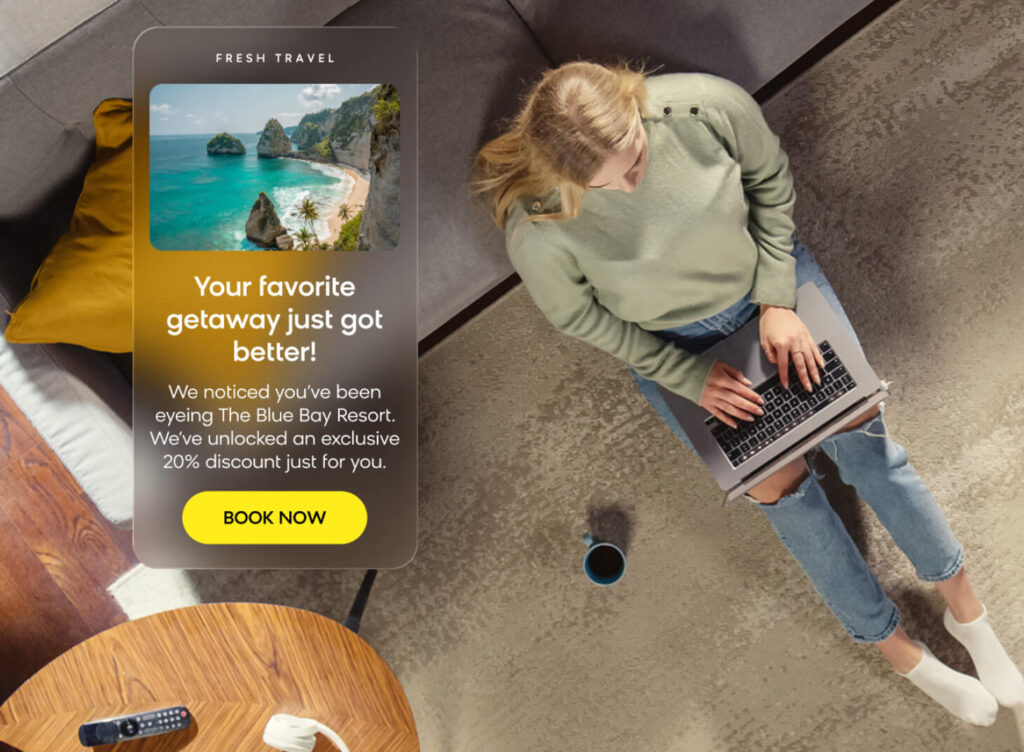
Nordic Leisure Travel Group’s “Favorite Hotels” feature saves each traveler’s preferred properties and uses them to trigger personalized campaigns. In the first four months, travelers who saved at least one favorite hotel had a 4x higher conversion rate.
Make Every Moment a Decision Point
Intelligence at the edge closes the gap between what a customer is doing in the moment and how brands can respond in real time. It turns live signals into decisions that grow revenue, make spend work harder, and build stronger customer relationships.
The goal isn’t to automate every interaction or add another campaign to your calendar. It’s to make each interaction more useful — to recognize when a customer is ready to act, when they need a different experience, and when the best decision is to hold back.
With Loomi, brands can bring customer data, business context, and channel execution together in the moment that matters. The result is a customer journey that feels less like a campaign you’re trying to optimize for everyone and more like a series of responsive decisions for each customer.
Visit our site to learn more about how Loomi helps brands turn real-time intelligence into personalized customer experiences.