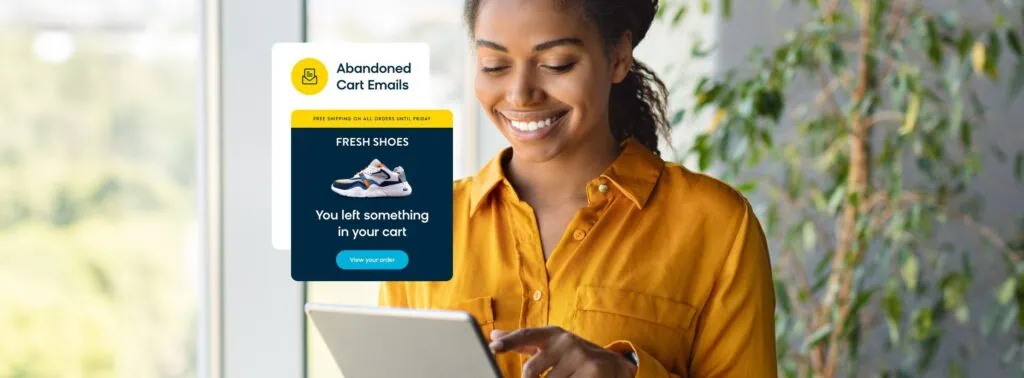
Picture this: A shopper has been eyeing one of your top-selling products for weeks. Web analytics show they’ve visited your online store multiple times and have even added the product to their online shopping cart. However, instead of seeing the shopper complete an online checkout, they simply completely disappear. Sound familiar?
That’s because abandoned carts are a commonplace phenomenon and the ecommerce equivalent of romantic ghosting. It’s sudden, it’s confusing, and it downright hurts.
Baymard Institute’s running research puts the average documented cart abandonment rate at just over 70%. For every 10 customers who add an item to their cart, seven leave without paying.
The upside is, cart recovery emails are the perfect tool to fix your abandonment rates. No other automated email reaches warmer buyers, and none converts a higher share of them. That combination is why cart recovery anchors every serious retail email program.
Cart recovery is the automation buyers themselves call the low-hanging fruit, usually the first flow a new email program switches on. It’s also the flow most likely to be running untouched two years later. What separates a set-it-and-forget-it reminder from a recovery program that earns its revenue claims comes down to seven practices, and most of them live in the plumbing rather than the copy. Let’s explore what it takes to make yours reach its full potential.
- An abandoned cart email is an automated message triggered when a shopper adds items to their cart and leaves without paying. It converts because it reaches people who were minutes from buying.
- The biggest wins in 2026 come from timing and measurement: send at each customer’s predicted best hour rather than a fixed delay, and judge the flow against a holdout group rather than taking the revenue number at face value.
- When Swiss wine retailer Flaschenpost automated its cart recovery flow, 138 of the 325 customers the campaign contacted completed their purchase: a 42% conversion rate by campaign attribution (best practice #7 covers why that distinction matters).
What Is an Abandoned Cart Email?
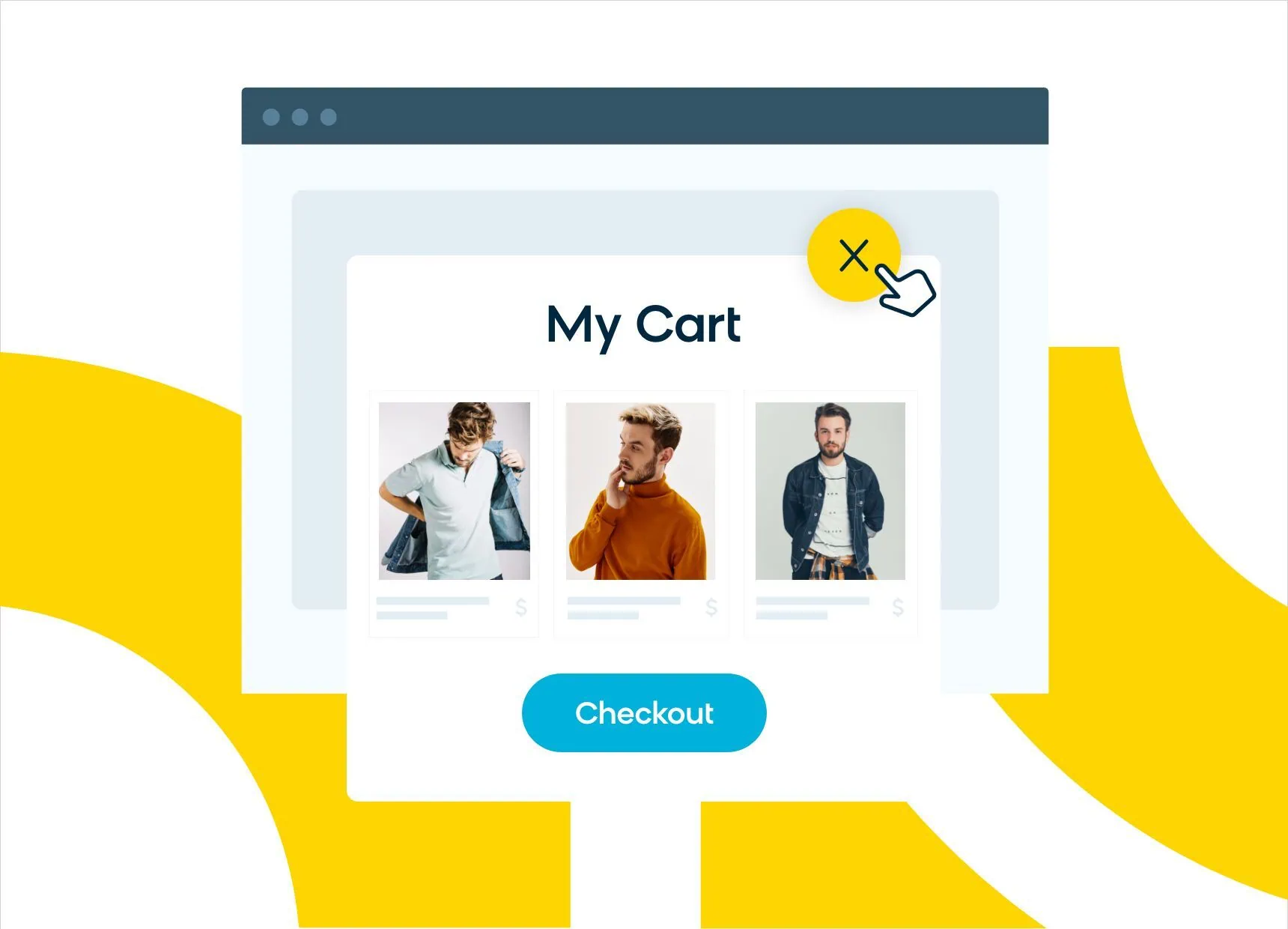
An abandoned cart email is an automated message sent to a shopper who added products to their online cart but left the store before paying. Arriving hours after the abandonment at most, it shows the exact items left behind, with images and prices pulled from the live cart, and hands the shopper a one-click path back to a saved checkout.
Carts get abandoned for all sorts of reasons: surprise shipping costs, a clunky checkout, missing payment options, or a shopper who simply got distracted at the kitchen table. Whatever the cause, each abandoned cart is a purchase decision that was nearly made. That’s what makes this the most valuable trigger in your email program: the intent is already there, and your job is only to remove whatever interrupted it.
Why Abandoned Cart Emails Are Worth the Effort
A shopper who builds a cart has done the hard part of the funnel on their own. They found the product, chose a variant, and started checkout. Recovering even a modest share of those near-purchases is usually worth more than a large lift in cold traffic.
Real campaign data makes the case better than industry averages:
- The UK-based retailer Lovall used automated abandoned cart campaigns to help increase CRM revenue by 50.85% year on year and boost average order values by 15.38%
- Bluebell Group attributes 2% of total ecommerce sales to its automated cart recovery campaigns
- The home furniture retailer Veke increased revenue by 58% using automated campaigns like abandoned cart emails
The economics work because the audience is tiny and primed to act. You’re not blasting a list; you’re catching a few hundred people a week at the exact moment their intent is highest.
7 Abandoned Cart Email Best Practices
1. Trigger on the State of the Cart, Not the Moment of Leaving
Marketers evaluating cart recovery ask one diagnostic question more than any other: “Is the flow actually firing correctly?”
It’s the right instinct. When recovery performance slides, too many teams redesign the email. But the culprit is usually upstream — a trigger that broke after a site update, a condition that quietly became too restrictive, or an integration that stopped sending events. Audit the plumbing before you touch the creative.
Solid plumbing needs three data inputs: a cart_update event that carries the full contents of the cart after every add or remove, a purchase event, and a product catalog whose IDs match what the cart tracks.
Before any email is sent, the flow should confirm that products are still in the cart, that no purchase has happened since the last update, that the recipient still has email consent, and that the update which triggered this run really was the most recent one.
That last check matters more than it sounds. In our abandoned cart use case scenario, it’s a timestamp comparison down to the decimal, because two cart updates landing in the same second can otherwise queue duplicate emails for the same customer.
Pro Tip: for anyone migrating email platforms, it’s important to note that a cart recovery flow doesn’t port 1:1. Event tracking, consent handling, and condition logic all differ between tools, and a copied flow usually lands either too restrictive (recovery volume drops and the new platform gets blamed) or too permissive. Rebuild the logic against the new platform’s events, then compare performance.
2. Time the Send to the Customer, Not to a Rule of Thumb
“How long should we wait before the first email?” is another common question marketers dwell on for cart recovery campaigns, and the answers they get are all over the place: 30 minutes, an hour, three hours, or a shrug and “it depends on your business.”
Here’s an actual framework:
The floor is set by respect. Wait long enough that you’re confident the session is over, because a reminder that arrives while someone is still comparing shipping options is an interruption.
The ceiling is set by memory. Send the same day, while the intent is still warm. Where you land inside that window shouldn’t be one brand-wide number at all.
Advanced email platforms can help you thread this needle seamlessly. Loomi stores a predicted best send time on each individual customer profile, based on when that person actually opens and clicks, so the reminder for a lunchtime browser lands at lunch and the one for a late-night scroller lands in the evening. When the fashion retailer MandM Direct tested its value campaigns by day of week, Sunday sends clearly outperformed, so it shifted its timing to follow the data; its campaigns now reach a 40% open rate.
Pro Tip: Two guardrails belong in every timing setup — a wait period before the first send, and silent hours so nobody gets a cart reminder at 3am.
3. Show the Exact Cart, Then Widen It Carefully
The most common complaint marketers make about their existing cart recovery email is that it’s generic: “it doesn’t know anything about the customer.” The fix lies in personalization — showing the specific items left behind, with image, price, and quantity pulled from the cart, and a one-click path back to a saved checkout.
If a customer’s cart total sits near your free-shipping threshold, say so; “you’re $12 from free shipping” closes carts that a discount can’t. And check availability before the send — if the hero product went out of stock overnight, the email should lead with alternatives instead of walking the shopper into a dead product page.
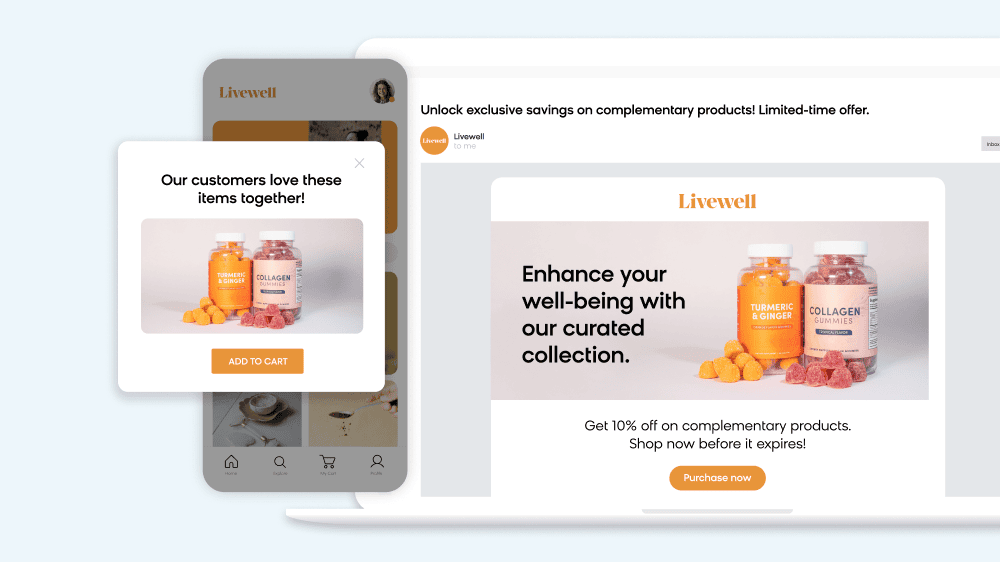
A surprising number of teams stop at the reminder because they believe a cart recovery email should only contain the abandoned products. It shouldn’t. Product recommendations widen the email, and the model you choose changes the message: recently viewed items remind, similar-item models offer alternatives when the abandoned product had the shopper hesitating, and “customers who bought this also bought” turns a recovery email into a bigger basket.
Pro Tip: the best abandoned cart scenarios check what the shopper has already viewed and swap out any recommendation that duplicates it. Showing someone a product they already rejected is precisely the “generic” feeling customers complain about. And with the right platform, none of this requires coding — dynamic content blocks in modern drag-and-drop editors pull cart contents and recommendations natively.

4. Earn the Open, and Don’t Lead With the Discount
Cart abandonment emails should have the highest open rates of any triggered campaign you run, because the recipient has already told you what they want. The subject line’s only job is to reconnect them with that intent, and the strongest examples tend to take one of three angles:
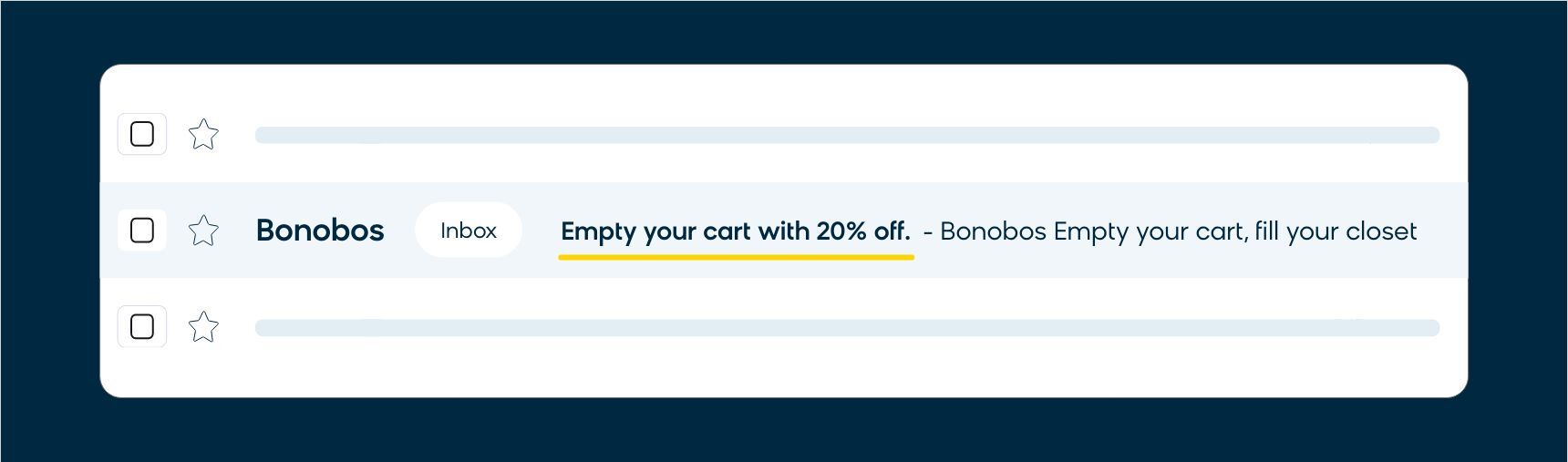
- Offering incentives, like Bonobos — some examples include teasing a coupon code inside or providing a free shipping offer
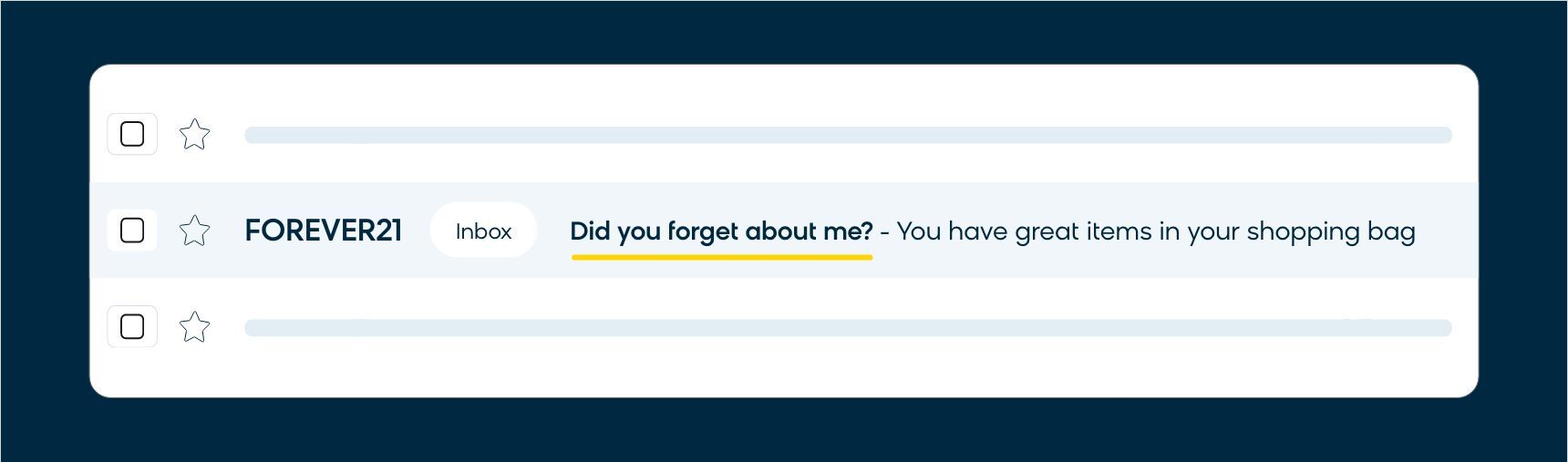
- Reminder notifications, like Forever 21: a plain nudge that items are waiting, which works precisely because it’s low pressure
- And creating a sense of urgency, like The Honest Company
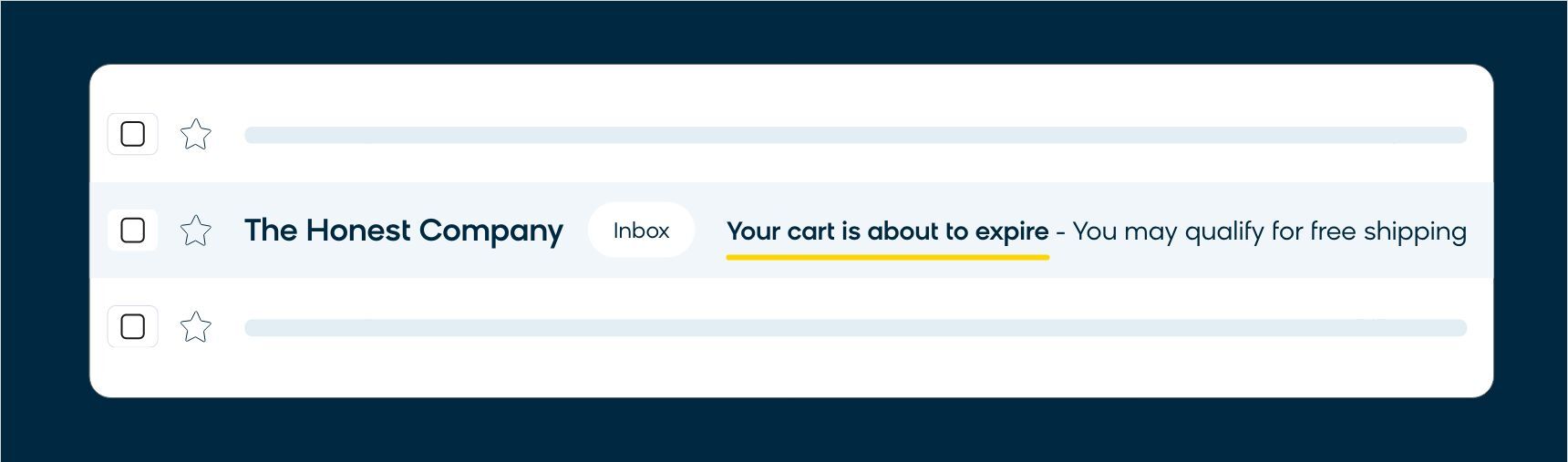
When a discount is needed to nudge buyers, marketers are often cautious about training their audience to expect them and start abandoning carts on purpose. It’s a legitimate worry, and the practical answer is sequencing.
To strategically employ incentives, you can follow a simple sequencing framework. Send the first reminder with no incentive at all — the cart contents, with a frictionless path back to checkout, recover a significant share of buyers without discounts. Hold your incentives for a later touch, aimed only at people who ignored the plain reminder. And when you do introduce one, watch the measurement in best practice #7, because a discount handed to shoppers who were returning anyway isn’t recovery, it’s margin leaking.
5. Employ Another Channel Only After Silence
There’s a double-edged analogy often used to describe cart recovery campaigns: a store clerk following you to the door. It’s helpful if done right, and creepy if overdone. The difference is whether each new message is valuable, informative, and lands in the right place.
That’s why a cross-channel recovery flow can be productive for cart recovery rates, but your scenario shouldn’t be an email sequence that also happens to send an SMS. It should be one conversation that picks the next channel based on what the customer needs.
That principle holds on any platform. As a working example, in our omnichannel cart flow, the first message goes to the channel matching the device the shopper abandoned on: mobile push if they left on their phone, web push on desktop. Only after an hour with no interaction does the next message go out, and email follow-ups wait a full day before concluding the message was ignored. Customers who clicked the first reminder never see a second one.
Pro Tip: consider the costs of SMS as a cart recovery channel. Texts can carry per-message fees, so don’t send them to everyone. Reserve SMS for the shoppers who engage most via text and not through other channels. This way, you’ll target exactly the segment that email couldn’t reach.
6. Cap the Frequency and Re-check Consent After Every Wait
“We don’t want to bombard people” is the most common hesitation marketers raise about cart recovery, and it’s well founded. An indecisive shopper can update their cart a dozen times a week, and a persistent cart that never empties can keep re-triggering the same flow forever.
Two mechanisms keep the flow polite. First, a cooldown of at least 7 days between entries into the flow is a good rule of thumb, along with an exclusion for anyone who recently purchased. Serial cart-updaters can often be your best customers, so treat their browsing as a habit to respect.
Second, deduplication at the trigger, as discussed above, is important so customers aren’t bombarded — a burst of cart edits should collapse into a single scheduled email rather than a queue of them.
Consent deserves the same rigor. Teams running on legacy platforms often discover their old tool has been emailing non-consented abandoners for years, and worry that doing it properly will cost revenue. But revenue from non-consented sends is regulatory exposure, and does inevitable damage to your email deliverability. Screen for consent at entry, and because a customer can unsubscribe during the hours your flow spends waiting, check it again after the wait, immediately before the send.
7. Measure Recovery Against a Holdout, Not Against Zero
Here’s the uncomfortable one. Most “recovered revenue” numbers are overstated, because some abandoners were always coming back. If a shopper who would have returned anyway happens to click your email first, last-click attribution hands the flow credit it didn’t earn. Measured against zero, every cart recovery program looks brilliant.
The honest test is a holdout: split eligible customers before the email, send to one group, hold the other back, and count the difference in completed purchases. Loomi builds an A/B split directly into its abandoned cart use case scenario, evaluated at the split rather than at delivery.
That detail matters for precise attribution. The control group passes every eligibility check the send group does and simply doesn’t get the email, so the only difference between the two groups is the message itself. It stings to deliberately not email warm buyers, which is why almost nobody does it, and why so many teams can’t say what their flow actually adds.
The same discipline can give you valuable data on your second and third emails, too. When you add each step as its own measured increment and let the numbers decide, rather than trusting the standard three-emails-in-three-days advice, you can see the real uplift your email program achieves.
Case Study: What Cart Recovery Looks Like When It Works
Flaschenpost Recovers Lost Sales With Cart Recovery Emails
Flaschenpost.ch had a classic scale problem: customers were adding wines to carts and leaving checkout, and manually chasing those near-purchases was operationally impossible.
Its automated recovery flow, built with Loomi, was the perfect fix. It triggers on live cart events, screens for consent and recent purchases, waits through silent hours, and sends a reminder featuring the exact bottles left behind with a one-click path back to checkout.
The results were immediate. In the first few months, 138 of 325 contacted customers completed a purchase (a 42% conversion rate, across 170 orders), at a CHF 294 average order value, adding up to CHF 50k in campaign-attributed revenue. These are attribution-window numbers, to be clear, which is why Flaschenpost’s scenario ships with the A/B split from best practice #7.
“The implementation of Bloomreach has greatly enhanced our marketing automation and personalization efforts, transforming customer interactions with tools that optimize conversions and boost customer lifetime value for an improved shopping experience.”
Janina Aeberli, Marketing Automation & Personalization Lead at Flaschenpost.ch
Recover the Revenue You’ve Already Earned
Abandoned cart emails are the rare marketing program where the audience, the intent, and the product have already found each other. Everything above, from trigger hygiene to holdout measurement, is about the same thing: refusing to fumble a sale that was nearly complete.
If you’re building abandoned cart campaigns with Loomi, the pieces ship ready-made: the cart recovery scenario, per-customer send time predictions, recommendation models that avoid repeating what a shopper already saw, and built-in holdout evaluation. Loomi handles the eligibility checks, timing, and personalization that used to make these flows expensive to build, turning your real-time customer data into strategic, personalized recovery efforts.
Ready to build smarter, revenue-driving abandoned cart campaigns? Check out our ready-to-launch use case and schedule a demo to see it in action.
Frequently Asked Questions
How is an abandoned cart email different from a browse abandonment email?
They get conflated constantly, and they shouldn’t be. Cart abandonment targets shoppers who added items and left: a small, high-intent audience that justifies fast follow-up and multiple touches. Browse abandonment targets everyone who viewed products without adding: a far larger, far colder audience that needs gentler timing, softer content, and stricter frequency caps. Running them on the same logic either bombards your browsers or under-serves your abandoners.
What can we do about abandoners who never gave us an email address?
A large share of cart abandoners are anonymous, and email can’t reach them. On-site interventions can: an exit-intent web layer or an abandoned cart banner that surfaces the saved cart the moment the shopper returns to the site. Retargeting audiences cover part of the gap too. The longer game is giving anonymous shoppers a reason to identify themselves early, before the cart, so the recovery flow has someone to talk to.
Does the recovery email work if the shopper switches devices?
Only if your customer profiles do. When desktop and mobile sessions resolve to a single customer profile, the cart built at a desk reopens from the email tapped on a phone. If your identity resolution treats each device as a stranger, cross-device recovery breaks regardless of how good the email is. Settle the data foundation first; everything downstream inherits it.
Should every store run a multi-email abandoned cart sequence?
Not by default. The first email does most of the work in nearly every program; each additional touch adds diminishing recovery and accumulating fatigue. If you extend the sequence, change the job of each step rather than resending the reminder: the second email earns its place with something new, like social proof or alternatives to the abandoned item, and the third is where an incentive belongs if it belongs anywhere. Treat the standard three-emails-over-three-days template as a starting point for your own testing, and let the holdout from best practice #7 decide which steps survive.