Artificial intelligence has already become part of everyday life, from the recommendations you see online to the way businesses engage with customers. But what is changing is how these experiences are powered, with agentic AI starting to take the reins.
The brands quietly pulling ahead are the ones giving AI a goal (guide a shopper, build a campaign, optimize the checkout) and letting it figure out the steps. That’s what makes an agent different from automation, and why ecommerce teams are starting to build their stacks around them.
What Is an AI Agent?
An AI agent is an intelligent system that can act on its own.
Unlike traditional AI tools that wait for human input, AI agents are designed to think, learn, and make decisions independently, even for complex tasks. They use technologies like machine learning, natural language processing (NLP), and large language models (LLMs) to understand data, solve problems, and work toward a goal.
The value of AI agents lies in their ability to reduce manual work, respond in real time, and adapt to changing situations without the need for human intervention. This makes them especially useful in areas like ecommerce, marketing, and customer support.
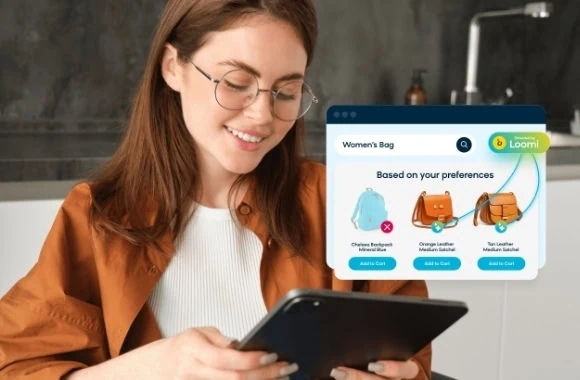
For example, an AI agent can recognize when a shopper is having trouble finding what they need and step in to help. It can suggest products, answer questions, and guide the next steps, all without constant prompts from a human.

AI agents can also work with other agents as a team. Essentially, different types of AI agents handle different tasks. One agent might understand the customer’s intent, another might pull the right data, and a third might deliver a personalized response. Together, multiple AI agents can create a smarter and more efficient system.
Traditional automation follows a fixed set of rules: if this happens, do that. An AI agent sets its own path to a goal. A traditional automation might send an email when a cart is abandoned. An AI agent decides whether to send the email, a push notification, or an on-site message (and which message) based on that specific customer’s real-time behavior.
How AI Agents Work
Understanding what an AI agent does is one thing. Understanding how it does it is what makes the concept click.
The Perception-Decision-Action Loop
At the core of every AI agent is a repeating cycle: perceive, decide, act, observe. The agent takes in input from its environment (a customer’s search query, a browsing behavior signal, a change in inventory), reasons about the best response, takes an action, and then observes what happened. Then it repeats. This is what separates an agent from a one-shot AI response, which generates output and stops. According to Microsoft, this continuous loop is what gives AI agents their ability to pursue goals across multiple steps and adjust course when circumstances change.
The LLM Core
The large language model is the reasoning engine inside most modern AI agents. It interprets instructions, understands context, and generates plans for what to do next. But an LLM alone doesn’t act. Agents wrap tools, memory, and data access around it so it can move from reasoning to doing. The LLM tells the agent what to do; the surrounding architecture makes it possible to actually do it.
Data and Context Layer
Agents don’t operate on training data alone. They pull live context: product catalogs, customer purchase history, real-time browsing behavior, inventory data. In ecommerce, this context layer is what makes an agent’s recommendation relevant to this shopper, right now, as a specific and timely answer rather than a generic suggestion. Google Cloud’s research on agentic commerce highlights this real-time data access as one of the defining capabilities that makes agents useful for retailers specifically.
Memory
AI agents use two kinds of memory. Short-term memory captures what happened in this session: the shopper said they want a sofa under $800 in gray. Long-term memory captures what the agent knows about this customer across sessions. They’ve bought from the outdoor furniture category before, and they tend to browse late at night. Together, these allow the agent to personalize without asking the same questions twice, and to get meaningfully better the longer someone is a customer.
Tool Access and Action
Agents connect to tools (APIs, databases, messaging systems, campaign platforms) to actually do things. One agent might query the product catalog. Another sends an email. Another updates a customer record. The agent decides which tool to use and when. This is what makes them genuinely autonomous. Rather than producing a recommendation for a human to act on, they take the action themselves.
At scale, this perception-decision-action loop runs across thousands of shoppers simultaneously, which is why agentic AI unlocks a different category of growth than any previous automation approach. You can see this loop working in practice for shoppers through AI-powered guided shopping.
Benefits of AI Agents
For ecommerce brands, AI agents deliver a genuine competitive advantage. These autonomous agents help businesses move faster, personalize experiences, and scale smarter. McKinsey research on the agentic commerce opportunity points to significant upside for brands deploying AI agents across the customer journey.
Speed and Efficiency
AI agents can take care of the repetitive tasks that slow you down. From updating product descriptions to syncing inventory or managing order flows, they work quickly and accurately so you don’t have to.
Real-Time Personalization
Your customers want to feel understood. AI agents use real-time data and past interactions to recommend the right products, adjust content on the page, and tailor each shopping experience based on browsing history, behavior, and preferences. This kind of agentic personalization leads to better engagement and more sales.
Smarter Decision-Making
AI agents analyze customer behavior, product performance, and trends to make decisions and tackle complex tasks. You just need to focus on the strategy and overarching goals. The autonomous AI agents will then dynamically decide how to achieve that goal.
Around-the-Clock Support
Customers expect support at any time. Unlike human agents, AI agents work around the clock, handling questions, recommending products, and guiding purchases. Whether it’s midnight or a long weekend, they’re ready to help shoppers move forward.
Scalable Growth
As your business grows, tasks multiply. AI agents can manage a higher workload without needing extra staff. They can run email campaigns, monitor website behavior, and respond to shoppers all at once, making it easier to grow without losing quality.
Lower Operational Costs
AI agents are a cost-effective way to run your business. By automating everything from customer support to product merchandising, you can reduce the time and money spent on manual work and avoid costly mistakes.
Better Customer Experience
Advanced AI agents learn from every interaction. Over time, they get better at understanding your shoppers and delivering what they need. This leads to smoother journeys, fewer drop-offs, and customers who keep coming back.
AI Agents in Ecommerce: Why It Matters Now
Shoppers make decisions in seconds. Catalogs have tens of thousands of SKUs. Marketing teams are stretched across channels, devices, and time zones. The problem isn’t that ecommerce brands lack data. Most have more of it than they can use. The problem is that no human team can act on all of it in real time. AI agents change that equation. As Google Cloud’s analysis of agentic commerce notes, the retailers who move quickly to deploy agents across the customer journey are building an advantage that compounds over time.
There are three specific places in ecommerce where AI in shopping makes an immediate, measurable difference.
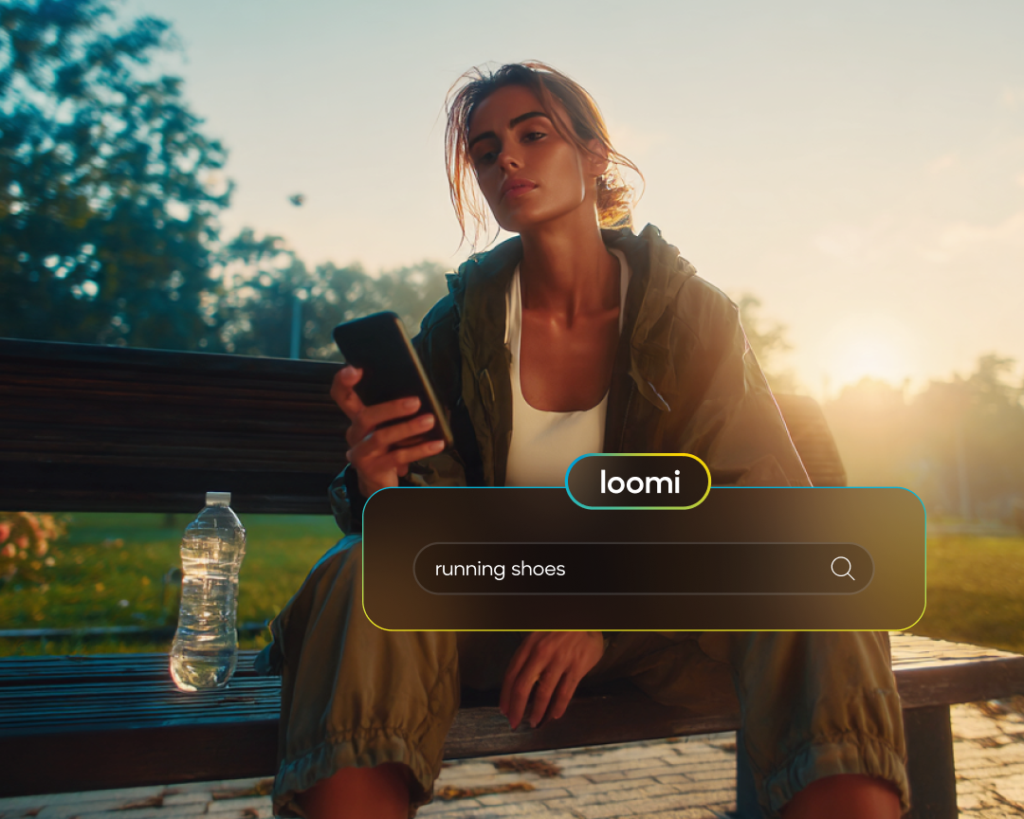
Discovery and guidance. A shopper who can’t find what they need leaves. An AI agent can intervene in that moment. Rather than triggering a rules-based pop-up, it opens a genuine, contextual conversation based on what that shopper has browsed and what the catalog contains. This is the difference between a site that reacts and one that guides. For brands dealing with high bounce rates on search and category pages, this is where agents create the most direct revenue impact. Loomi Conversational Agent is purpose-built for this kind of intervention. See it in practice with non-searching shopper engagement.
Marketing at scale. Ecommerce teams can’t manually build personalized campaigns for every segment. There are too many signals, too many permutations, and too little time. AI agents generate, test, and optimize campaigns autonomously, acting on signals that humans would miss or be too slow to use. A customer who browsed a product three times in two days is a different audience than someone who purchased once six months ago. Loomi Marketing Agent is built to recognize those distinctions and act on them without a marketer writing a rule for each one.
Cross-channel coordination. A customer abandons a cart, then visits the site again the next day. An AI agent can connect those signals, decide whether to send a reminder email or trigger an on-site message, and do so without anyone writing a rule for that specific sequence. The agent determines the best next action based on what it knows about that customer: their channel preferences, their purchase history, their current session behavior.McKinsey’s research on the agentic commerce opportunity makes clear this isn’t a future-state conversation. Brands deploying agents across these three areas are seeing results now, not in some theoretical next wave of technology.
The Future of AI Agents
AI agents are already transforming how we work and shop. But their full potential is just beginning to take shape. As machine learning and intelligent systems continue to evolve, autonomous agents will become more capable, more adaptable, and more aligned with human needs.
Today’s AI agents can already understand customer intent with significant accuracy. They’ll go beyond assisting with routine tasks and adjust strategies in real time, offer personalized guidance, and help businesses respond faster to changes in behavior or demand. Instead of needing to be directed, they will anticipate what needs to happen and take action on your behalf.
In ecommerce, this opens the door to powerful new use cases. AI agents could manage promotions automatically, suggest product bundles based on emerging trends, or take over complex workflows. They can help you deliver relevant experiences without constant oversight.
Outside of ecommerce, AI agents are beginning to shape other industries, too. In smart cities, they can help control traffic flow, manage energy use, and improve public services. In education, they’re used to adapt lessons to each student’s pace and learning style. In robotics, they’re helping machines make decisions and work safely alongside people.
What sets the next generation of AI agents apart is their ability to adapt and learn. They learn continuously, respond to their context, and make decisions that are not only fast but also thoughtful. These agents will feel less like tools and more like collaborators that understand your goals and help you reach them.
Bloomreach and AI Agents
Bloomreach uses AI agents to help ecommerce brands grow faster and work smarter.
These autonomous AI agents guide shoppers in real time and run personalized marketing campaigns across all your channels, so you can increase revenue and reduce costs without increasing your workload. Both are powered by Loomi AI, Bloomreach’s agentic commerce platform.
Here’s how two of our AI agents, Loomi Conversational Agent and Loomi Marketing Agent, drive results for ecommerce brands.
Conversational Shopping with Loomi Conversational Agent
Every online store has a checkout button, but not every store has a way to guide shoppers there with confidence.
That’s where AI agents make a difference.
Loomi Conversational Agent acts like your best sales associate: available 24/7, proactive, and always focused on helping shoppers find exactly what they need. It doesn’t wait for customers to get stuck before it engages. It recognizes the signals: a shopper hesitating between two products, someone who has viewed the same item three times without adding it to cart, a search query that’s too vague to return useful results. At those moments, Loomi Conversational Agent steps in.
It asks qualifying questions, narrows the catalog to what actually fits, and guides the purchase with the kind of confidence you’d expect from an experienced in-store associate. Think of the sofa example from earlier in this article: a shopper types something vague, and instead of returning 400 results, the agent asks a few targeted questions (style, size, color, budget) and surfaces the options that genuinely fit. That interaction is happening in real time, based on that shopper’s specific context, without any human on the other end.
Unlike other agents that are confined to a single chat window, Loomi Conversational Agent can engage shoppers across the experience: embedded in the search bar, surfaced on product pages, or triggered at the right moment when a shopper has been browsing for a while without converting. The result is fewer abandoned sessions and more purchases completed with confidence.
And because the agent learns from every interaction, the experience gets sharper over time. It builds an understanding of your catalog, your customers’ language, and the questions that tend to come up before a purchase, and uses all of that to get more useful with each conversation.
The results speak for themselves. TFG (The Foschini Group), the largest fashion, lifestyle, and specialty retail group in South Africa, deployed Loomi Conversational Agent on Bash, their ecommerce platform. During Black Friday, customers who interacted with the agent saw a 35.2% increase in conversion rates, 39.8% higher revenue per visit, and a 28.1% lower exit rate. These weren’t marginal improvements. They were statistically significant, measured against a clean A/B test.
Marine retailer Defender also adopted Loomi Conversational Agent to guide complex purchase decisions, where product fit genuinely matters and the wrong choice leads to returns and frustration. The result was a nearly 3% increase in add-to-cart rate and over 3% increase on mobile, from a catalog where the stakes of a wrong recommendation are high.
With Loomi Conversational Agent, you add strategy, scale, and meaningful conversations that drive results.

Autonomous Marketing with Loomi Marketing Agent
You didn’t get into ecommerce to spend your days juggling platforms, tweaking workflows, or rewriting email copy for the tenth time.
Loomi Marketing Agent is built to take that off your plate.
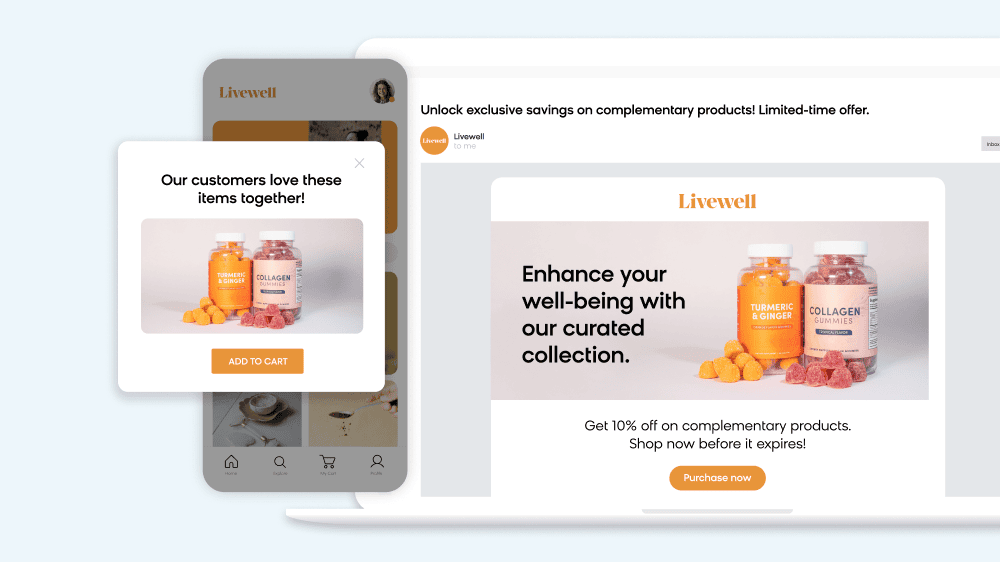
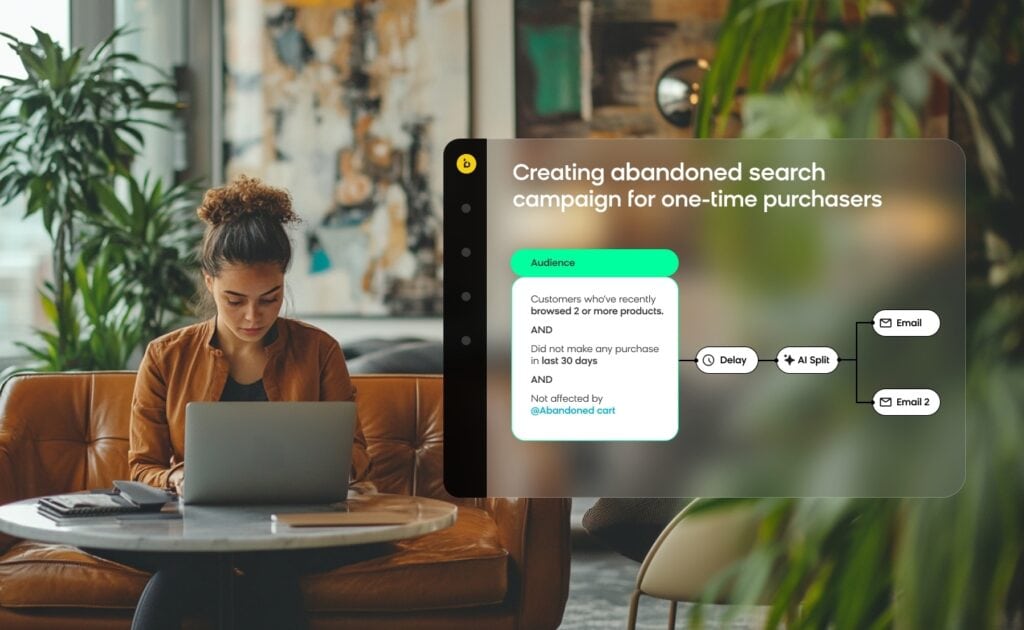
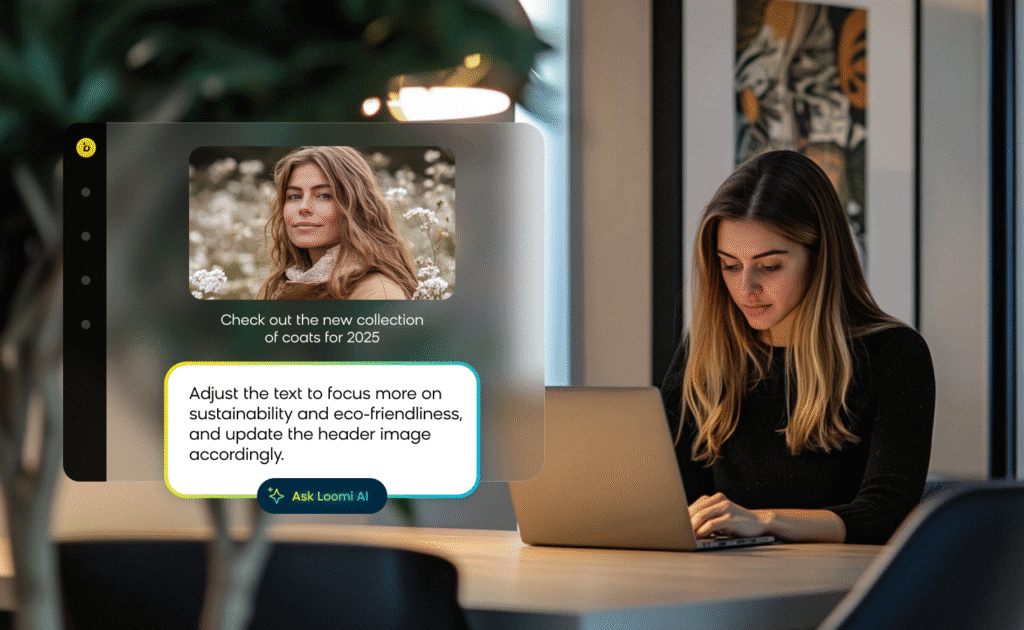
At the core of Bloomreach marketing automation is an AI agent that does the heavy lifting for you. Describe the goal (a win-back campaign, a post-purchase sequence, a flash sale push) and Loomi Marketing Agent builds the workflow, selects the channel mix, writes the content, and launches. It monitors performance in real time and adjusts without waiting for you to log in and make a call. It finds signals in customer data that marketers wouldn’t manually identify (a cohort drifting toward churn, a segment responding better to SMS than email) and acts on them at the moment they matter. This is marketing workflow automation operating at a speed no manual process can match.
In practice, a marketer describes a win-back goal. Loomi Marketing Agent selects the audience from live behavioral signals, writes content variants, launches across email and SMS, and adjusts send times based on open rates, without the marketer configuring each step. That sequence, which would take a marketing team hours to build manually, runs autonomously and improves as it goes.
You get to focus on creative direction, big-picture goals, and new ideas instead of building journeys from scratch.
The results Bloomreach customers have achieved reflect what happens when campaign execution is removed as a bottleneck. Revolution Beauty used Loomi Marketing Agent to automate campaigns across their customer base, achieving 5x more revenue per email compared to manually built campaigns. Benefit Cosmetics drove 40% more revenue from email using Bloomreach’s autonomous marketing capabilities. And boohooman achieved 25x ROI on SMS campaigns through Bloomreach marketing automation.For brands looking to grow customer acquisition with AI, the pattern is consistent: teams that let the agent handle execution outperform teams that don’t, not because the humans are less capable, but because no human team can operate at the speed and scale that agents can.
If your current system makes you feel like you’re constantly catching up, it’s time for one that’s already thinking ahead by using AI agents to complete tasks.
Get the Most Out of AI Agents With Bloomreach
AI agents are the future of ecommerce. They automate routine tasks, make decisions, and take action in real time. But building AI agents and multi-agent systems from scratch can be cost-intensive and slow. Bloomreach is built specifically for ecommerce personalization at scale, with purpose-built agents that are ready to deploy.
Our AI agent technology makes it easy for brands to drive impactful results and free up their teams to focus on crucial strategy. From personalized marketing and real-time conversations to guided shopping experiences, our AI agents help you drive growth without adding complexity.You spend less time managing tools and more time leading strategy, while the system keeps learning, optimizing, and delivering results.
Book a demo to see Loomi AI in action.
Frequently Asked Questions
What is an AI agent?
An AI agent is an autonomous software system that perceives its environment, makes decisions, and takes actions to achieve a specific goal, without needing constant human input. Unlike a traditional chatbot that waits for a question and returns a fixed answer, an AI agent reasons through problems, uses available tools and data, and determines its own path to a result. The key distinction is agency: the system acts on its environment rather than simply responding to it.
How do AI agents work?
AI agents operate on a perception-decision-action loop: they take in input (a customer query, a behavior signal, a data update), reason about the best response using an LLM as their core reasoning engine, then access tools or databases to act on that reasoning. According to Microsoft this continuous loop, combined with memory that persists across steps, is what allows agents to pursue multi-step goals and adjust course when something changes. Unlike a one-shot AI response, the agent keeps going until the goal is achieved.
What is the difference between an AI agent and a chatbot?
A chatbot responds to questions within a single session. It doesn’t initiate action, doesn’t retain context across sessions, and doesn’t connect to external systems to do things. An AI agent can do all three: it acts proactively, remembers context over time, and uses tools to take real actions like sending a message, updating a record, or launching a campaign. The distinction comes down to direction of flow. Chatbots wait; agents act.
What is agentic AI?
Agentic AI refers to AI systems that operate with a high degree of autonomy, setting goals, planning multi-step approaches, and executing without human direction at each step. Where traditional AI responds, agentic AI acts. MIT Sloan describes agentic AI as a meaningful shift from AI as a tool you direct to AI as a system that pursues outcomes on your behalf.
How can AI agents help ecommerce brands?
In ecommerce, AI agents help brands guide shoppers in real time, personalize marketing across channels, and automate complex workflows, all without manual oversight at each step. The result is faster decisions, more relevant experiences, and growth that doesn’t require proportional headcount increases. Bloomreach offers two purpose-built AI agents for ecommerce: Loomi Conversational Agent, which guides shoppers through discovery and purchase decisions, and Loomi Marketing Agent, which builds, launches, and optimizes campaigns autonomously.