
Cross-selling in modern ecommerce has become a complex affair — you need to deliver relevance, speed, and personalization across increasingly fragmented, multichannel customer journeys.
Modern cross-selling requires AI-driven intelligence that interprets customer intent in real time and delivers contextually relevant suggestions across every touchpoint. Legacy techniques that relied on static product bundling and generic recommendations now fall short when customers expect experiences tailored to their specific needs and behaviors.
That’s why 90% of marketers believe that personalization significantly boosts profitability, with most companies now using AI to support their personalization efforts. Advanced cross-sell strategies powered by AI and machine learning consistently outperform traditional approaches, with nearly 60% of businesses reporting increased retention and conversions from personalized experiences.
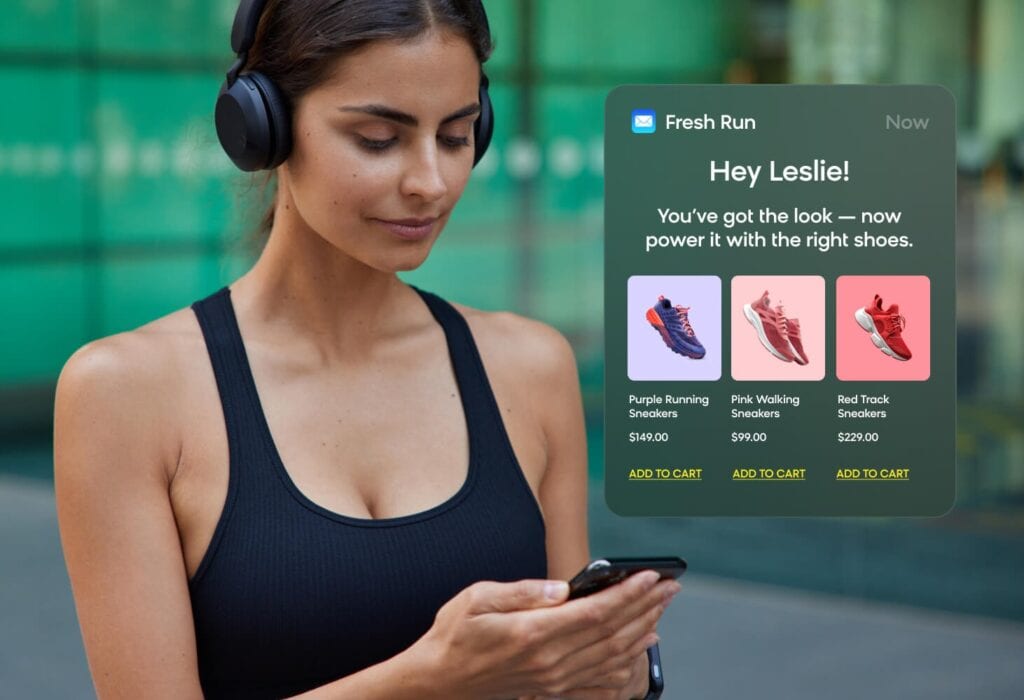
Learn how you can deploy unified data platforms to transform your cross-selling from a reactive sales tactic into a proactive customer experience enhancement strategy.
Why Many Cross-Sell Strategies Fall Short
Traditional cross-selling initiatives struggle because they operate on outdated assumptions about customer behavior and technological capabilities. These approaches rely on static product widgets, rigid business rules, and siloed data systems that can’t adapt to real-time customer signals.
With these traditional strategies, you might end up showing recommendations that fail to account for a customer’s readiness. Or, you may show irrelevant offers that don’t actually speak to a customer’s current context. Stale data and disconnected tools can further fragment the customer experience.
If you’re not able to seamlessly personalize across every touchpoint, you’re going to deliver a subpar experience that cross-selling strategies will only make worse.
Common Cross-Sell Pitfalls To Avoid
If you want your cross-selling strategy to be effective in today’s customer-centric environment, you’ll need to avoid several pitfalls that can hurt your brand:
- Irrelevant recommendations. Customers will immediately recognize random or disconnected suggestions, eroding their trust in your brand’s understanding of their needs and reducing the likelihood of future purchases.
- Static logic. You need a platform that can adapt based on real-time behavior. If your system can’t adjust to new information gathered during browsing, you’ll fail to capitalize on changing customer intent.
- Rigid segmentation. If you can’t adapt your customer segments, they’ll become obsolete as soon as a customer acts outside predetermined categories. Modern customers can’t be easily pigeonholed into marketing segments, but rather have nuanced preferences and behaviors.
- Disconnected tech stack. Customers are shopping on a wide range of platforms across every step of the journey. If your solutions aren’t communicating with one another and working in tandem, you’ll end up creating fragmented experiences. Customers will notice when email recommendations contradict website personalization or when previous interactions aren’t reflected in current suggestions.
- Over-personalization. You also want to be careful not to serve recommendations that feel so intrusive that they become creepy. Recommendations demonstrating too much knowledge about personal circumstances can trigger privacy concerns and damage relationships rather than building them.
The most successful approach focuses on micro-responsiveness that operates in real time rather than at a predetermined pace. Modern AI systems process customer actions in milliseconds, enabling recommendations that feel natural and timely rather than calculated or pushy.
The AI Cross-Sell Framework
Effective AI-powered cross-selling operates as a continuous optimization cycle rather than discrete campaigns. This framework ensures each customer interaction generates intelligence that improves future recommendations across all touchpoints, creating a self-reinforcing system that becomes more effective over time.
The framework consists of five interconnected stages that work together to create seamless, intelligent cross-selling experiences:
Stage 1: Connect Unified Data
Merge behavioral signals, transaction history, contextual information, and real-time session data into a single intelligence source. This eliminates data silos that hamper effective cross-sell experiences and provides the foundation for meaningful personalization.
Stage 2: Understand Intent
AI algorithms analyze customer actions to predict shopping goals and preferences instantly. This goes beyond tracking page views to interpret the underlying motivations driving behavior, enabling more accurate and relevant recommendations.
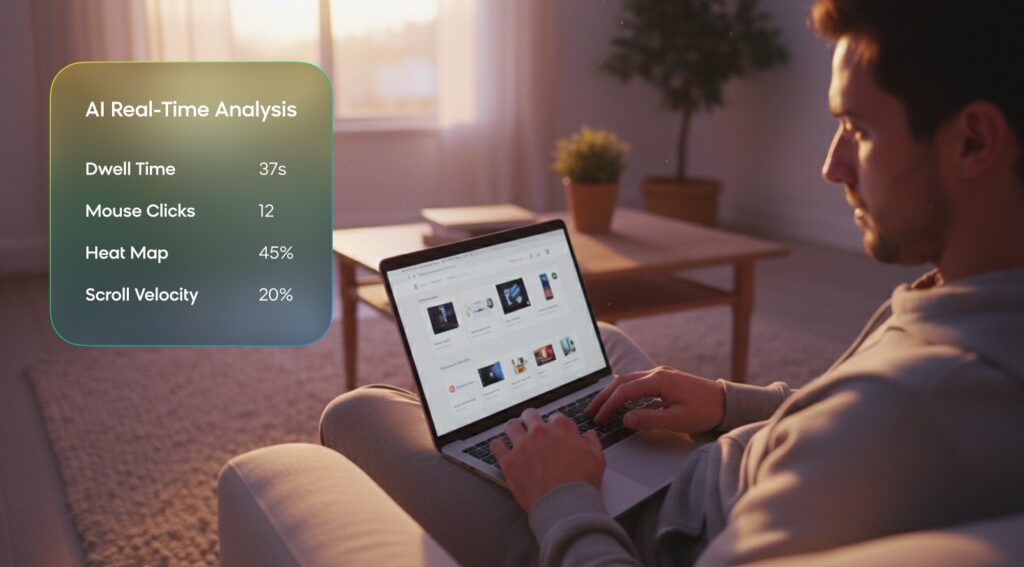
Stage 3: Predict Needs
Machine learning models evaluate customer lifecycle stage, inventory availability, content engagement, and contextual factors to identify optimal cross-sell opportunities before customers express interest, creating proactive rather than reactive experiences.
Stage 4: Deliver in Real Time
Personalized recommendations flow seamlessly across email campaigns, product pages, search results, chat interactions, and social ads, ensuring consistent, relevant messaging that follows customers throughout their journey.
Stage 5: Learn and Automate
The system continuously refines understanding through AI testing, reinforcement learning, and performance analysis, improving recommendation accuracy and customer satisfaction while reducing manual intervention requirements.
This framework transforms cross-selling from manual campaigns to an automated system operating at the speed of customer intent. Companies implementing comprehensive AI-powered cross-selling strategies report significant improvements in attachment rates, average order values, and customer lifetime value.
Measuring AI Cross-Sell Success: Essential KPIs
Modern cross-selling success requires metrics capturing both immediate sales impact and long-term customer relationship health. Here are some key metrics to keep track of to measure success:
- Attach rate measures the percentage of customers who add recommended items to orders. Advanced AI-powered recommendation systems consistently outperform static suggestions, with sophisticated personalization driving meaningful improvements in product attachment rates across diverse customer segments.
- Revenue per visitor (RPV) quantifies the total value generated from personalized customer journeys. This captures both direct cross-sell impact and broader effects of improved customer experience on purchasing behavior, providing a comprehensive view of personalization effectiveness.
- Conversion lift per personalized product page isolates the specific impact of dynamic recommendations on individual pages. Advanced measurement compares personalized experiences against control groups to demonstrate the incremental value from AI-driven cross-sell strategies.
- Customer lifetime value (CLV) growth reveals long-term cross-selling impact on customer relationships. Effective AI personalization programs drive substantial CLV improvements through enhanced customer satisfaction and increased purchase frequency over extended periods.
- Purchase frequency uplift measures how cross-selling affects customer buying patterns over time. Well-executed AI-powered cross-sell programs typically show strong improvements in customer purchase frequency within the first six months of implementation.
Companies implementing comprehensive AI-powered cross-selling strategies report substantial improvements compared to traditional approaches. These results compound as AI systems accumulate more customer data and behavioral insights, creating sustainable competitive advantages.
7 Effective AI-Driven Cross-Sell Strategies
1. Smart Timing via Autonomous Triggers
AI-powered systems determine optimal recommendation timing based on customer behavior patterns rather than predetermined schedules. The AI analyzes purchase history, browsing patterns, cart abandonment signals, and engagement metrics to identify moments when customers are most receptive to cross-sell suggestions.
For instance, a skincare brand can use autonomous triggers to offer complementary serums shortly after customers purchase cleansers to drive higher AOV.

2. Adaptable Product Discovery
Instead of adhering to strict demographic and behavioral segments, you can use AI to cluster customers dynamically based on real-time actions. This enables micro-personalization that adapts to individual journeys rather than broad category assumptions, creating more relevant and effective cross-sell opportunities.
For example, a furniture brand can replace static categories with AI-driven discovery that suggests complementary items based on current session activity. When customers browse dining tables, the AI analyzes similar user journeys to recommend complementary chairs, lighting, or decor that frequently appear in successful purchase combinations.
3. Guided Shopping With Conversational Cross-Sell
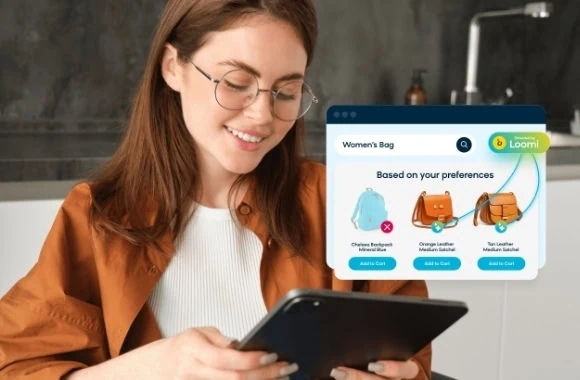
AI-powered conversational shopping assistants like Bloomreach Clarity integrate cross-selling naturally into customer interactions, offering relevant suggestions within the context of inquiries or support requests. This feels helpful rather than intrusive because recommendations address specific needs expressed during the conversation.
4. Lifecycle-Aware Post-Purchase Offers
AI analyzes purchase patterns to predict when customers will need complementary products or consumables, enabling proactive outreach that anticipates needs rather than reacting to expressed interest. This creates value for customers while optimizing revenue opportunities.
For example, an outdoor equipment brand can use predictive modeling to recommend hydration packs and trail snacks 2-3 weeks after hiking boot purchases, aligning with typical gear preparation timelines.
5. Intent-Driven Site Search Suggestions
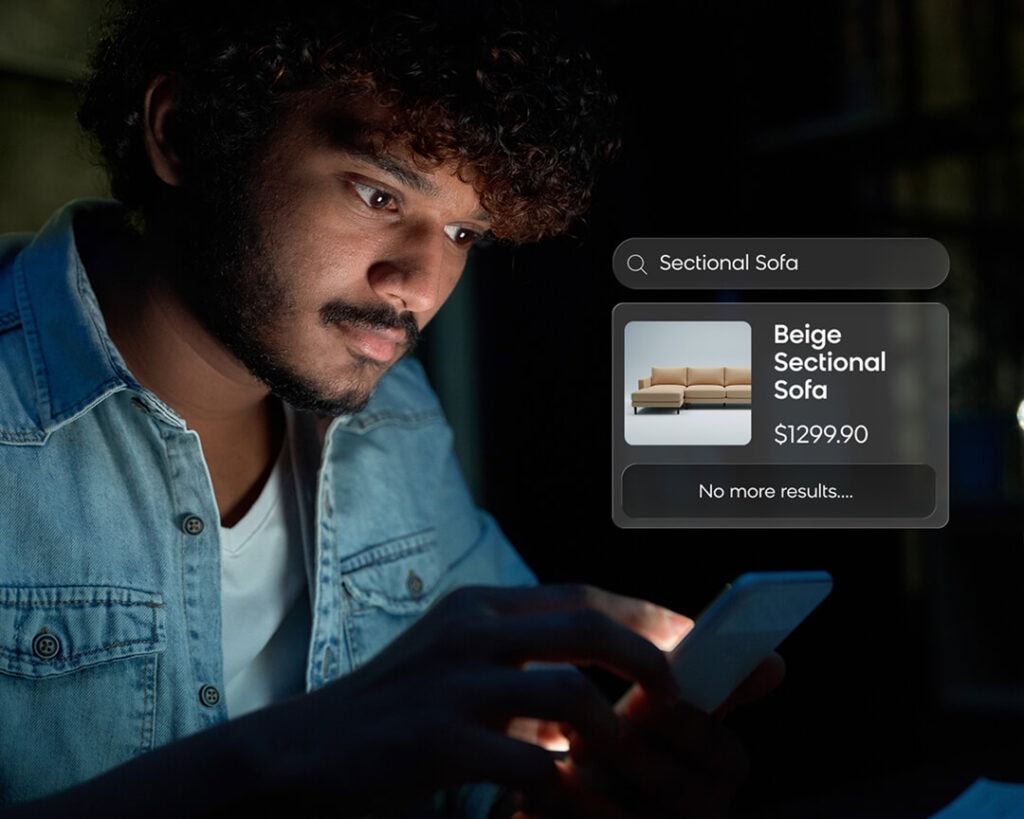
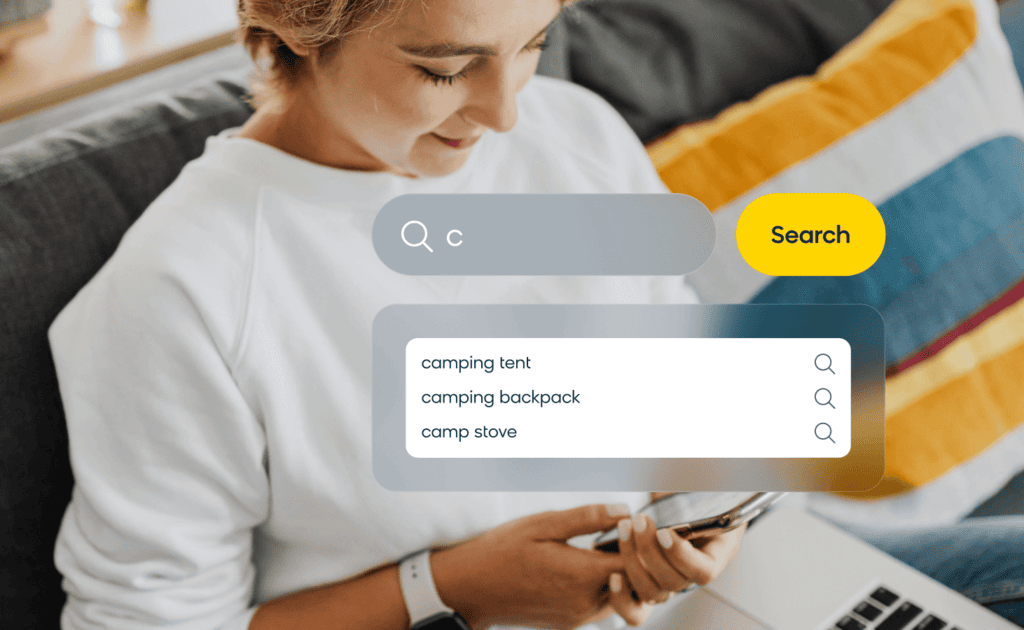
AI-enhanced search analyzes individual customer behavior to customize results and suggest relevant products. This goes far beyond keyword matching to understand the actual intent behind each query, creating opportunities for intelligent cross-selling within the search experience.
Sur La Table implemented AI-powered search to surface more accurate and relevant results and recommendations, leading to an 11.5% boost in category AOV and a 7.6% increase in search AOV.
6. Location-Based Cross-Sell Triggers
Geographic and environmental data inform recommendations that reflect local inventory, seasonal trends, or weather conditions. This contextual awareness makes suggestions feel timely and relevant to customer circumstances, improving both relevance and conversion rates.
For instance, a home goods retailer could integrate weather data to promote sun protection during heat waves and heating accessories before temperature drops.
7. Cross-Channel Journey Continuity
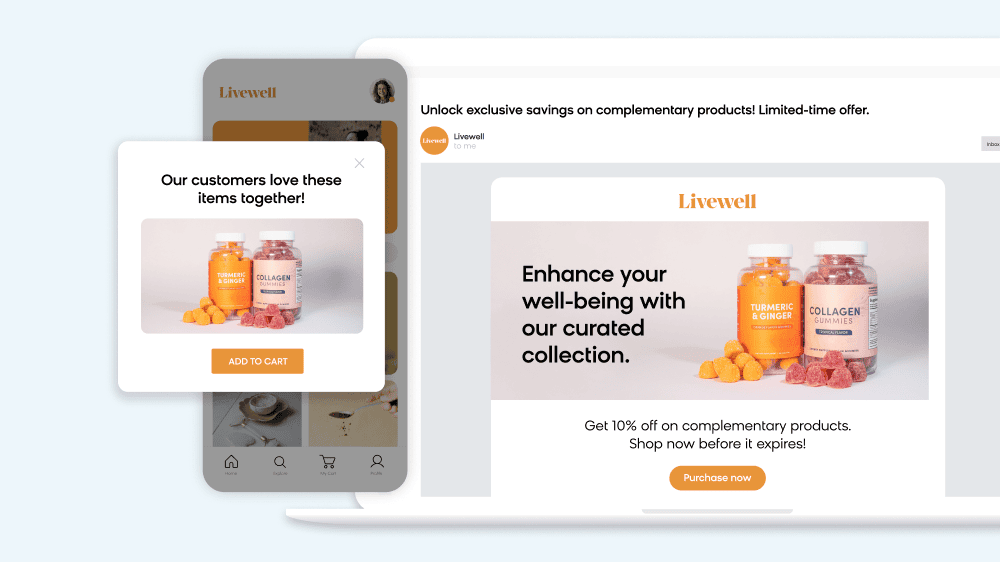
Personalization persists across email marketing, paid advertising, website interactions, and customer service, creating cohesive experiences that reinforce cross-sell messaging without repetition or contradiction. This unified approach strengthens the customer relationship while maximizing cross-sell opportunities.
Advanced systems track interactions across channels to deliver progressive product education. Customers who skip promotional emails encounter personalized display ads featuring products they browsed, maintaining engagement without seeming intrusive — all while providing consistent cross-sell messaging.
Embrace the Future of Cross-Selling
Cross-selling continues to evolve toward fully autonomous systems that understand customer needs better than customers understand themselves. With autonomous solutions, you’ll understand not only what customers bought, but also why they made those decisions. This deeper comprehension enables truly personalized recommendations that are actually helpful instead of obvious sales tactics.
If you want to be successful with modern customers, you’ll need to begin by embracing AI as a strategic advantage rather than a tactical tool. By turning to a solution like Bloomreach, you’ll get an all-in-one platform that is autonomous, intelligent, and customer-centric — the ideal combination for effective cross-selling strategies. Start transforming your cross-selling strategy today by scheduling a personalized demo.