
Intent-based marketing stands at a critical inflection point. Traditional approaches that collect breadcrumb trails and analyze customer behavior after sessions end are no longer effective. Today’s customers expect immediate, contextually relevant experiences that respond to their needs in real time — not hours or days later.
The shift from legacy tracking systems to AI-driven orchestration represents more than a technological upgrade. It’s a fundamental reimagining of how brands understand and respond to customer intent. While many marketing platforms still rely on batch processing and delayed insights, leading commerce organizations are moving toward systems that detect and activate on behavioral signals within milliseconds.
In a world where intent is increasingly dynamic and fleeting, you need a tech stack that can handle real-time intent-based marketing. Read on to find out how you can evolve your strategies to keep pace with modern expectations.
Rethinking Intent: Beyond Clicks and Batch Data
The traditional definition of intent — pieced together from clickstream data, form fills, and third-party signals — captures only a fraction of customer motivation. This retrospective approach treats intent as a static trail rather than the dynamic, evolving signal it actually represents.
Legacy platforms focus on post-session analysis, creating segments based on completed actions. Many providers rely heavily on third-party intent signals that introduce delays and privacy concerns. These approaches share a fundamental limitation: they react to intent after the moment of peak influence has passed.
Modern intent-based marketing recognizes a crucial truth: True customer motivation reveals itself through micro-behaviors within active sessions. Scroll velocity changes when customers find relevant products. Dwell time increases around purchase consideration. Mouse movement patterns shift during decision-making moments. These real-time behavioral cues provide more accurate intent signals than post-session analysis ever could.
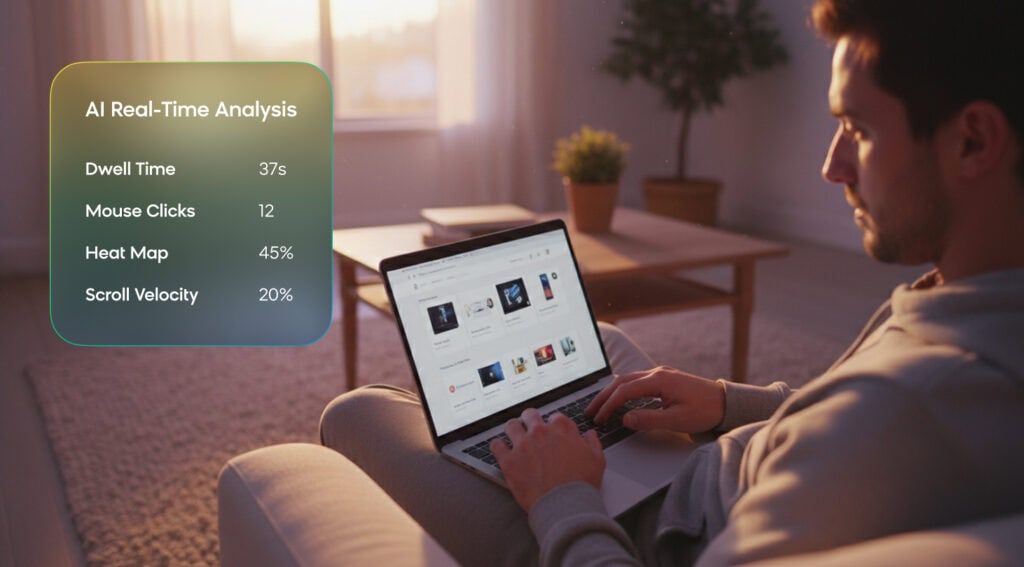
The most sophisticated AI platforms now process these micro-signals instantly, building dynamic customer profiles that update in real time. Rather than waiting for session completion to trigger personalization, these systems modify experiences as intent evolves, creating responsive journeys that adapt to changing customer needs within individual interactions.
The Intent Maturity Framework
Intent-based marketing operates across three distinct tiers, each requiring different technological approaches and offering varying levels of marketing impact.
Tier 1: Known Intent
This foundational level includes explicit customer data from CRM systems, transaction histories, and stated preferences. While valuable for broad personalization, known intent reflects past behavior rather than current motivation. Most marketing platforms excel at this level, using demographic and purchase history data to create relatively static customer segments.
Tier 2: Inferred Intent
Category browsing patterns suggest interest areas, engagement frequency indicates brand affinity, and cart abandonment timing reveals price sensitivity. These inferences provide deeper insights than known data alone, but still rely on assumptions rather than direct signals.
Tier 3: Real-Time Intent
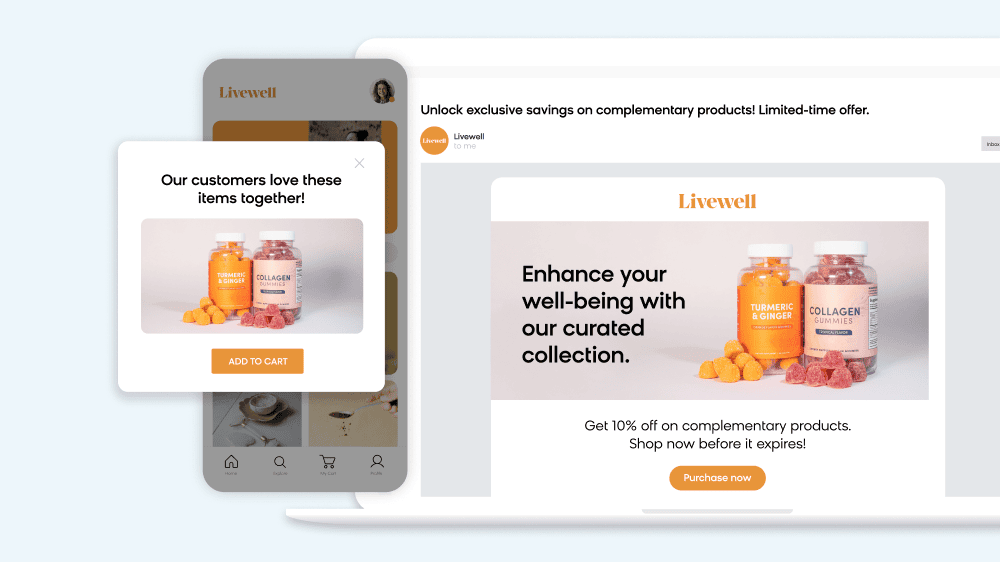
The highest tier captures and responds to live behavioral signals as they occur. Platforms operating at this tier activate personalization during active sessions rather than preparing for future ones. For example, when a customer’s browsing patterns show that they’re comparison shopping, complementary product recommendations appear immediately. This real-time responsiveness transforms passive websites into interactive, intelligent experiences.
Real-Time AI and Autonomous Orchestration
The gap between detecting intent and acting on it determines marketing effectiveness. Most platforms identify customer signals but require manual intervention to create responses. Marketers must build segments, design campaigns, and schedule deployments — a process that can take hours or days.
Autonomous orchestration eliminates these delays by embedding AI decision-making directly into customer experiences. Advanced systems analyze behavioral signals and trigger appropriate responses without human intervention. When a customer shows purchase hesitation, the AI might instantly display customer reviews, offer size guidance, or present limited-time incentives.

This orchestration spans all customer touchpoints simultaneously:
- Marketing channels: Email and SMS campaigns adapt content based on real-time browsing behavior. If a customer views premium products but doesn’t purchase, automated messaging highlights value propositions or offers flexible payment options.
- Product discovery: Search results and product recommendations update dynamically based on current session behavior. Category pages reorder based on demonstrated preferences within individual visits.
- Conversational shopping: Conversational shopping agents proactively surface relevant information. For example, you can have the agents offer size guides when customers linger on product dimensions or offer guiding questions for more complex purchases.
The most advanced AI platforms now accept natural language prompts for campaign creation, allowing marketers to describe desired outcomes rather than manually building complex automation rules. A prompt like “increase conversion for hesitant luxury shoppers” automatically generates appropriate triggers, content variations, and success metrics.
This shift toward autonomous orchestration reduces time-to-market for personalization campaigns while improving performance metrics across multiple channels, allowing marketers to focus on strategy rather than tactical execution.
Intent in Action: Measurable Revenue Outcomes
The revenue impact of real-time intent activation shows consistent patterns across successful deployments. Organizations that respond to intent within active sessions see immediate improvements in conversion metrics, with compounding benefits over time as AI systems learn from additional data.
Sur La Table implemented AI-powered search optimization and product recommendations, resulting in a 6.6% increase in add-to-cart rates and an 11.5% improvement in category average order value. The brand’s success came from implementing intent-aware models that could immediately deliver more relevant and accurate results.
Bensons for Beds achieved 41% year-over-year sales growth by implementing omnichannel personalization that responds to sleep-related browsing patterns. The furniture retailer discovered that customers researching sleep problems were highly receptive to educational content about mattress technology, leading to premium product purchases.
Hornby Hobbies saw 34% email revenue growth within four months, plus a 10% web conversion improvement by connecting online browsing behavior with targeted email content. The model train retailer can now serve intent-driven search results and then use those real-time insights to personalize its campaigns.
These results share common elements: immediate response to behavioral signals, personalization that adds genuine value, and integration across multiple customer touchpoints. The companies didn’t simply implement new technology — they redesigned customer experiences around real-time intent recognition.

Privacy-First Intent Recognition: AI With Trust at Its Core
Privacy regulations and consumer preferences increasingly limit traditional tracking methods like third-party cookies, forcing marketers to find new approaches for understanding customer intent.
AI-powered intent recognition actually benefits from these privacy constraints by focusing on first-party, consented behavioral signals rather than broad demographic targeting. When customers willingly browse product catalogs, their actions provide rich intent data without requiring invasive tracking methods.
Modern AI systems interpret behavioral patterns without storing personally identifiable information. Machine learning models recognize “customers who browse luxury items but purchase mid-range products” without knowing individual customer names or contact details. This approach maintains personalization effectiveness while respecting privacy boundaries.
Advanced search technologies exemplify privacy-friendly intent recognition:
- When customers upload photos to find similar products, AI analyzes image characteristics without storing personal photos
- When customers use natural language searches like “comfortable shoes for standing all day,” systems understand intent through language patterns rather than user profiling
The shift toward privacy-first personalization requires more sophisticated AI models, but delivers better customer experiences. Customers trust brands that demonstrate respect for privacy while still providing relevant, helpful interactions.
Building Signal-Aware Marketing Systems
Architecting effective intent-based marketing requires rethinking the entire customer data and activation stack. Traditional martech architectures separate data collection, analysis, and activation into distinct systems with manual handoffs between each stage. Signal-aware systems integrate these functions into unified, real-time processing pipelines.
The foundation involves capturing comprehensive behavioral signals beyond basic page views and clicks. Scroll velocity, cursor movement, time-on-element, and micro-interactions provide rich intent data that traditional analytics miss. Advanced tracking systems monitor these signals without impacting website performance or user experience.
Unified customer profiles aggregate signals from all touchpoints instantly rather than through batch processing. When a customer interacts via email, website, or mobile app, each signal updates their intent profile immediately. This real-time aggregation enables consistent personalization across all channels without delays or inconsistencies.

AI-powered activation eliminates manual campaign building for common intent scenarios. Instead of creating complex segmentation rules, marketers describe desired outcomes using natural language prompts. Agentic AI then translates these prompts into appropriate triggers, content selection, and optimization parameters automatically.
Dynamic audience segmentation represents the evolution beyond static customer segmentation. These adaptive audiences update continuously based on real-time behavioral signals. A segment for “customers considering premium upgrades” automatically includes customers showing relevant intent signals and removes them when behavior patterns change.
This integrated approach transforms marketing operations from manual campaign management to autonomous optimization, allowing teams to focus on creative strategy while AI handles tactical execution.
Turn Intent Into Revenue — Instantly
Intent-based marketing creates a virtuous cycle: better experiences lead to higher engagement, which generates more behavioral data, which enables even more precise personalization. Organizations that master this cycle build sustainable competitive advantages through customer relationships that strengthen over time.
With a platform like Bloomreach, powered by Loomi AI, you get AI-driven personalization that understands customer intent in real time, helping top brands around the world see immediate improvements in conversion rates, customer satisfaction, and revenue growth.
Stop reacting to customer signals hours or days after the fact. Schedule your personalized demo of Bloomreach to see how AI-native personalization responds to customer signals at the speed of intent.