Braze is a widely recognized name in customer engagement. But as brands evaluate their options, many discover that Braze competitors offer capabilities better suited to their specific needs, whether that’s deeper ecommerce integration, more accessible pricing, or AI-powered personalization that goes beyond messaging.
This guide breaks down the best Braze alternatives in 2026, helping you understand what each platform does well, who it’s best for, and how to evaluate which solution fits your business.
If you’re comparing Braze alternatives — or evaluating Braze vs. Bloomreach vs. Iterable vs. Klaviyo — this guide will help you understand where each platform is strongest.
Why Brands Look for Braze Alternatives
Braze has built a reputation for cross-channel messaging at scale. The platform handles email, SMS, push notifications, and in-app messaging with real-time data processing, making it a go-to choice for mobile-first brands and enterprises with dedicated marketing operations teams.
That said, certain factors lead brands to explore alternatives:
- Enterprise pricing structure. Braze typically starts at $30,000 or more per year, with costs scaling based on monthly active users and message volume. For mid-market brands or those with tighter budgets, this creates a significant barrier.
- Mobile-heavy architecture. While Braze performs well for push notifications and in-app messaging, brands seeking stronger web personalization, on-site recommendations, or ecommerce-specific features may often find gaps.
- Implementation complexity. Braze’s flexibility may come with a steeper learning curve. Teams without dedicated technical resources may struggle to fully utilize the platform’s capabilities.
- Missing commerce features. Braze focuses on messaging and doesn’t include native loyalty programs, product recommendations, or site search. Brands wanting these capabilities may need additional tools, adding complexity and cost.
Braze is especially strong when brands rely on in-app and mobile SDK events for targeting. However, many teams also depend on data coming from a warehouse such as Snowflake, and that data is often synced in batches rather than truly in real time. For use cases that depend on‑the‑moment behavior, that lag can be a constraint.
Many Braze customers also pair it with a separate CDP, product analytics, and additional personalization tools to get the level of data flexibility and insight they need. That can introduce extra contracts, integrations, and internal overhead over time.
How To Evaluate Braze Alternatives
Before comparing platforms, define what matters most for your business. These criteria will help you structure your evaluation:
Omnichannel Capabilities
Does the platform support all the channels you need today and plan to use in the future? Look beyond email and SMS to web personalization, mobile apps, and ads. A true omnichannel customer engagement strategy requires channels that work together, not in silos.
AI and Personalization
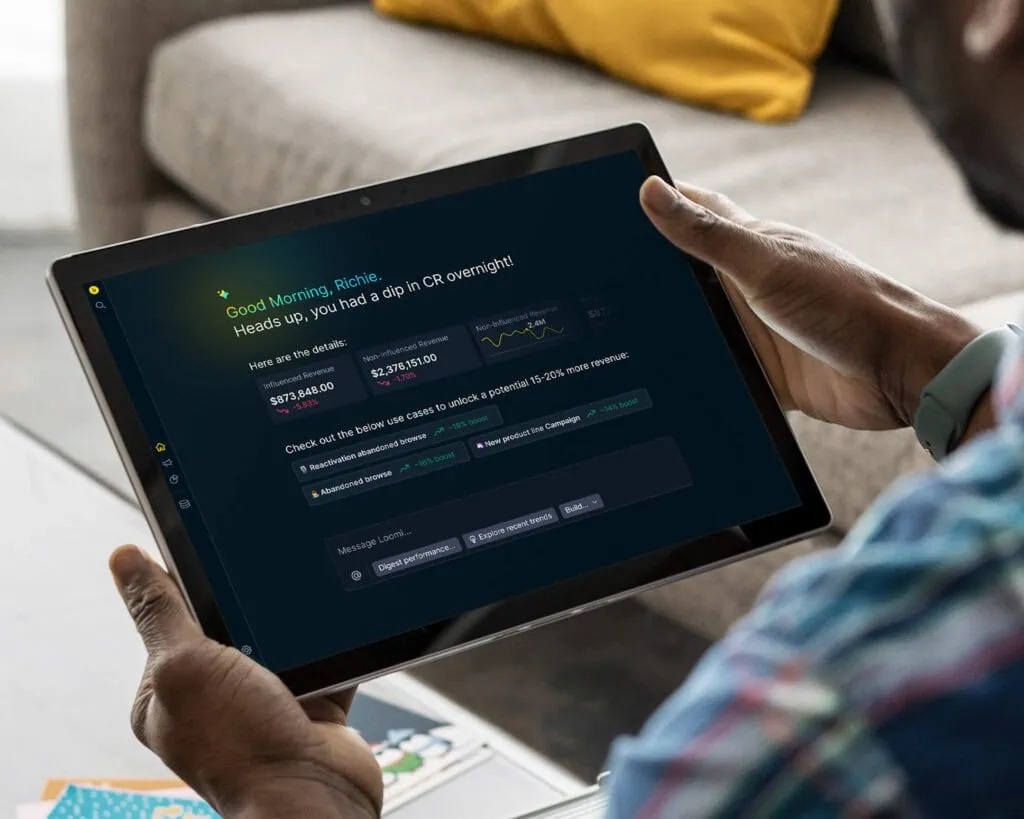
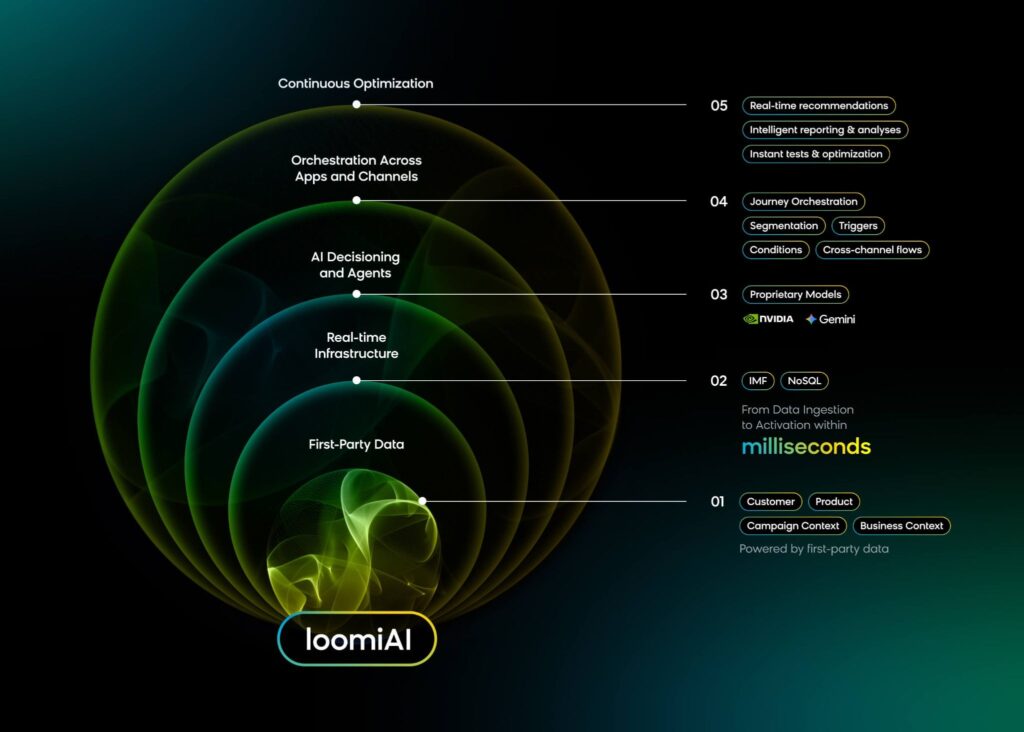
How does the platform use AI? Some offer basic segmentation and send-time optimization. Others provide real-time personalization, predictive analytics, and autonomous marketing. The most advanced platforms combine three ingredients: rich first‑party data, real‑time infrastructure, and AI that understands each customer in context.
Data Unification
Can the platform serve as your customer data foundation, or will you need a separate CDP? Unified data reduces integration headaches and enables more sophisticated targeting. Rather than focusing on labels like “CDP,” look for whether the platform can actually unify customer and product data, keep it fresh in real time, and make it easy for marketers — not just engineers — to activate that data across channels.
Ecommerce Focus
If you’re in retail or ecommerce, evaluate whether the platform was built for commerce or adapted for it. Native product catalogs, purchase behavior tracking, and merchandising integrations matter.
Time to Value
How quickly can you launch and see results? Some platforms require months of implementation, while others deliver value within weeks.
Total Cost of Ownership
Beyond licensing fees, consider implementation costs, required integrations, and ongoing technical resources. A cheaper platform that requires extensive development may cost more in the long run.
The Best Braze Competitors in 2026
1. Bloomreach — Best for Ecommerce Brands Seeking Unified Personalization
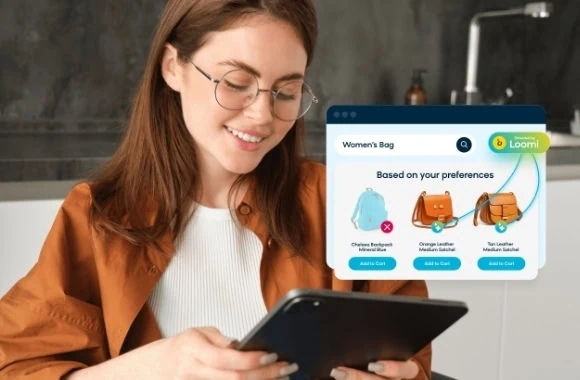
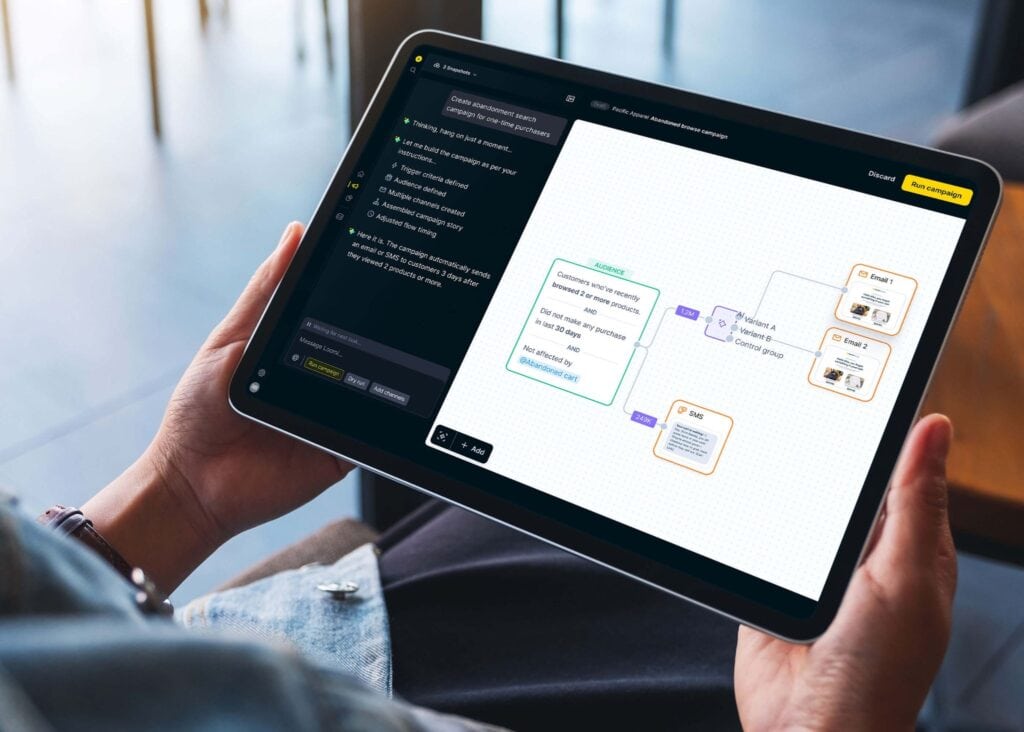
Bloomreach is a personalization platform powered by Loomi AI, an agentic platform that understands every customer in context, then tailors their experience in real time. Rather than focusing only on messages, Loomi AI personalizes the entire customer journey — across email (ESP), SMS, web, mobile apps, ads, search (product discovery), conversational shopping, and even LLM‑powered experiences — all in a single platform.
What makes it different:
Loomi AI brings together first‑party data, real‑time infrastructure, and AI models in a single platform. That intelligence then powers apps and agents for marketing automation, ecommerce search, merchandising, and conversational shopping — so every channel is driven by the same “brain.”
Key capabilities:
- Unified data and activation — no separate CDP required for advanced segmentation and analytics
- Orchestration across email, SMS, web push, mobile app, and ad platforms
- True real‑time activation across channels, not just ingestion of app events
- AI-powered product recommendations
- Over 100 native integrations, including ecommerce platforms (Shopify, Magento, Bigcommerce) and data management (Databricks, Snowflake)
- Native customer data engine
- Prebuilt use cases to launch campaigns quickly
- Agentic AI capabilities, including autonomous marketing and conversational shopping
Results brands have achieved:
River Island saw a 30.9% increase in revenue per email and 26% higher open rates after implementing Bloomreach’s marketing automation. BrewDog achieved 13.8% more revenue from personalized email campaigns. And a Forrester Total Economic Impact study found that Bloomreach customers experienced 251% ROI over three years, with ROI payback within six months.*
Best for: Mid-market to enterprise brands that want a unified platform for personalization across channels, or brands that want to start with one capability (like marketing automation) and expand over time.
*The Forrester Total Economic Impact study was commissioned by Bloomreach and independently conducted by Forrester Consulting. Actual results may vary.
2. Iterable — Best for Enterprise Cross-Channel Orchestration
Iterable is a cross-channel marketing platform that competes directly with Braze for enterprise customers. It offers flexible data integration, visual workflow building, and campaign orchestration across email, SMS, push, and in-app messaging.
Key capabilities:
- Visual journey builder for complex workflows
- Flexible data model with strong API support
- A/B and multivariate testing
- Real-time segmentation
Best for: Large enterprises with dedicated marketing operations teams that need Braze-like capabilities with reportedly easier implementation and strong customer support.
3. Klaviyo — Best for SMB Ecommerce Email and SMS
Klaviyo has become the default choice for small to mid-sized ecommerce brands, particularly those on Shopify. The platform makes email and SMS marketing accessible with prebuilt flows, strong segmentation based on purchase behavior, and straightforward pricing.
Key capabilities:
- Native Shopify, Magento, and WooCommerce integrations
- Prebuilt automation flows (welcome series, abandoned cart, post-purchase)
- Predictive analytics for customer lifetime value
- SMS marketing integrated with email
Best for: Ecommerce brands under $50M in revenue that primarily need email and SMS automation with easy ecommerce platform integration.
4. Customer.io — Best for Developer-Friendly Automation
Customer.io appeals to technical teams that want flexibility in building behavioral messaging workflows. The platform supports email, SMS, and push notifications with a data model that adapts to your specific tracking needs.
Key capabilities:
- Event-based messaging triggers
- Flexible data schema
- Visual workflow builder
- Strong API for custom integrations
Best for: SaaS companies and tech-forward teams with engineering resources that want to build custom messaging logic without enterprise complexity or pricing.
5. MoEngage — Best for Mobile-First Engagement
MoEngage positions itself as an insights-led customer engagement platform with particular strength in mobile apps. The platform offers push notifications, in-app messaging, email, and SMS with built-in AI for send-time optimization and predictive segmentation.
Key capabilities:
- AI-powered segmentation and optimization
- Strong mobile app engagement tools
- Omnichannel messaging
- Customer journey orchestration
Best for: App-centric businesses that need sophisticated mobile engagement with analytics to understand user behavior and retention.
6. CleverTap — Best for High-Volume Mobile Analytics
CleverTap combines mobile engagement with deep analytics capabilities. The platform’s TesseractDB captures extensive user event data, enabling granular segmentation and behavioral analysis.
Key capabilities:
- Real-time user behavior analytics
- High-volume event tracking (up to 10,000 data points per user)
- Omnichannel messaging (push, email, SMS, WhatsApp)
- Predictive churn modeling
Best for: Mobile apps and digital businesses with high user volumes that need both engagement tools and product analytics in one platform.
7. Insider — Best for AI-Powered Personalization at Scale
Insider focuses on AI-driven personalization across web, mobile, and messaging channels. The platform uses machine learning to predict customer behavior and automatically optimize experiences.
Key capabilities:
- AI-powered product recommendations
- Cross-channel journey orchestration
- Predictive segmentation
- Web and app personalization
Best for: Large B2C enterprises prioritizing AI-driven personalization, particularly in retail, travel, and financial services.
8. OneSignal — Best for Simplifying Push Notifications
OneSignal started as a push notification specialist and has expanded to include email, SMS, and in-app messaging. The platform offers a generous free tier and simple implementation.
Key capabilities:
- Web and mobile push notifications
- Basic email and SMS capabilities
- Segmentation and A/B testing
- Easy SDK integration
Best for: Developers and startups that need reliable push notifications without enterprise complexity or cost.
Quick Comparison Table
| Platform | Best For | Key Strength | Starting Price |
|---|---|---|---|
| Bloomreach | Ecommerce brands | Unified AI platform (marketing automation + product discovery) | Custom |
| Iterable | Enterprise marketing teams | Cross-channel orchestration | Custom |
| Klaviyo | SMB ecommerce | Shopify integration, ease of use | Free tier |
| Customer.io | SaaS and tech teams | Developer flexibility | $100/mo |
| MoEngage | Mobile-first businesses | Insights-led engagement | Custom |
| CleverTap | High-volume mobile apps | Analytics depth | $75/mo |
| Insider | Enterprise B2C | AI personalization | Custom |
| OneSignal | Push-focused use cases | Simplicity, free tier | Free tier |
Why Bloomreach Is a Top Choice for Customer Engagement
For ecommerce and retail brands, Bloomreach offers something most Braze alternatives don’t: a unified platform where marketing automation and product discovery work seamlessly together.
It is particularly attractive for teams that want deep web and ecommerce personalization without relying on a separate CDP, analytics stack, and multiple point solutions.
The Power of Connected Data
When your email campaigns, site search, and product recommendations run on the same AI platform, each touchpoint makes the others smarter. A customer’s search behavior informs their email content, while their email clicks improve product recommendations. This compounding effect is difficult to achieve with disconnected tools.

Modular Flexibility
Unlike platforms that require all-or-nothing adoption, Bloomreach lets brands start where they need the most help. Many customers begin with marketing automation and expand to search and merchandising over time. This modular approach reduces implementation risk while preserving the option to grow.
Built for Commerce
Bloomreach was built for ecommerce from the ground up. Native product catalogs, purchase behavior tracking, and merchandising tools come standard, not as afterthoughts or integrations.
Proven Results
The Forrester Total Economic Impact study found that Bloomreach customers achieved:
- 251% ROI over three years
- ROI payback within six months
- 27% increase in conversion rates
- 35% improvement in email open rates
- 2x more campaigns without additional IT resources
Brands like Arriva UK Bus have seen 380% increases in CRM revenue, while Oliver Bonas achieved 762% revenue growth through email marketing.
See How Bloomreach Drives Results
Whether you’re evaluating Braze alternatives or building your customer engagement strategy from scratch, Bloomreach helps ecommerce brands deliver personalized experiences that increase revenue and retention.
Book a demo to see Loomi AI in action and learn how brands like River Island and BrewDog achieved double-digit revenue growth.
Frequently Asked Questions
Who are Braze’s main competitors?
The main Braze competitors include Bloomreach, Iterable, Klaviyo, MoEngage, CleverTap, Insider, Customer.io, and Salesforce Marketing Cloud. Each serves different market segments — Bloomreach and Insider focus on enterprise personalization, Klaviyo is good for SMB ecommerce, and Customer.io appeals to developer-centric teams. Many buyers specifically compare Braze vs. Bloomreach when they need deeper ecommerce personalization, or Braze vs. Iterable and Klaviyo when they are focused on cross‑channel orchestration or SMB ecommerce.
How do Braze’s AI features compare to other platforms?
Braze has invested heavily in AI for campaign optimization and experimentation, particularly around choosing the best message or send time. Its Sage AI features and Braze Data Platform branding focus primarily on improving campaigns inside its engagement stack. Many alternatives, however, apply AI more broadly — not just to messaging, but to on‑site recommendations, search results, dynamic offers, and autonomous journey orchestration across channels.
Is Braze better than Klaviyo?
Braze and Klaviyo serve different markets. Braze offers more sophisticated cross-channel orchestration and scales better for enterprise use cases with mobile apps. Klaviyo is easier to implement, more affordable, and deeply integrated with ecommerce platforms like Shopify. For SMB ecommerce, Klaviyo often makes more sense. For enterprise mobile-first brands, Braze may be the stronger choice.
What is the best customer engagement platform?
The best platform depends on your specific needs. For ecommerce brands wanting unified personalization across every touchpoint, Bloomreach offers the most comprehensive solution. For mobile-first enterprises, Braze and CleverTap excel. For SMB ecommerce focused on email and SMS, Klaviyo provides the fastest path to value.
Is Braze a competitor to Salesforce?
Yes, Braze competes with Salesforce Marketing Cloud in the customer engagement space. However, they serve somewhat different use cases. Braze specializes in real-time, mobile-first engagement, while Salesforce Marketing Cloud offers a broader marketing suite with deep CRM integration. Many enterprises evaluate both when building their marketing technology stack.
All trademarks, service marks, and company names referenced in this article are the property of their respective owners. Pricing and feature information are based on publicly available data as of February 2026 and are subject to change. Bloomreach does not guarantee the accuracy of third-party pricing or feature details.