
Traditional retention marketing operates reactively — drip campaigns, generic loyalty programs, and fragmented customer insights that create fundamental gaps. Legacy platforms delay response times, create channel silos, and miss live customer intent when it matters most.
The market demands better. With global ecommerce projected to reach $8 trillion by 2026, customer loyalty forms moment to moment through real-time interactions. Today’s consumers expect brands to understand their needs instantly and respond with relevant, personalized experiences across every touchpoint.
Discover how Bloomreach Engagement enables marketers to orchestrate dynamic, data-rich customer journeys that adapt to each user, from first intent signal through long-term brand advocacy.
What Retention Marketing Really Means in 2025
Retention marketing has evolved from static campaign execution to adaptive customer journey orchestration. The outdated approach of calendared campaigns, batch processing, and reactive churn outreach no longer meets modern customer expectations or business requirements.
For retention marketing to succeed today, it needs to operate as a continuous, AI-powered journey where each touchpoint learns and evolves based on real-time data. Instead of waiting for customers to churn, brands have to anticipate needs and intervene proactively to strengthen relationships.
Modern retention marketing works across three levels:
- Transactional retention drives loyalty through perks, offers, and direct response
- Emotional retention creates identity-driven experiences that build deeper brand connections
- Predictive retention uses AI modeling for proactive intervention before departure signals appear
Brands implementing AI-driven retention strategies consistently see higher customer lifetime value compared to traditional batch-and-blast methods.
The Economic Case for Retention Marketing
Customer acquisition costs are significantly higher than retention costs — it can be anywhere from 5-25x more expensive to acquire a new customer than to retain existing ones. This cost differential continues widening as digital advertising becomes more competitive and expensive.
Strategic retention marketing delivers measurable returns through AI-driven personalization and behavioral targeting. Companies investing in sophisticated retention strategies consistently outperform those relying on generic mass marketing approaches.
Bloomreach Engagement addresses this gap by using Loomi AI to create customer-first experiences, which in turn boosts average order value and reduces attribution gaps at scale. The platform processes behavioral signals in real time, enabling brands to respond to customer intent within milliseconds rather than hours or days.
From Rule-Based Campaigns to Intent-Driven Journeys
Traditional marketing automation relies on fixed decision trees and rigid “if/then” logic that can’t adapt to nuanced customer behavior patterns or changing market conditions. This creates significant limitations for modern retention strategies that require flexibility and responsiveness.
Next-generation orchestration takes a fundamentally different approach:
Real-time interpretation: Loomi AI analyzes in-session customer behavior from the first search query or product view, building intent profiles that inform immediate and future interactions.
Dynamic optimization: Channels, content, timing, and messaging adjust based on live customer data, eliminating lag time between customer actions and brand responses.
Evolutionary learning: Journey paths evolve continuously as customers browse, purchase, and engage, creating increasingly personalized experiences over time.
Unified orchestration: Bloomreach’s integrated approach combines product discovery, marketing, and analytics across the entire customer funnel, ensuring consistent experiences regardless of entry point or channel.
The competitive advantage becomes clear: While legacy platforms require manual updates and struggle with complex customer scenarios, autonomous systems learn and optimize continuously without human intervention.
The Four Pillars of Autonomous Retention Marketing
Real-Time Awareness
Mobile commerce drives approximately 65-70% of ecommerce sales, creating a reality where micro-behaviors must trigger micro-actions to capture customer intent. Traditional systems that process data in batches miss critical conversion moments and fail to capitalize on immediate purchase signals.
Real-time awareness instantly parses scroll depth, dwell time, click paths, and product interaction patterns. Loomi AI processes these signals to enable adaptive responses that feel natural and timely to customers.
When a customer spends significant time viewing a specific product category but doesn’t purchase, the AI immediately triggers relevant content, offers, or recommendations rather than waiting for a scheduled campaign to deploy hours or days later.
Contextual Relevance
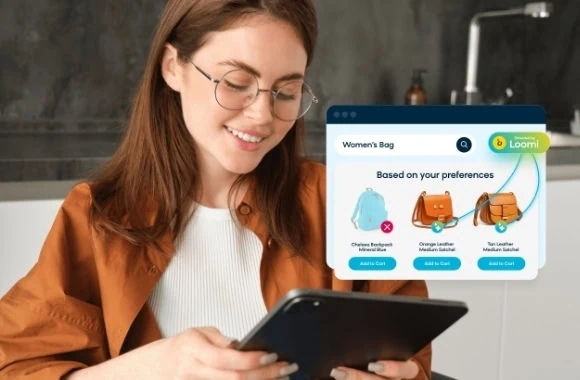
Static personalization that relies solely on demographic data or purchase history falls short of modern customer expectations. True relevance requires understanding circumstance, timing, and situational context alongside individual preferences.
Effective contextual relevance incorporates:
- Interest-based product bundles that reflect browsing patterns and seasonal relevance
- Adaptive loyalty tiers that respond to engagement frequency and purchase behavior
- Geo-timed offers that consider location, weather, and local events
- Lifecycle-appropriate messaging that matches where customers are in their journey
Loomi AI automates decisioning around message format, channel selection, and cadence for each individual customer’s context. This eliminates the need for marketers to manually create hundreds of campaign variations while ensuring each customer receives maximally relevant communications.

Journey Autonomy
The traditional approach requires marketers to anticipate every possible customer path and create corresponding campaigns. This manual process creates gaps in coverage and fails to account for the non-linear nature of modern customer journeys.
Journey autonomy shifts the dynamic: Marketers set strategic objectives (“engage lapsed VIP customers post-purchase”), while AI designs and executes the tactical implementation, autonomously testing message cadences, selecting optimal channels, and optimizing copy for different audience segments.
This transforms the marketer’s role from campaign operator to experience architect. Instead of building individual campaigns, marketers focus on designing the parameters within which AI can optimize for business outcomes.
Unified Customer Experience
Fragmented marketing tools create inconsistent customer experiences as different systems operate with incomplete data and conflicting logic. Customers receive mixed messages across channels, leading to confusion and decreased brand trust.
Bloomreach’s unified approach integrates marketing, product discovery, and conversational shopping into a single cohesive stack. This architecture ensures that from first click to repeat purchase, customers experience consistent, intelligent brand interactions.
5 Modern Retention Campaigns Worth Copying
Successful retention marketing requires moving beyond generic campaigns to sophisticated, AI-driven strategies that respond to individual customer behavior and intent. These proven campaign types demonstrate how modern brands are leveraging technology to create meaningful customer relationships.
Predictive Lifecycle Nurtures
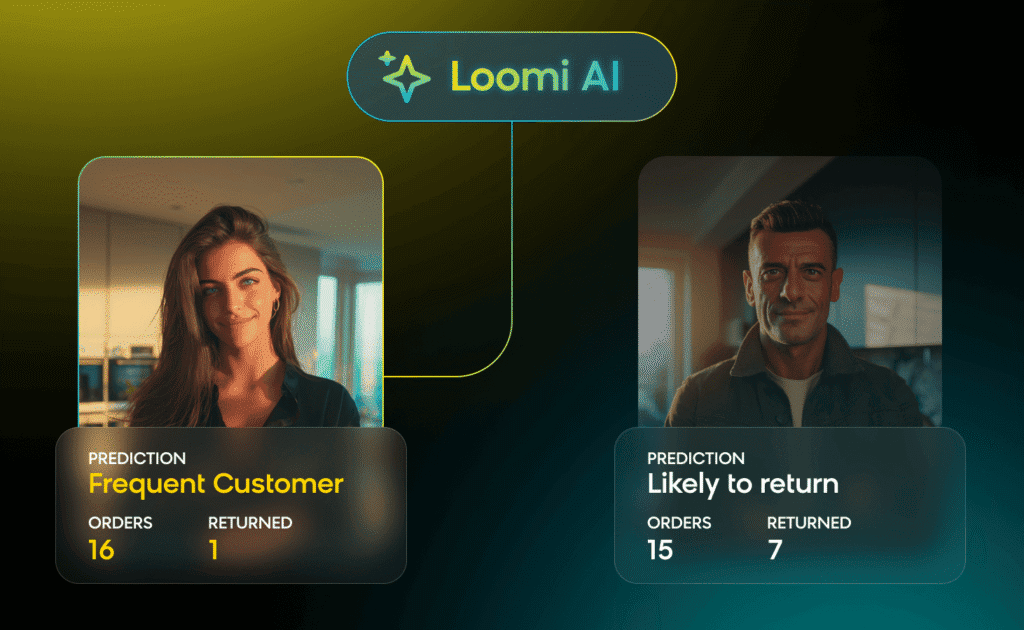
Traditional lifecycle marketing segments customers into broad categories like “new,” “active,” and “at-risk.” Predictive lifecycle nurtures use AI to assess individual churn risk by analyzing behavior patterns, engagement frequency, and purchase timing. Loomi AI identifies customers likely to churn weeks before they show obvious departure signals, enabling proactive intervention.
Abandoned Search Recovery
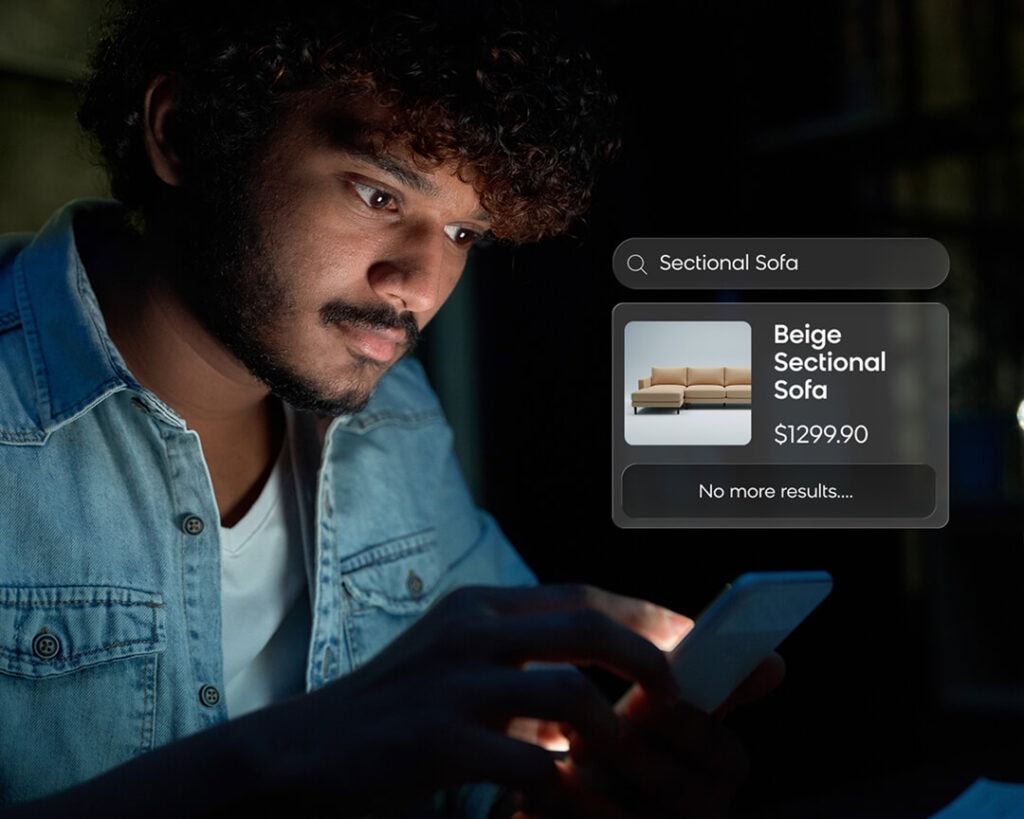
Most brands focus on cart abandonment, but search abandonment also represents a potential missed opportunity. Customers who search for specific products demonstrate clear intent even without adding items to cart. AI-powered abandoned search recovery retargets based on search queries, product views, and category interest to bridge intent gaps before customers leave the site.
Loyalty 2.0
Static loyalty tiers based solely on spending miss opportunities for deeper engagement. Modern loyalty programs use AI to personalize perks and rewards based on individual behavior patterns, preferences, and engagement history. This might mean offering exclusive content to engagement-focused customers while providing early access to sales for price-sensitive shoppers.

Cross-Sell Intelligence
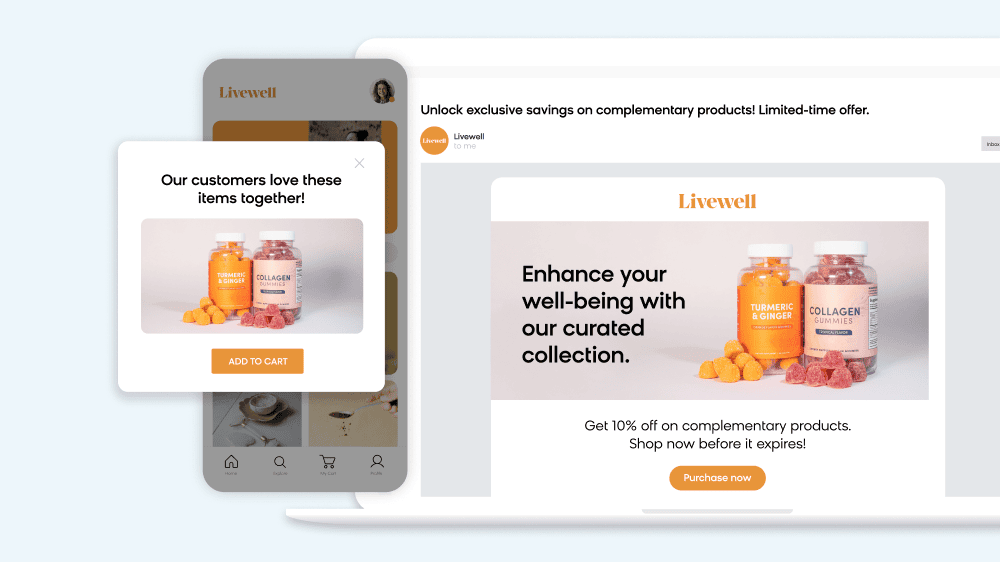
Traditional cross-selling relies on basic “customers who bought X also bought Y” logic. Advanced cross-sell intelligence analyzes purchase cadence, product affinity, seasonal patterns, and individual preferences to suggest relevant bundles at optimal timing. The AI learns which customers respond to complementary products versus upgrades and adjusts recommendations accordingly.
Conversational Win-Backs
Customers who engage with chatbots or abandon conversations mid-stream demonstrate high intent but face specific barriers to purchase. Conversational win-back campaigns use context from chat interactions to deliver targeted follow-up through email, push notifications, or retargeting ads that directly address the customer’s stated concerns or questions.
How Top Brands Drive Big Results
Real-world results demonstrate the power of AI-driven retention marketing across different industry verticals and customer segments. These case studies show how autonomous retention strategies translate into measurable business outcomes.
PrettyLittleThing achieved a 133% lift in mobile push revenue by implementing Gen Z-specific journey optimization. The AI learned that this demographic responded better to visual content, shorter message formats, and time-sensitive offers, automatically adjusting campaigns to match these preferences.
Desigual can now send over 80 personalized campaigns to 72 countries with just a 3-person marketing team using AI templating and autonomous optimization. The platform handled localization, cultural preferences, and regional product availability without requiring manual campaign creation for each market.
ThirdLove now gives 3.5 million customers a personalized shopping experience, resulting in over $256K in incremental revenue in just a few months. The brand achieved this by using quizzes and real-time personalization to deliver uniquely tailored campaigns.
These results demonstrate that AI-driven retention marketing works across different business models, customer demographics, and geographic markets when properly implemented with commerce-native technology.

Why Bloomreach Is Purpose-Built for Retention in Commerce
Bloomreach offers a commerce-native approach that differentiates it from general marketing automation platforms. Rather than retrofitting generic tools for ecommerce use cases, Bloomreach builds every feature with commerce-specific needs in mind, from product discovery through repeat purchase optimization.
The platform’s real-time architecture ensures that customer insights are instantly actionable, enabling immediate response to behavior changes, purchase signals, and engagement patterns. This technical foundation supports the autonomous retention strategies that modern commerce requires.
Start building retention marketing strategies that work for modern consumers. Learn more about what sets Loomi AI apart and how we deliver next-level personalization that converts.