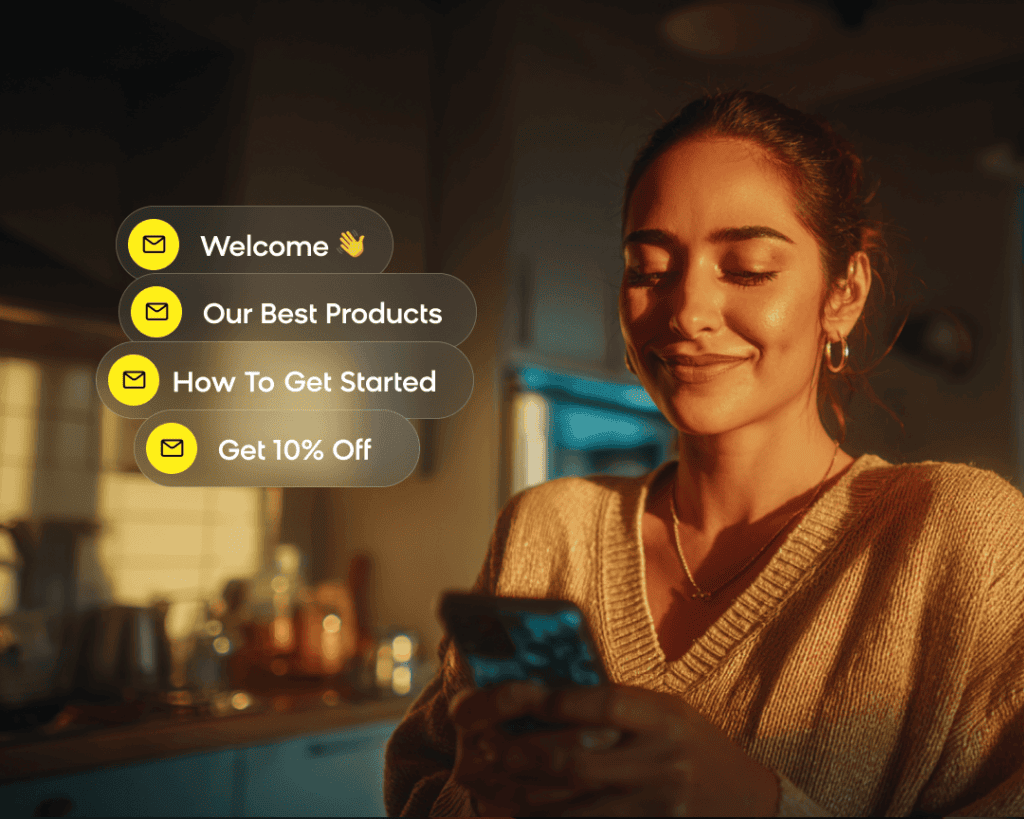
The common advice on welcome email series focuses almost entirely on timing: send within an hour, space emails three days apart, don’t overwhelm the subscriber. Timing matters, but it’s rarely what separates high-performing sequences from forgettable ones.
What actually drives revenue from a welcome series is structure: knowing which types of emails to send, in what order, and how to adapt that sequence based on what a subscriber does (or doesn’t do) after email one. Nail the structure, and the timing optimizations become a finishing touch rather than the main event.
A welcome email is often the highest-performing message most brands send by adding value across the entire subscriber lifecycle. This guide walks through the framework we use to build welcome email sequences that convert, including the four email types every series should draw from, automation logic that adapts to subscriber behavior, and results from brands that have put this into practice.
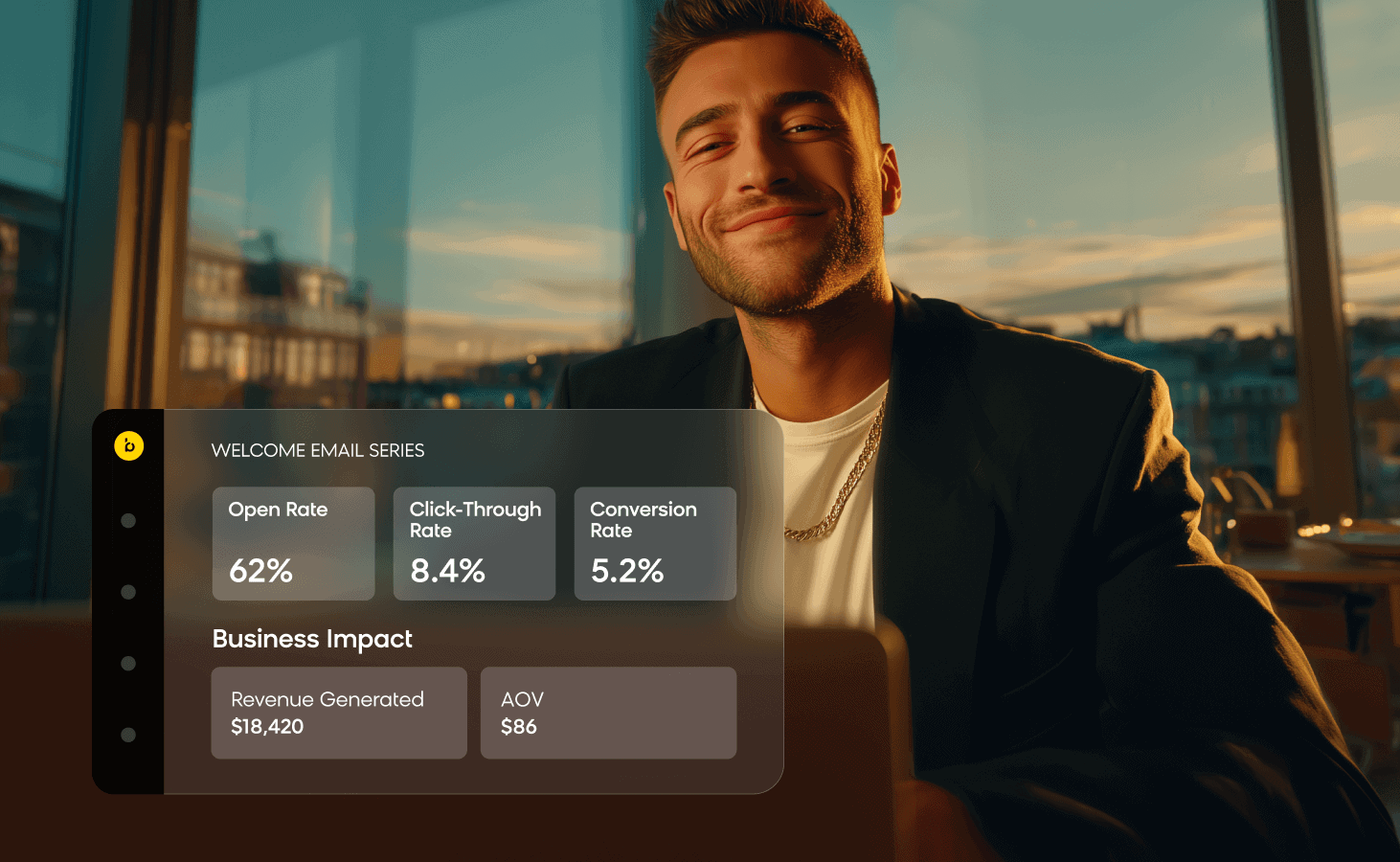
What Is a Welcome Email Series?
A welcome email series is a set of automated emails triggered when someone signals interest in your company, whether through an account signup, list subscription, or event registration. It’s the first step of the customer lifecycle management journey after someone trusts you with their email. Rather than cramming everything into a single message, an effective series breaks your introduction into 3–6 emails that each serve a distinct purpose.
Think of it as the difference between a monologue and a conversation. A single welcome email talks at the subscriber. A series builds a relationship, with each touchpoint designed to move them closer to their first meaningful action.
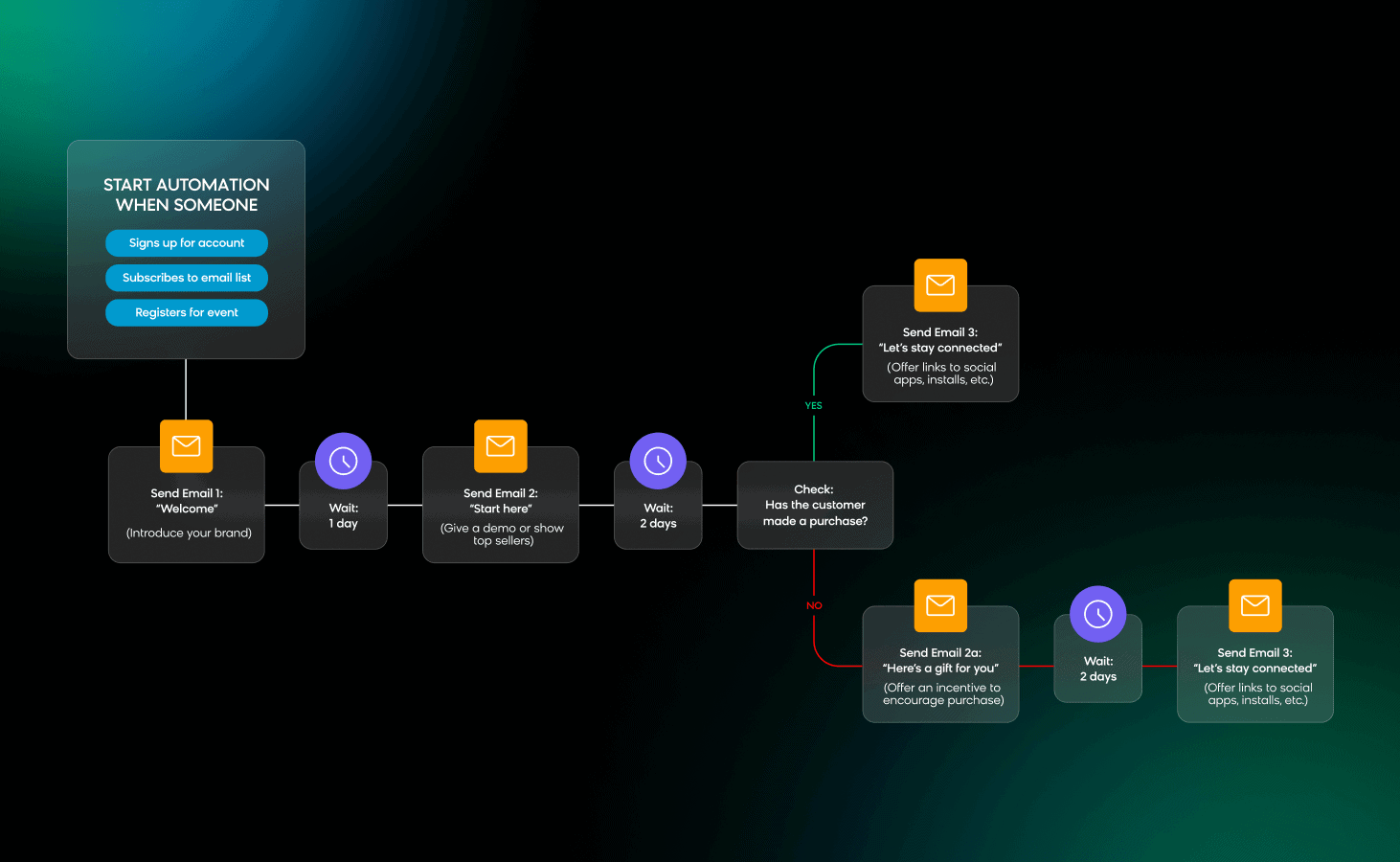
The foundation of any welcome series rests on three steps:
- Introduction email: A welcoming message that shares what your brand is about, your value proposition, and what someone can expect from your emails.
- Value demonstration email: A strategic nudge toward the next stage in the lifecycle journey. Showcase your best products, offer a demo, or deliver educational content that proves your expertise.
- Engagement branch: Split into two paths. If someone has already purchased or taken a key action, encourage them to connect on social or install your app. If they haven’t acted on previous emails, offer an incentive to move them forward.
The 4 Types of Welcome Emails
Before mapping out your sequence, it helps to understand the four types of welcome emails you can draw from. Most high-performing series mix two or three of these, adapting the blend based on what the subscriber needs at each stage.
Educational Welcome Emails
Educational emails help new subscribers take a first step with confidence. They work well when your product needs setup, your value takes a moment to click, or customers benefit from guidance before buying.
What to include: An obvious starting point (setup step, resource, or “start here” guide), a short how-to or checklist that removes friction, a proof point that builds trust (results, ratings, customer quote), and a single next step.
Subject line examples:
- “Your quick-start guide is inside”
- “3 things to try first”
- “Here’s how [Brand] customers get started”
Incentive Welcome Emails
Incentive emails drive a first conversion with a clear offer and a reason to act soon. They’re most effective when signup intent is high or when your audience expects a deal for joining.
What to include: The offer and redemption steps in plain language, a specific deadline or limit, one element that reduces hesitation (free shipping, easy returns), and a fallback CTA for non-buyers (bestsellers or top categories).
Subject line examples:
- “Your 15% welcome discount expires Friday”
- “A little something for joining us”
- “This one’s on us (for the next 48 hours)”
Product Showcase Welcome Emails
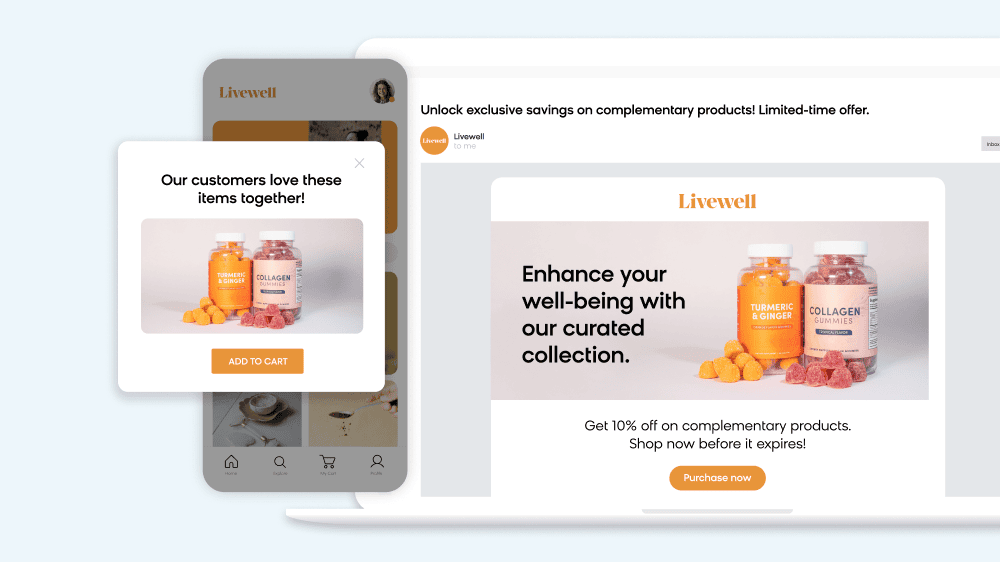
Product-focused emails help subscribers understand what to look at first and why those options are popular. They’re useful when your catalog is broad or when customers need help choosing.
What to include: A tight shortlist of top categories or bestsellers, a quick “why people pick this” line for each, social proof that’s easy to scan (ratings or review snippets), and a clear browse path.
Subject line examples:
- “Our customers’ top picks”
- “Not sure where to start? We’ve got you”
- “The 5 products everyone’s talking about”
Preference Capture Welcome Emails
Preference capture emails collect zero-party data early so future messaging can be more relevant. They’re a strong fit when personalization depends on interests, goals, sizing, or frequency preferences.
What to include: One or two high-value questions, a direct reason you’re asking and what changes once they answer, an easy way to update choices later, and a follow-up that reflects what they chose.
Subject line examples:
- “Tell us what you love (and we’ll show you more of it)”
- “Answer 2 questions, get better emails. Promise!”
- “Quick: What brought you here today?”
Why a Welcome Email Series Matters in 2026
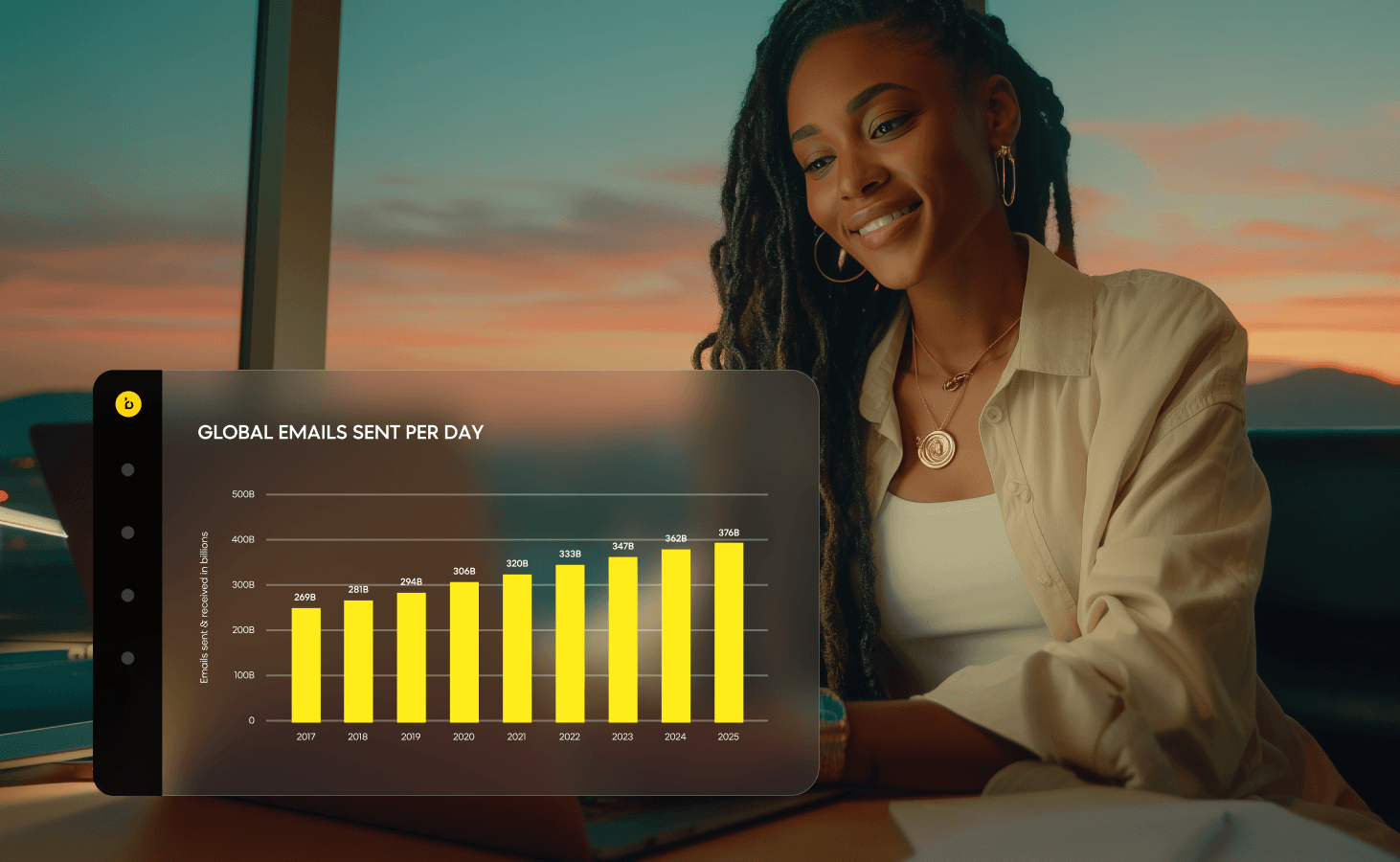
There are 4.5 billion users of email across the world as of 2025, with projections suggesting this number will reach over 4.8 billion by 2027. That means 4.5 billion people could potentially become a new subscriber, loyal customer, or repeat customer of your business thanks to your welcome email. Here are some other key factors to consider:
- Subscriber expectations are higher than ever. 74% of people expect to receive a welcome email immediately after they subscribe. Miss that window, and you’ve already lost momentum before the relationship begins.
- Personalization drives measurable revenue. McKinsey research found that 71% of consumers expect personalized interactions, and 76% get frustrated when it doesn’t happen. The same research found that companies excelling at personalization generate 40% more revenue than those that don’t. Your welcome series is the first place to deliver on that expectation.
- The welcome window is your highest-leverage moment. New subscribers are at peak interest. They’ve just opted in, they’re curious about your brand, and they’re watching to see if you deliver on the promise that got them to sign up. A structured series capitalizes on that momentum, while a generic single email wastes it.
At Bloomreach, we’ve seen firsthand how the welcome series sets the trajectory for the entire customer lifecycle. That’s why we built automated welcome series solutions into our platform, so brands can move from signup to personalized engagement without manual intervention.
The 7-Step Welcome Email Series Framework
This framework gives each email in your sequence a defined role. You won’t always need all seven, but having the full model lets you adapt based on your business, your audience, and what the data tells you.
Step 1: Send the Immediate Confirmation Email
Send your first welcome email the moment someone subscribes. That expectation is highest at the moment of signup, making the confirmation email the most time-sensitive send in your entire sequence.
This email confirms their signup, sets expectations for future communications, and provides any essential account information. Keep the subject line straightforward (“Welcome! Your subscription is confirmed”) and send from a recognizable sender name.
This should just be a signup confirmation, with a brief note on what to expect and one clear next step (browse products, complete your profile, or check out a resource).
Step 2: Deliver Your Brand Story and Value Proposition
Within 24 hours, send an email that introduces your brand story, mission, and unique value proposition. This email should answer: “What can I expect from this relationship?”
Include founder stories, company values, or behind-the-scenes content that builds an emotional connection. The goal is trust, not a sale.
Step 3: Showcase Your Best Content or Products
On days 3–4, highlight your most popular products, services, or content. Use social proof (customer reviews, bestseller badges, “most-read” indicators) to guide new subscribers toward your highest-value offerings.
This is where the product showcase email type shines. Demonstrate quality and variety without overwhelming — a curated shortlist outperforms a full catalog dump every time.
Step 4: Provide Educational Value
Between days 5–7, send educational content that helps subscribers get maximum value from what you offer. How-to guides, video tutorials, resource libraries, or a quick-start checklist all work here.
Educational content builds trust and positions your brand as a helpful authority. It also gives you behavioral data: what they click tells you what they care about.
Step 5: Introduce Social Proof and Customer Stories
Between days 8–10, share customer testimonials, case studies, or user-generated content. Real results from real customers increase confidence in the subscriber’s decision to engage with your brand.
For ecommerce email marketing, this is where you show how other shoppers found value. For B2B, case studies with specific metrics carry more weight than generic testimonials.
Step 6: Present a Soft Call to Action or Special Offer
Around days 12–14, include a gentle call-to-action or special offer for subscribers who haven’t yet converted. This could be a discount code, free trial, or exclusive access to premium content.
Make the offer time-sensitive but not aggressive. The incentive email type works well here, but only for subscribers who haven’t already purchased. Use segmentation to suppress this email for those who have already converted.
Step 7: Establish Ongoing Communication Expectations
Close your welcome series by setting explicit expectations for ongoing communication. Let subscribers know how often they’ll hear from you, what type of content to expect, and how to customize their preferences.
Include links to your social media profiles and encourage engagement across multiple channels. This transition email bridges the gap between onboarding and your regular marketing automation workflows.
Welcome Email Examples That Convert
Theory only takes you so far. Here are examples of how each email type looks in practice, with the elements that make them effective.
The Preference-First Welcome (DFS)
UK furniture retailer DFS opens its welcome series by asking new subscribers “what’s your thing?” to learn their furniture preferences. Rather than guessing what a customer might want, the brand collects zero-party data up front and uses it to create personalized customer experiences across every subsequent email.
If a subscriber indicates interest in bedroom furniture, the automation sends a comprehensive bedroom furniture buying guide. The series then strategically encourages customers to visit physical showroom locations at exactly the right moment in their journey.
As a result, DFS drove a 4.2% higher conversion rate and 3.9% more revenue from the automated welcome email series using Bloomreach’s marketing automation.

The Segment-Specific Subject Line (BrewDog)
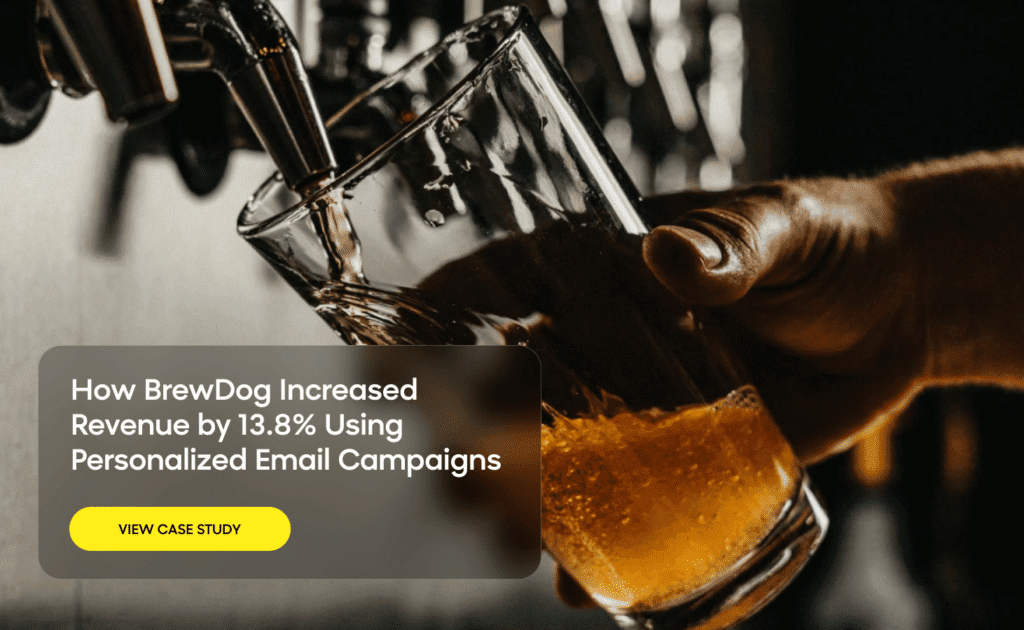
An 80,000-subscriber A/B test revealed why personalization at the subject line level matters more than most teams realize. Scottish craft brewer BrewDog customized email subject lines for different customer segments, using behavioral data (web activity, recent purchases, investor status) to ensure each email feels written for that specific segment.
The result? Personalized campaigns that delivered 13.8% greater revenue and 15.6% more clicks compared to non-personalized versions.
This shows why it’s important to personalize the first thing a subscriber sees: the subject line. When the element with the highest visibility gets tailored to the segment, everything downstream performs better.
The Full Lifecycle Welcome (thortful)
Collecting 10 million zero-party data points in a welcome journey sounds ambitious, but UK greeting card marketplace thortful built exactly that after migrating to Bloomreach. The brand’s approach combines a welcome journey, a preference center, and a Reminders Program that triggers communications based on customer-submitted dates (birthdays, anniversaries, and milestones).
The results justify the investment: thortful’s preference-led personalization delivered 20% higher CRM revenue. The brand’s loyalty program test group also saw a separate 16% increase in customer value.
thortful treats the welcome journey as the start of an ongoing data relationship, not a one-time onboarding sequence, which is why the campaign has been successful. Every interaction after signup feeds back into personalization.

Industry-Specific Welcome Flows
The 7-step framework can adapt based on your business model. Here’s how the sequence shifts for three common verticals.
Ecommerce Welcome Email Flow
An ecommerce welcome email series front-loads product discovery because purchase intent is typically highest at signup. Pair that with early social proof to reduce friction.
| Timing | Type | Goal | |
|---|---|---|---|
| 1 | Immediate | Confirmation + preference capture | Confirm signup, ask category preferences |
| 2 | Day 1 | Product showcase | Personalized bestsellers based on preferences |
| 3 | Day 3 | Educational | Buying guide or style tips for their category |
| 4 | Day 7 | Social proof | Customer reviews + UGC for browsed products |
| 5 | Day 10 | Incentive | Welcome discount with a deadline |
B2B SaaS Welcome Flow
SaaS subscribers need to reach a value milestone before they’ll convert. Focus on activation and feature discovery.
| Timing | Type | Goal | |
|---|---|---|---|
| 1 | Immediate | Educational | Quick-start guide, one clear first action |
| 2 | Day 2 | Educational | Remove the biggest setup blocker |
| 3 | Day 5 | Product showcase | 2–3 features framed as outcomes |
| 4 | Day 10 | Social proof | Case study with metrics from a similar company |
| 5 | Day 14 | Incentive | Trial extension or demo offer |
Content/Newsletter Welcome Flow
Newsletter subscribers are evaluating whether your content is worth the space in their inboxes. Prove value fast and learn their preferences.
| Timing | Type | Goal | |
|---|---|---|---|
| 1 | Immediate | Educational | What to expect, cadence, and a “start here” piece |
| 2 | Day 2 | Product showcase | “Best of” content grouped by topic |
| 3 | Day 5 | Preference capture | Quick survey on topics and frequency |
| 4 | Day 10 | Social proof | Reader quotes or subscriber milestones |
Setting Up Welcome Email Automation
A well-designed framework means nothing without the automation infrastructure to execute it. Here’s how to build a welcome series that runs reliably and adapts to subscriber behavior.
Trigger Strategy
Every welcome series starts with a trigger: the specific action that enrolls someone into your sequence. Common welcome triggers include:
- Email subscription: The most common entry point, which fires on form submission or confirmed opt-in
- Account creation: For platforms where signing up is distinct from subscribing
- First purchase: Post-purchase welcome differs from pre-purchase onboarding (the subscriber already has buying intent confirmed)
- App install or first open: For app-first brands where email capture happens during onboarding
Set up multiple trigger conditions so your welcome emails reach subscribers based on their specific entry point, whether through organic signup, paid campaigns, or referral sources. Create a slightly different welcome path for each signup source to match the intent it brings.
Segmentation From Day One
Generic welcome sequences underperform vs. segmented ones. Even basic segmentation at the point of signup makes a measurable difference.
Segments to consider:
- New vs. returning subscribers who previously unsubscribed and reengaged
- High-intent vs. low-intent based on pre-signup behavior (browsed products, added to cart, viewed pricing vs. arrived cold)
- Acquisition source (paid social, referral, in-store, organic search, partner), since each source carries different intent signals
- Category or content interest based on the page or product that led to signup
With Bloomreach’s Loomi AI, you can build these segments using real-time behavioral data and automated segmentation, so each subscriber gets a welcome path tailored to their context from the first email.
Suppression During Onboarding
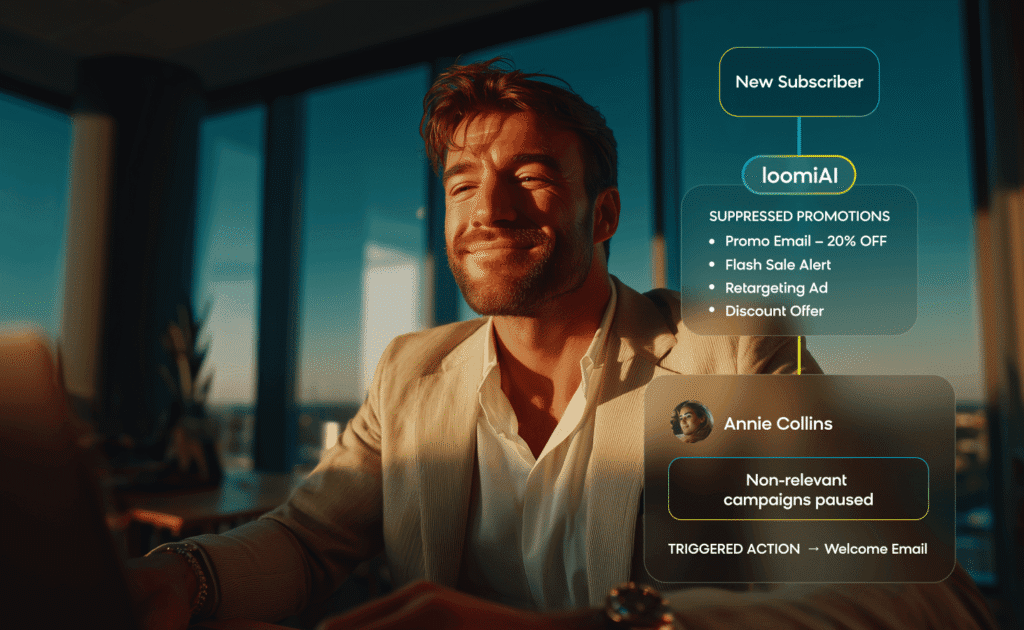
Suppression rules protect the welcome experience from competing messages. During the onboarding window:
- Pause promotional blasts so the welcome series gets full attention
- Coordinate cross-channel sends to prevent email, SMS, and push notifications from stacking on the same day
- Exclude calendar-triggered campaigns (seasonal promos, flash sales) that don’t match the “new subscriber” context
Without suppression, a new subscriber might get your welcome email at 9 a.m. and a promotional blast at 2 p.m. That dilutes the welcome experience and trains them to ignore your emails early.
Multi-Channel Coordination
Email is the backbone, but the welcome experience gets stronger when it’s coordinated across channels. For subscribers who engage with your omnichannel strategy:
- Email handles the core sequence: expectations, value, products, and preference capture
- In-app messages can reinforce the welcome when someone opens your app after clicking a welcome email
- Push or SMS works for time-sensitive nudges (e.g., an expiring welcome offer, a saved cart reminder) based on consent and channel preference
The key is orchestration, not duplication. Each channel should add something the others can’t, not repeat the same message in a different format.
Choosing the Right Platform
Choosing the right email marketing platform determines what’s possible. Look for:
- Real-time trigger capabilities that fire emails within seconds of signup, not on a batch schedule
- Easy-to-use automation builders with branching logic for behavioral paths
- A/B testing that’s built into the automation, not bolted on as a separate tool
- Unified customer profiles that connect email behavior with website activity, purchase history, and cross-channel engagement
Our marketing automation solution includes all of these, with Loomi AI, Bloomreach’s agentic platform, powering real-time personalization that adapts the welcome sequence as subscriber behavior changes.
Optimal Timing and Frequency
When To Send Each Email
Timing is critical for welcome email success. Send your first email immediately after subscription, when you’re still fresh in the subscriber’s mind. This immediate response earns the highest open rates and sets positive expectations.
For the rest of the series, daily emails work well for the initial phase. This cadence maintains logical progression without creating gaps that dissipate momentum. After the first 3–4 days, you can space emails further apart (every 2–3 days) as the relationship settles into a rhythm.
Time Zone Optimization
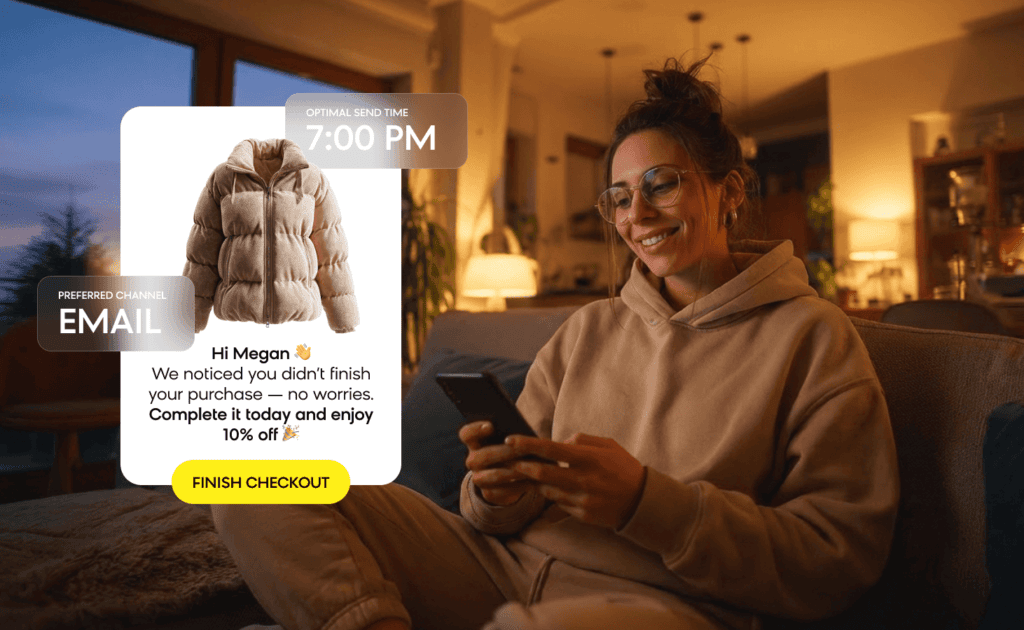
Consider your subscribers’ time zones when scheduling welcome emails. Use automation tools that send based on the recipient’s location rather than a single global time.
Just remember that optimal times vary by industry and audience. Test what works for your subscribers, and use send time optimization to let the data guide scheduling rather than assumptions about business hours.
A/B Testing Your Welcome Series
A welcome series should never be static. Systematic A/B testing reveals what your subscribers actually respond to, as opposed to what best practices suggest they should.
What To Test (In Priority Order)
- Subject line and preview text. Test clarity vs. curiosity, benefit-led vs. offer-led, and how well the preview text supports the subject line. This is the highest-leverage test because it determines whether the email gets opened at all.
- Offer type. Test a percentage discount vs. a dollar amount vs. a free gift vs. free shipping. The best incentive depends on your price points and audience expectations.
- Sequence length and timing. Does a 4-email series outperform a 7-email series? Does spacing emails two days apart beat daily sends? Test this at the series level, not the individual email level.
- CTA placement and focus. Is it better to have one clear CTA above the fold vs. multiple links throughout the email? For welcome emails specifically, simpler usually wins.
- Personalization depth. Test a standard version against one that uses dynamic email content (product recommendations based on browse behavior, location-based offers, category-specific messaging).
- Channel combination. Test email by itself vs. email + SMS vs. email + push. Does adding a second channel improve activation without increasing unsubscribes?
How To Run Welcome Email Tests
Run A/B tests as a 50/50 split between control and variant. Change one variable at a time, pick a success metric before you start, and run both versions simultaneously for a clean read. With welcome emails, give tests enough volume to reach significance. Low-traffic brands may need 2–4 weeks per test.
Measuring Welcome Email Performance
The email marketing analytics for a welcome series should go beyond standard campaign metrics. Since the subscriber is in the acquisition stage, focus on metrics that speak to engagement and long-term relationship building.
Core metrics:
- Open rate: Measures initial subscriber interest and subject line effectiveness. Welcome emails should significantly outperform your campaign average.
- Click-through rate (CTR): Indicates content relevance and CTA performance. Welcome series CTR benchmarks sit around 16.60% for autoresponders.
- Conversion rate: Tracks how many subscribers take a desired action (purchase, signup, feature activation) during the welcome window.
- Unsubscribe rate: An early warning signal. High unsubscribes in the welcome series indicate a mismatch between signup expectations and email content.
Advanced metrics:
- Revenue per recipient (RPR): Total revenue attributed to the welcome series divided by unique recipients. This is the single best metric for comparing welcome series approaches.
- Series completion rate: What percentage of subscribers engage with the full sequence? Drop-off points reveal where you’re losing attention.
- Activation event completion: For SaaS and app businesses, this determines whether new users complete key onboarding actions during the welcome window.
- Downstream retention lift (30/60/90 day): Cohort subscribers by join date and compare retention for those who completed the welcome series vs. those who didn’t. This is where the long-term value of a strong welcome series shows up.
Track these metrics using email performance analytics that connect email engagement to downstream business outcomes rather than vanity metrics alone.
Welcome Email Mistakes To Avoid
Overloading the First Email
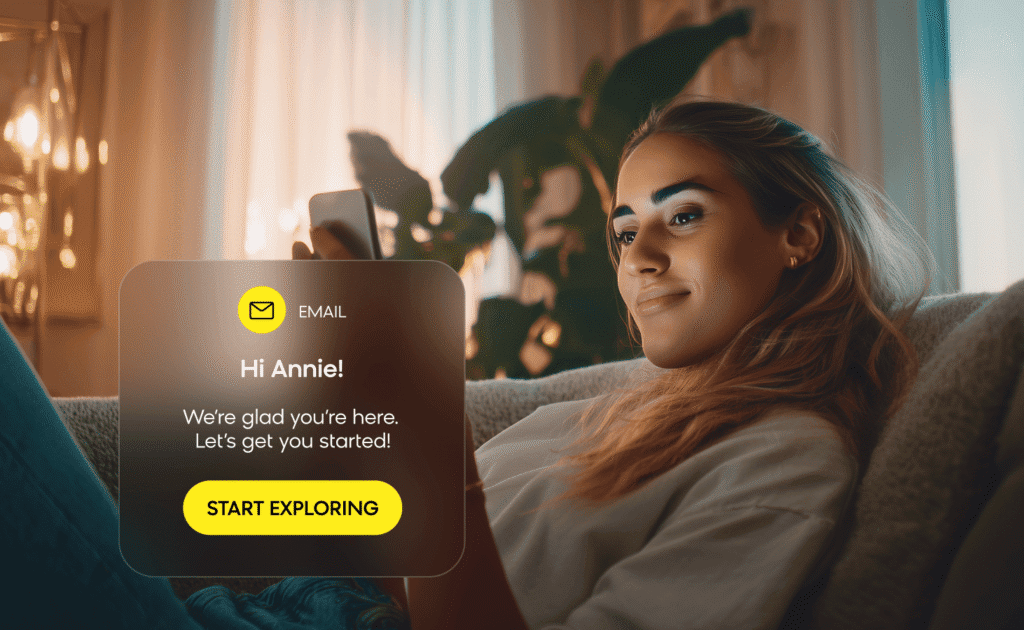
The biggest mistake is trying to do too much in email one — too many messages, too many CTAs, and too much brand story. The first email should simply confirm the signup, set expectations, and give one specific next step. Everything else can wait for email two and beyond.
Making It All About the Brand
New subscribers are thinking “What do I get?” not “Tell me your company history.” Lead with value, set expectations for what they’ll receive, and write to their needs. The brand story belongs in email two, not email one.
Sending the Same Sequence to Everyone
A subscriber who arrived through a paid social ad for running shoes and a subscriber who signed up organically from your blog have different intent levels and different interests. If you serve different customer segments, use their acquisition source, browsing behavior, and signup context to tailor the welcome path from day one.
Letting Other Campaigns Collide With Onboarding
Without suppression rules, a new subscriber might get a welcome email and a flash sale email on the same day. That fragments attention and trains subscribers to ignore your messages. Set suppression windows that protect the welcome series from competing sends.
Treating Your Welcome Series as Set-and-Forget
A welcome series that was optimized six months ago is already stale. Review performance quarterly, test small changes continuously, and update content and offers as your audience and product evolve.
Key Takeaways
A high-performing welcome email series depends on structure more than timing. Here’s what to take away:
- Use the 7-step framework as your backbone, adapting which emails you include based on your business model and what the data tells you
- Draw from the four email types (educational, incentive, product showcase, preference capture) to give each email a clear purpose
- Segment from day one — even basic segmentation by acquisition source or browsing behavior lifts performance across the entire series
- Protect the welcome experience with suppression rules that prevent promotional emails from competing with your onboarding sequence
- Measure what matters: RPR, series completion rate, and 30/60/90-day retention over open rates alone
Ready to build a welcome series that personalizes based on subscriber behavior? See Bloomreach in action to learn how Loomi AI selects and customizes each email in real time.
Welcome Email Series: Frequently Asked Questions
How many emails should be in a welcome series?
The most effective welcome series will contain 3–6 emails, each with a specific purpose. The average length across industries is around 6 emails, though this ranges from 2 to 14 depending on business model and sales cycle. Start with 3–4 and expand based on engagement metrics. If subscribers are still clicking and converting through email 6, your series has room to grow.
What’s the best timing between welcome emails?
Send the first email immediately after signup. For the next 3–4 emails, daily sends maintain momentum while subscribers are at peak interest. After that, space emails 2–3 days apart. Monitor engagement rates for your specific audience, as the ideal cadence varies by industry.
What are the different types of welcome emails?
The four types are educational (helps subscribers get started), incentive (drives first conversion with an offer), product showcase (highlights bestsellers or top categories), and preference capture (collects data to personalize future emails). Most welcome series combine 2–3 of these types in sequence, adapted to the subscriber’s behavior.
What metrics should I track for welcome email performance?
Beyond standard open and click rates, focus on revenue per recipient (RPR) to measure business impact, series completion rate to find drop-off points, and 30/60/90-day retention lift to measure long-term value. Track activation events for SaaS businesses and first-purchase conversion for ecommerce.
How do you personalize welcome emails with AI?
AI-powered personalization uses behavioral signals and predictive models to select content, timing, and offers for each individual subscriber. With Loomi AI, welcome emails adapt based on browsing behavior, purchase history, and engagement patterns. For example, a subscriber who browses bedroom furniture gets a bedroom buying guide, while one browsing living room sets gets a different recommendation. The sequence adjusts automatically as new data comes in.
What compliance issues should I consider?
Ensure your welcome series includes clear unsubscribe options and adheres to CAN-SPAM, GDPR, and regional privacy regulations. Include your physical address, honor opt-out requests promptly, and maintain transparent data practices. If you’re collecting zero-party data (preferences, interests), be explicit about how you’ll use it. Stay updated on evolving privacy laws in your target markets.