Personalization feels the most helpful when it reflects what matters to you in the moment.
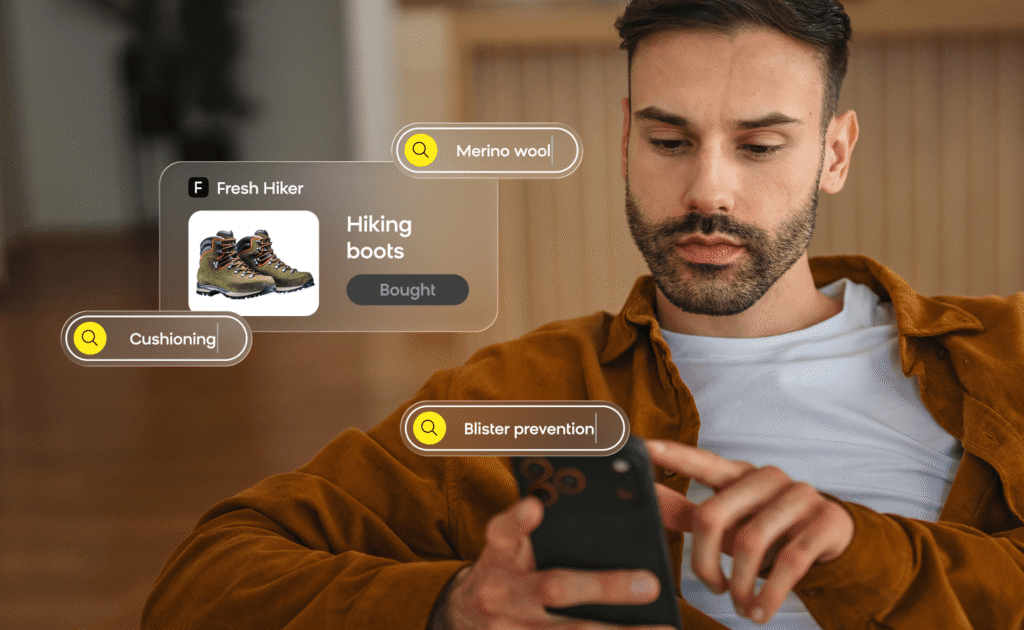
For example, let’s say a shopper buys hiking boots online, and then returns a week later for socks. Their first three-day hike is getting close, and they’re anxious after hearing a friend’s story about painful blisters.
The retailer remembers the boots they bought a week earlier, which is a useful start, but it doesn’t explain what’s on their mind today.
As they browse, they filter for merino wool, compare cushioning, and open a guide to preventing blisters. Soon, they see hiking socks that match those preferences, along with advice on getting the right fit for their new boots.
Now another uncertain purchase starts to feel manageable. Your customer has a clearer sense of what to choose and one less thing to worry about before the trip.
The retailer already knew which boots they’d bought, but the shopper’s browsing adds the context behind the purchase. Bringing the two together helps them choose with confidence and get back to looking forward to the hike.
Knowing the Customer Is Only the Start
Purchase history gives your brand a useful starting point, but today’s search should reveal a customer’s needs more clearly. Their queries, filters, product comparisons, or even conversations with your AI shopping assistant are all signals that reveal more about what matters to them on this visit.
To return relevant results, you need to connect those signals with what you already know about the customer and let new information guide which products appear first.
The challenge, though, is making those decisions in the moment as the shopper searches and refines their choices.
Connecting Customer History With the Here and Now
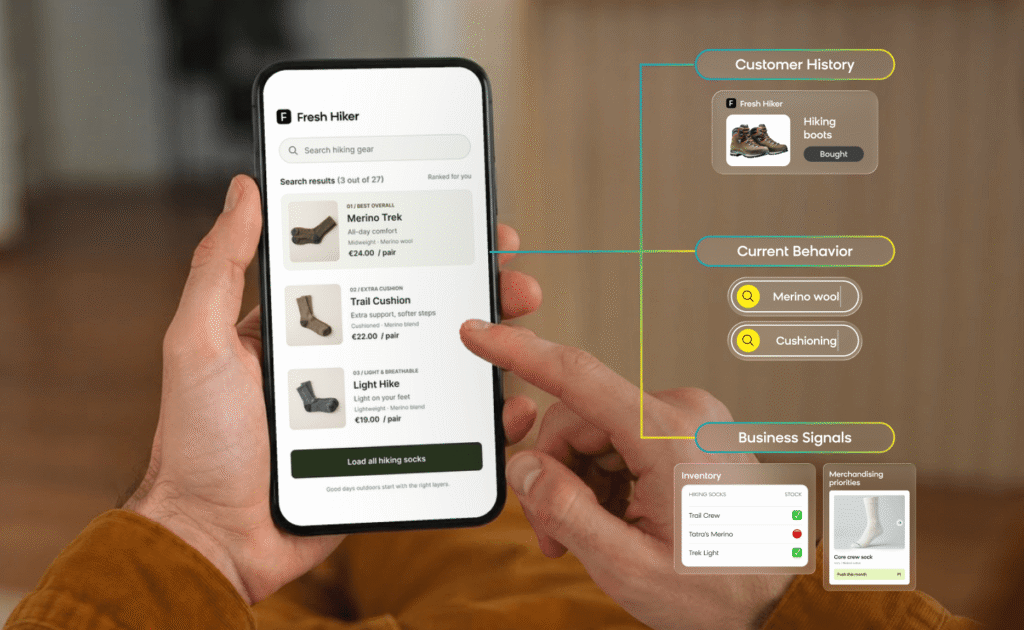
In order to deliver the on-site experiences that resonate (and get shoppers to convert), you need three types of information: customer history, current behavior, and business signals.
Customer history is essentially a record of purchases, preferences, and past interactions. It’s generally supported by an enterprise data platform or CDP, and it gives your brand useful context, such as knowing what the shopper bought last week.
Current behavior is captured by the behavioral layer that acts as short-term memory. It keeps track of what the shopper is doing during the current visit and combines those live signals with relevant details from the customer’s history.
There are also business signals that help determine relevant products to prioritize. It might prioritize inventory availability, product performance, margins, or merchandising priorities, like introducing new products that don’t have performance data yet.
So, using the same shopper from our earlier example, this means connecting their hiking boot purchase with today’s interest in merino wool and cushioning, then using business signals to help rank the matching socks. The brand might highlight an in-stock bestseller or give a similar new arrival more visibility.
Together, these three inputs help the brand surface socks that fit the shopper’s needs while supporting its larger business goals.
Intelligence at the Edge: Turning Context Into a Decision
The next step is deciding how to respond. Which products should appear first? Is there any guidance that would help the shopper choose? Should you offer an incentive, or is the shopper already likely to buy?
Intelligence at the edge reflects the idea that AI-powered decisions should happen at the point of customer interaction, informed by customer history, live intent, and business priorities — on any channel where they’re interacting with the brand.
Loomi puts this approach into practice by automatically surfacing and ranking products in a way that’s optimized for the shopper and the business. You can also shape the selection around business priorities, such as available inventory or margin goals. The decision serves the shopper’s immediate need while supporting your objectives.
For buyers evaluating AI customer experience platforms, the question goes beyond what customer data a system can access. You’ll want to be cognizant of how that data changes the experience: Do product recommendations adjust mid-session when a shopper switches what they’re shopping for? Will a purchase automatically stop a scheduled reminder? Can the platform account for inventory and margin when choosing an offer?
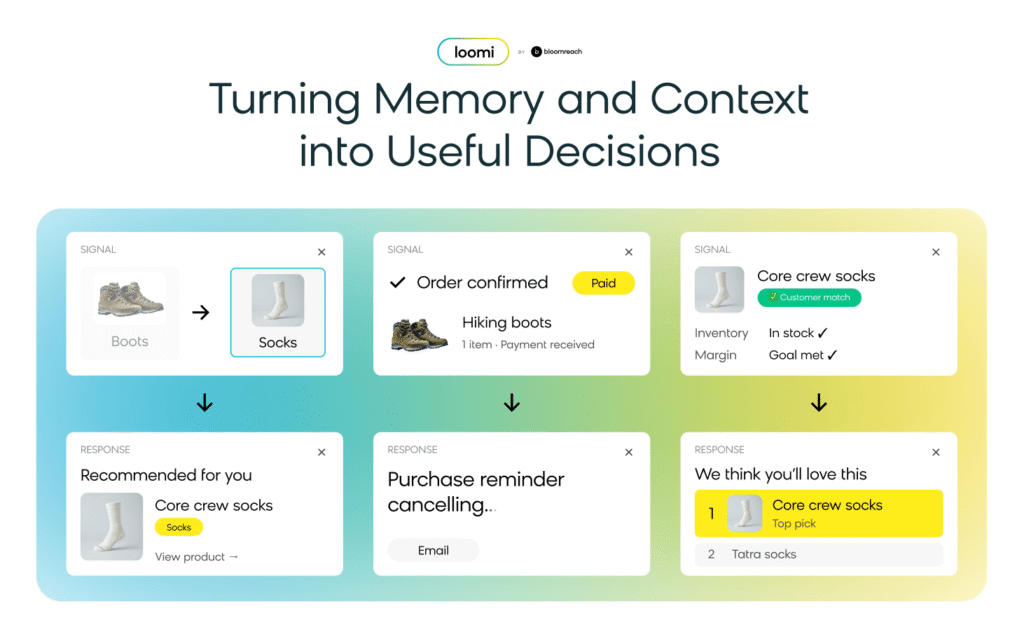
The answers reveal how effectively a platform turns memory and context into useful decisions. In turn, those decisions translate into personalized experiences that actually move the needle on revenue. Be sure to check out our guide to learn how you can start acting on real-time intent.