
Perpetual vs. periodic inventory: which system is right for your business? The core difference is straightforward. A perpetual inventory system updates in real time as every sale and purchase happens. A periodic inventory system relies on manual counts at set intervals, like monthly or quarterly.
But the differences run much deeper than timing. Each system affects how you calculate cost of goods sold (COGS), how accurately you can forecast demand, and how efficiently you manage stock across locations. With the average retailer losing 1.6% of sales to inventory shrinkage from theft, errors, and damage, choosing the right inventory method directly impacts profitability.
Here’s what you need to know about both systems so you can pick the one that fits your business.
What is a Perpetual Inventory System?
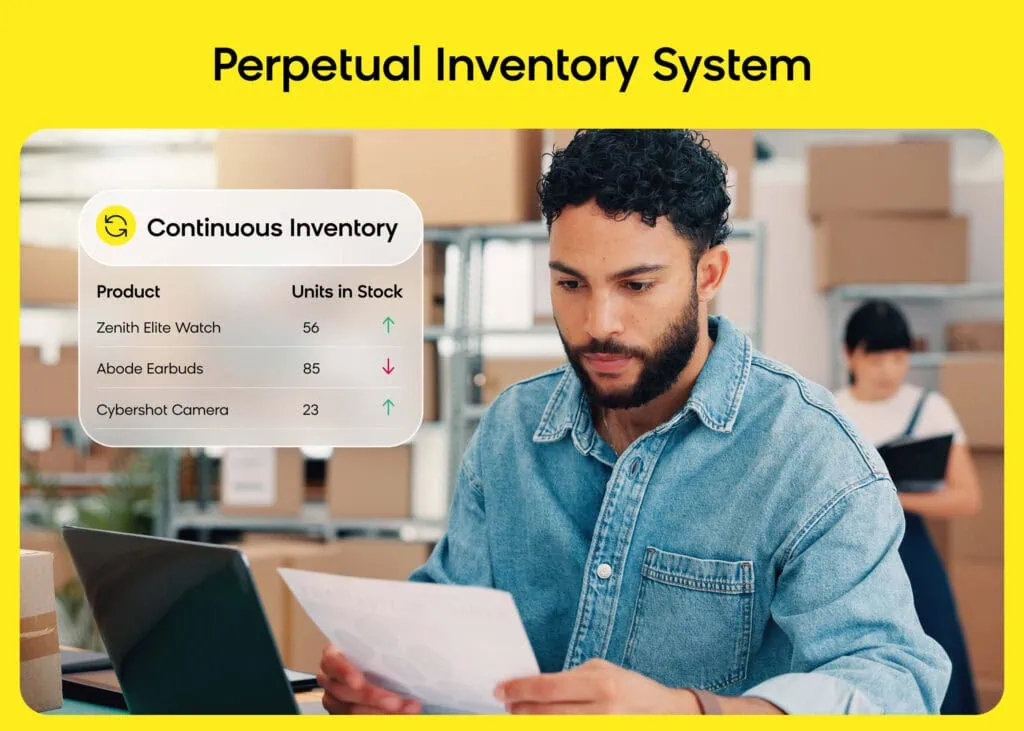
A perpetual inventory system (also called a continuous inventory system) is a method of inventory management that tracks stock levels in real time. According to Investopedia, it’s “a computerized system that continuously records inventory changes in real-time,” reducing or eliminating the need for periodic physical counts.
The system works through technology: barcode scanners, point-of-sale (POS) systems, RFID tags, and inventory management software. When a warehouse employee scans a product code or a customer completes a purchase, the system updates inventory records automatically.
Keep in mind that even with real-time tracking, you still need occasional manual audits. The perpetual method doesn’t account for theft, damaged goods, or products that go missing. Those discrepancies only surface during a physical count.
Perpetual Inventory System Pros
- Real-time stock visibility allows for more accurate and efficient reordering decisions. You’ll know the moment you hit reorder points.
- Transaction data on demand gives you insight into which products are selling well and which are sitting on shelves.
- Centralized tracking makes it much easier to manage stock across multiple warehouses and retail locations.
- Faster stock checks mean you can quickly confirm whether a product is in stock, which is critical for same-day and next-day fulfillment.
- Management control improves because leadership can monitor inventory levels without waiting for scheduled counts.
- Simpler integration with AI-powered merchandising tools, inventory optimizers, and demand forecasting systems. Real-time data feeds make these tools more effective.
Perpetual Inventory System Cons
- Human error in data entry can still throw off your records if information is entered incorrectly or missed entirely.
- Higher upfront costs for software, hardware (scanners, RFID tags), and employee training.
- Time investment is required to log every transaction as it happens, which adds a layer of operational overhead.
- Technical dependencies mean system outages or software issues can temporarily disrupt your inventory visibility.
What is a Periodic Inventory System?
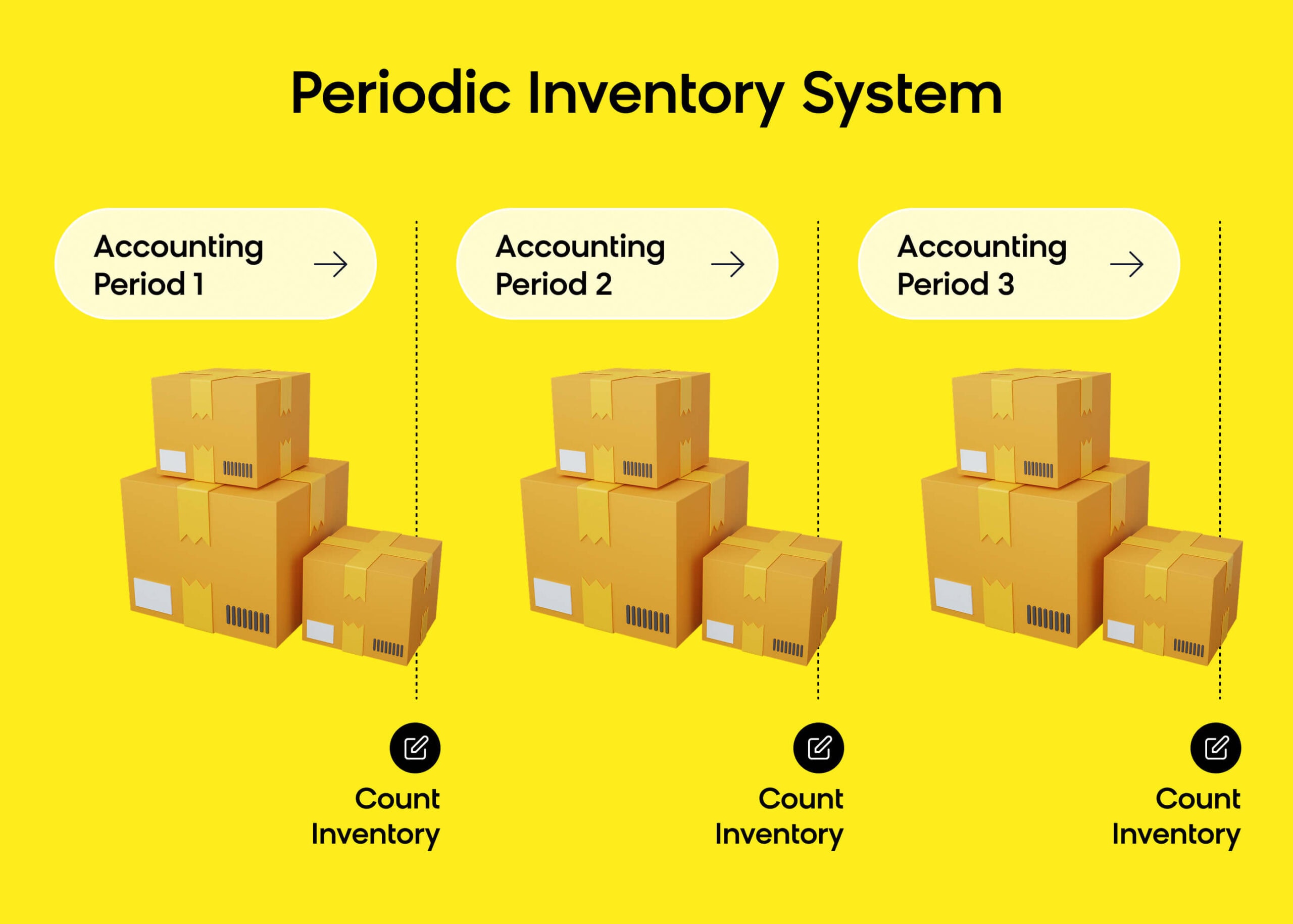
A periodic inventory system doesn’t track items as they’re sold. Instead, it relies on doing a physical count of all inventory at set intervals (monthly, quarterly, or annually) to determine stock levels and calculate the cost of goods sold.
Between counts, you won’t have real-time data on what’s in stock. You’ll estimate, “eyeball” your shelves, or rely on purchase records to get a rough idea. The actual numbers only become clear after the next physical count.
This method is straightforward for small operations. There’s no software to maintain, no barcode infrastructure to set up, and you can start using it with nothing more than a spreadsheet and a clipboard.
Periodic Inventory System Pros
- Low cost. No software licenses, no scanning hardware, no need to train employees on a POS system.
- Simple to start. You can begin immediately without major preparation, and you set the counting interval to fit your business needs.
- Easy to manage for small businesses with a limited number of products and a single location.
- Flexible scheduling. Physical counts can be timed around your accounting periods or slow seasons to minimize disruption.
Periodic Inventory System Cons
- No real-time visibility. You can’t get an accurate picture of your inventory until the accounting period ends.
- Scales poorly. The larger your business grows, the less accurate and useful this system becomes.
- Time-consuming counts. Physical audits take longer as you add more products, locations, and SKUs. Staff must pause other work to count.
- Limited management control. Leadership can’t make quick inventory decisions between count periods.
Error-prone. Manual counting leads to miscounts, double counts, and data entry mistakes that compound over time.
Perpetual vs. Periodic Inventory System: Key Differences
| Feature | Perpetual System | Periodic System
|
|---|---|---|
| Tracking method | Automated, real-time | Manual, at set intervals |
| Technology required | POS, barcodes, RFID, software | Spreadsheets or paper |
| Cost to implement | Higher upfront | Low |
| Inventory visibility | Constant, real-time | Snapshot at time of count |
| Accuracy | Higher (automated) | Lower (manual, error-prone) |
| COGS calculation | Updated with each transaction | End of period only |
| Best for | Mid-to-large businesses, high volume | Small businesses, low volume |
| Staff training needed | Moderate to high | Minimal |
| Scalability | High | Limited |
| Disruption to operations | Minimal | Yes, during physical counts |
How Each System Calculates Cost of Goods Sold (COGS)
One of the biggest practical differences between these systems is how they handle COGS, the cost of acquiring or manufacturing the goods you sell during a period.
The COGS formula:
Beginning Inventory + Purchases – Ending Inventory = COGS
In a periodic system, you can only calculate COGS at the end of an accounting period. You take a physical count to determine your ending inventory, then plug it into the formula. Between counts, you’re working with estimates.
In a perpetual system, COGS is calculated automatically with every transaction. The system records the cost of each item as it’s sold, so you always have a current COGS figure. This makes financial reporting faster and more accurate throughout the year.
FIFO, LIFO, and Weighted Average
Both systems can use any standard cost flow method:
- FIFO (First In, First Out): Oldest inventory is sold first. Most common for perishable goods.
- LIFO (Last In, First Out): Newest inventory is sold first. Can reduce tax liability in times of rising prices.
- Weighted Average Cost: Averages the cost of all units available for sale. Smooths out price fluctuations.
The key difference: a perpetual system applies the chosen method to each individual transaction as it happens. A periodic system calculates it in bulk at the end of the period. Both approaches are compliant with IRS and GAAP (Generally Accepted Accounting Principles) requirements.
Which Inventory System Is Right for Your Business?
The right choice depends on your business size, complexity, and growth trajectory.
A periodic system works well if you:
- Run a small operation with a manageable number of SKUs
- Operate from a single location
- Have a tight budget and don’t need real-time stock data
- Sell products with low turnover rates
A perpetual system makes more sense if you:
- Manage inventory across multiple locations or warehouses
- Sell high volumes with fast-moving stock
- Need real-time data for product recommendations and demand forecasting
- Want to integrate inventory data with your ecommerce merchandising platform
Many businesses start with periodic tracking and transition to perpetual as they scale. If you’re finding that manual counts are getting harder to manage, or that stockouts and overstock are cutting into margins, it’s time to invest in a perpetual system.
Improve Your Ecommerce Inventory Strategy With Loomi AI
Regardless of which inventory system you use, the real competitive advantage comes from what you do with your inventory data. Real-time inventory feeds power smarter ecommerce merchandising: showing in-stock products in search results, adjusting product recommendations based on availability, and automatically promoting items that need to move.
Loomi AI connects inventory data to the customer experience through AI-powered product discovery. Our search and merchandising tools use real-time stock levels to ensure customers always find products they can actually buy, which reduces abandoned carts and improves conversion rates.
Schedule a personalized demo to see how Loomi AI turns inventory data into better product discovery and higher conversion rates.