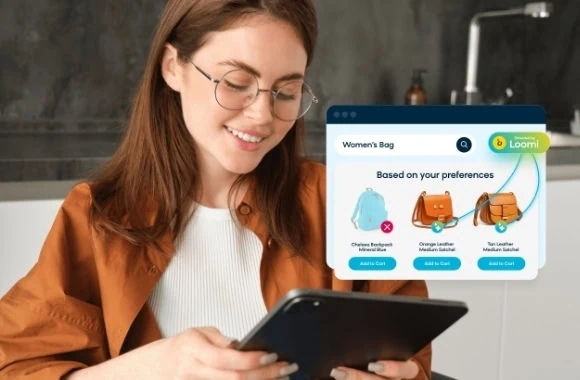
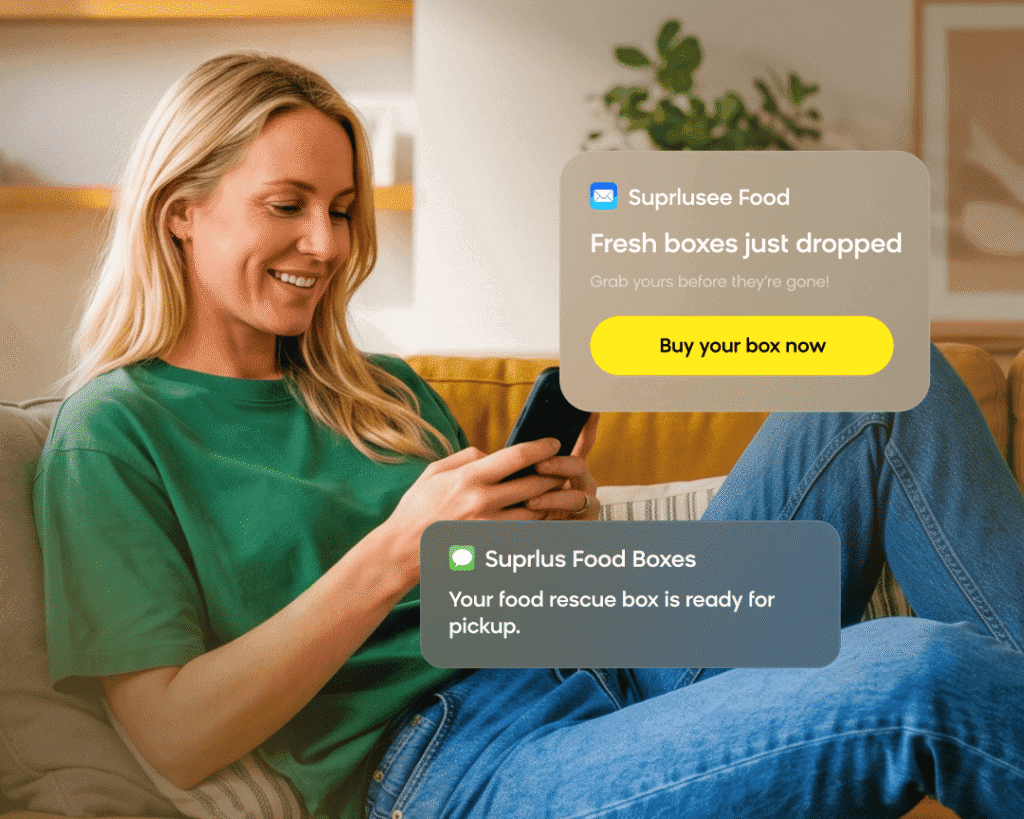
A single customer might open your email on the train, browse your site at lunch, tap an abandoned-cart push notification that evening, and click on an SMS link the next morning. To that person, it’s one continuous relationship with your brand. But behind the scenes at many companies, it’s four disconnected tools, four separate datasets, and four teams who never quite see the same picture. Closing that gap is exactly what a customer engagement platform (CEP) is built to do.
Instead of stitching channels together after the fact, a CEP treats every interaction as part of one ongoing conversation, powered by one shared view of the customer. This allows brands to deliver the kind of continuity shoppers now treat as a baseline.
Learn more about what a customer engagement platform is and why this is a crucial investment brands will want to get right.
What Is a Customer Engagement Platform?
A customer engagement platform is software that unifies customer data, intelligence, and communication channels into a single system, so a brand can deliver personalized, real-time interactions across the entire customer journey. Rather than managing email, web, mobile, SMS, and ads as separate efforts, a CEP coordinates them around one continuously updated profile of each person.
The word that does the heavy lifting is “engagement.” A campaign tool sends a message and moves on, while a customer engagement platform manages the relationship over time, reacting to what each customer does, predicting what they’ll respond to next, and adjusting the experience accordingly. It’s an ongoing and two-way process that goes beyond one-off campaigns.

You’ll see the term used in two different worlds. In customer service, a “customer engagement platform” often means a contact-center suite for managing support conversations across phone, chat, and email. In marketing and ecommerce, which is what we’re focusing on here, it means the system that powers lifecycle marketing and personalization (i.e., acquiring, converting, retaining, and growing customers across every channel they use). The two share a goal of better customer experiences, but the marketing-led CEP is the one built to drive revenue across the full journey.
For a deeper look at the discipline that sits on top of the technology, our guide to customer engagement breaks down the strategies and metrics in detail.
How a Customer Engagement Platform Works
Most definitions of a CEP stop at “it unifies your channels,” which doesn’t tell you much. The more useful way to understand a CEP is as four connected layers, each feeding the next. When people say a platform is “unified,” this stack is what they mean.
Unified Customer Data
Everything starts with data. A CEP ingests behavioral, transactional, and profile data from every source (e.g., site activity, purchases, email engagement, app events, point-of-sale, and customer service interactions). It resolves that data into a single profile per person that’s updated continuously rather than synced overnight. Without this foundation, personalization is guesswork, and the rest of the stack has nothing reliable to act on.
The Intelligence Layer
Data on its own is inert. The intelligence layer is what decides who to target, what to show them, and when to reach out. Modern platforms combine several kinds of AI here: machine learning to predict churn or rank products, rules-based logic to enforce consent and business constraints, and generative AI to produce content and interpret plain-language goals. Each handles a job the others can’t, and together they turn raw signals into decisions.
Orchestration
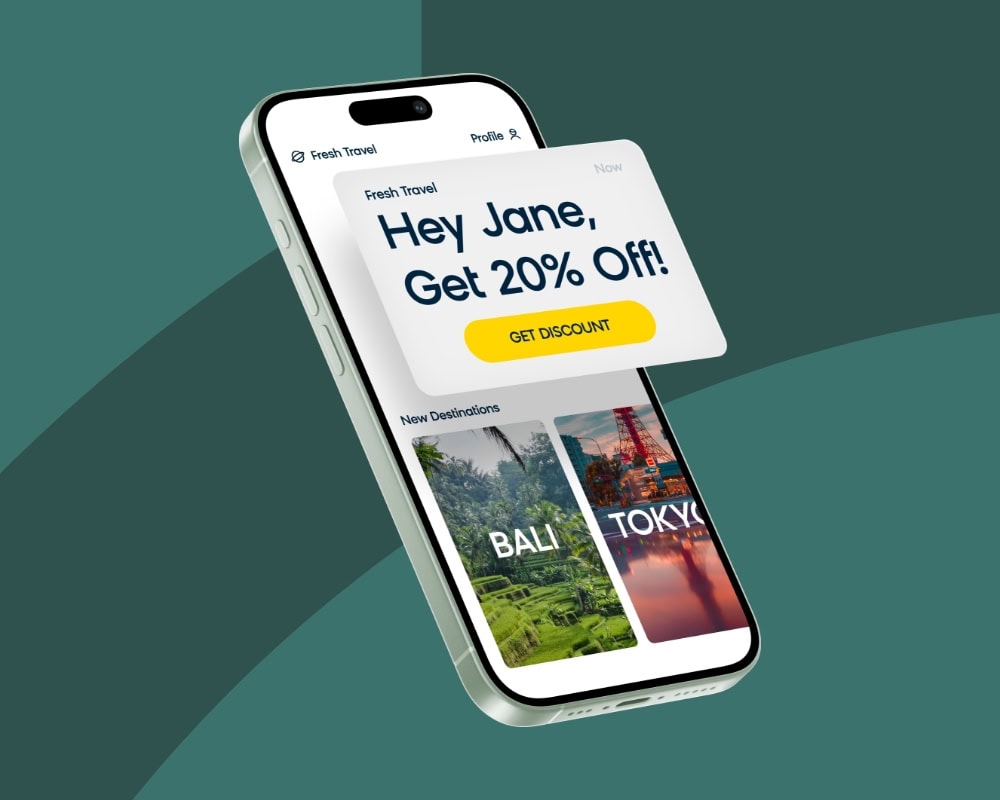
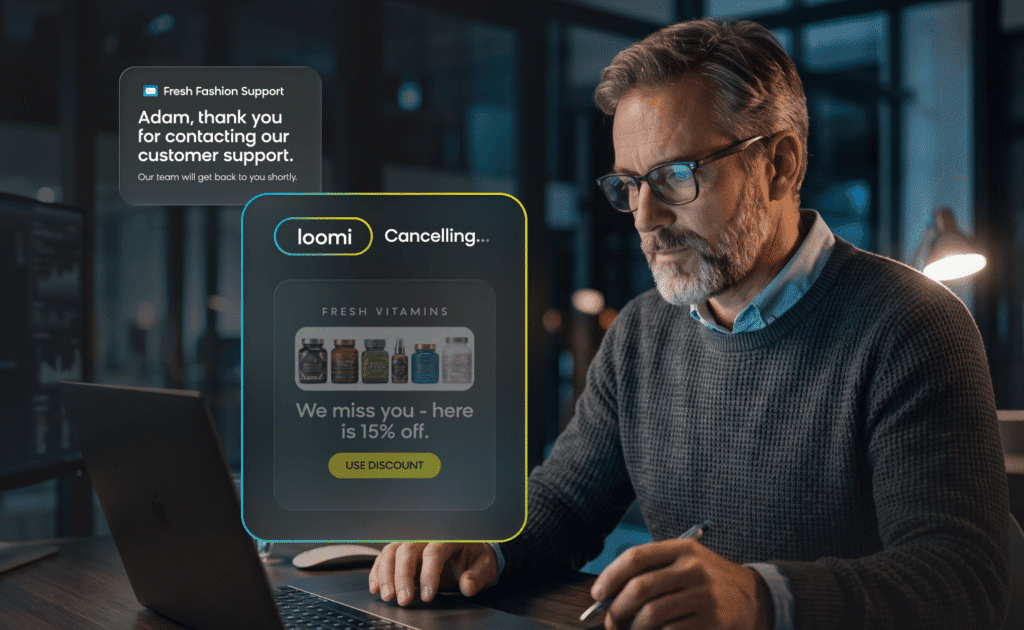
Orchestration is the logic that connects a trigger to an action across the journey. If a customer abandons a cart, the platform waits, checks whether they bought elsewhere, then sends the right follow-up on the channel that customer actually responds to. Good orchestration is also aware of what has already happened: it can hold back a win-back text because the customer just contacted support, or skip a push notification for something they bought an hour ago by email. That awareness is what separates real orchestration from a pile of disconnected automations.
Channels and Measurement
Finally, the platform executes across the channels customers use — including email, web, mobile app, SMS, and paid media — and it measures the outcome. Those results flow back into the data layer, which sharpens the next decision. Thus, a CEP gets smarter the longer it runs because every interaction becomes a new signal. Essentially, data feeds the intelligence, the intelligence drives orchestration, orchestration executes across channels, and the results feed back into the data. This is also why AI is reshaping customer engagement faster than almost any other martech category.
CEP vs. CRM vs. CDP vs. Marketing Automation
The fastest way to understand a customer engagement platform is to place it next to the tools it’s most often confused with. Each solves a distinct problem, and many companies run more than one.
| Platform | Primary Job | Data It Centers On | Typically Used By |
|---|---|---|---|
| Customer engagement platform (CEP) | Deliver personalized, real-time interactions across the full journey | Real-time behavioral and profile data, activated across channels | Marketing, ecommerce, lifecycle teams |
| CRM (customer relationship management) | Track relationships, deals, and history | Account and contact records, sales pipeline | Sales and service teams |
| CDP (customer data platform) | Collect and unify customer data into clean profiles | First-party data from many sources | Data and marketing operations |
| Marketing automation platform | Automate campaign workflows, usually email-first | Lists and segments tied to campaigns | Marketing teams |
In practice, the boundaries between these different platform types are fuzzy. A CRM solution is a system of record; it tells you what happened, but it wasn’t built to orchestrate live, cross-channel experiences. A customer data platform unifies data well but often hands activation off to other tools. Traditional marketing automation excels at scheduled email flows yet tends to treat channels in isolation.
A customer engagement platform overlaps with all three because it has to: it needs CDP-grade data, automation’s workflow engine, and the real-time activation that neither was designed for. The strongest modern CEPs effectively fold the data layer in, which is why the line between a CDP and a CEP keeps moving.
A simple way to decide where a CEP fits your stack: if you already run a CDP and a marketing automation tool and they’re tightly integrated, a CEP mainly adds real-time, cross-channel orchestration on top of what you have. If you’re starting closer to scratch, a CEP can replace several of those tools at once.
Key Features To Look for in a Customer Engagement Platform
Feature lists from vendors tend to blur together. These are the capabilities that actually separate a platform that drives revenue from one that just sends messages.
- Unified, real-time data: A single profile per customer that updates the moment they act rather than on a nightly batch. Stale data makes every downstream decision worse.
- Layered AI: Predictive models for churn and propensity (how likely a customer is to take an action like buying again), generative AI for content, and rules-based control for consent and governance.
- Omnichannel orchestration: The ability to coordinate email, web, app, SMS, and ads from one set of journeys, so the experience stays consistent as customers move between channels.
- Granular segmentation and triggers: Real-time segments that react to behavior instead of static lists you rebuild every week.
- Experimentation and analytics: Built-in A/B testing and reporting that tie activity to revenue, so you can prove what’s working and cut what isn’t.
- Governance and consent: Native handling of preferences, frequency, and regional rules, because deliverability and trust depend on it.
A platform can check every box on paper and still feel disjointed if these capabilities live in separate modules bolted together by acquisition. The test is whether they share one data model and one interface.
Customer Engagement Platform Use Cases
The clearest way to see what a CEP does is to watch it work across the customer lifecycle. A few patterns recur across nearly every brand.
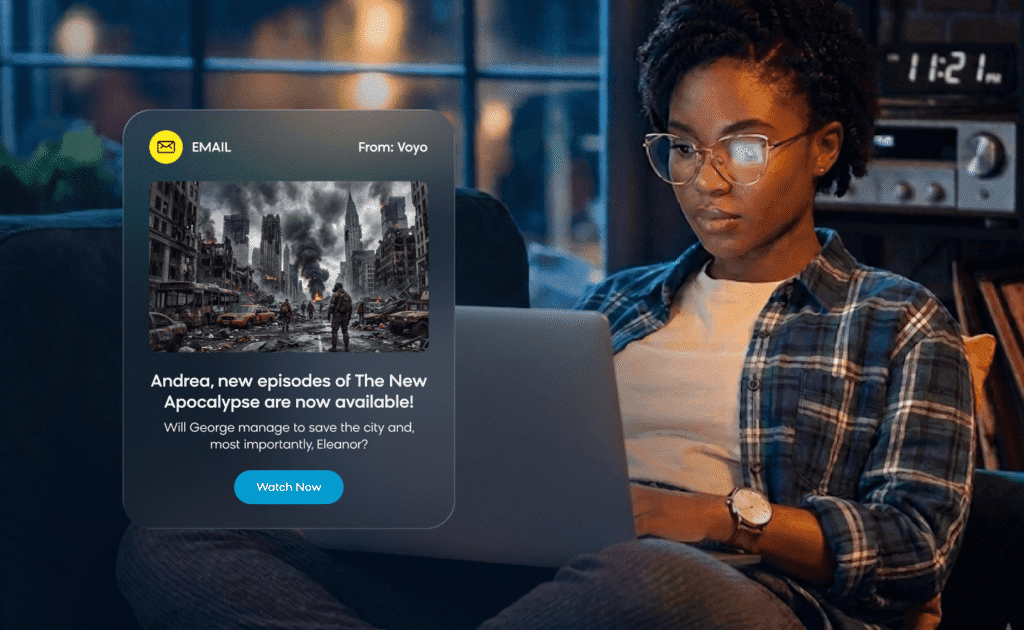
First, CEPs are great at winning back lapsed customers. Reengagement is where unified data pays off fastest, because the platform can detect disengagement and respond automatically. Croatian streaming service Voyo built a win-back flow for cancelling subscribers that served personalized content recommendations based on what each viewer actually watched. Those win-back emails landed a 38% open rate and a 2.53% click-through rate, and the broader program returned 500% on its initial investment in the first six months.
CEPs are also effective at driving repeat purchases. Turning one-time buyers into loyal ones depends on understanding behavior across channels. Footwear brand Tamaris had customer data fragmented across ecommerce, retail point-of-sale, and email, which made it impossible to see why shoppers lapsed. After unifying that data into a single profile and layering on AI-powered segmentation, Tamaris triggered automated reactivation journeys that raised its repeat purchase rate and helped the brand roll the winning playbook out across 13 countries in just 12 months.
Many brands are centralized in a single region. CEPs can do wonders in helping brands coordinate engagement at a global scale. JD Sports needed to run personalized lifecycle campaigns across email, push, weblayers, and paid media without multiplying complexity for every new region. Working from unified data and real-time orchestration, the retailer saw a 65% increase in conversion rate in the UK and a 75% lift in open rates in Spain.
How To Choose a Customer Engagement Platform
The problem with trying to choose a CEP is that the market is crowded and most demos look similar. Here are some factors to help you separate platforms once you get past the feature grid.
- Start from your goals: Decide what you’re actually trying to move (retention, conversion, average order value, speed of execution, etc.). The right platform maps to those priorities rather than to the longest spec sheet. And, be honest about whether you need a full CEP at all: If email is your only real channel and your customer data is already clean, a dedicated marketing automation tool may get you there faster.
- Demand true data unification: Many platforms claim to be unified but rely on connectors that sync periodically. Ask how profiles are built, how fresh the data is, and whether segmentation runs in real time. This single factor determines how good everything downstream can be.
- Test the depth of the AI: Generative content demos well, but predictive accuracy and governed decisioning are what drive real results over time. Look for a platform that combines all three rather than leaning on one, and ask what the models predict, how they’re trained, and where rules keep them in check.
- Match channel coverage to your customers: Buy for the channels your customers use, with room to expand. A platform that orchestrates email, app, SMS, and web from one place is worth more than a wider list you’ll never activate.
- Weigh integration and speed-to-value: A platform only helps once it’s live. Online pharmacy etabletka migrated its entire marketing infrastructure in two months with zero downtime, then cut the volume of its automated campaigns by 40% while lifting click-to-open rate 73%, with fewer but better-targeted sends doing more than the old high-volume approach. Factor implementation time and total cost of ownership (implementation, training, and the tools a CEP lets you retire) into the decision, well beyond the headline license fee.
Where Bloomreach Fits
We built Loomi, our agentic personalization platform, around a conviction that a customer engagement platform is only as good as the intelligence and data underneath it. Loomi unifies customer data and acts on it in real time, turning a fresh signal into a personalized decision in milliseconds instead of waiting for the overnight sync most tools rely on. Loomi’s marketing automation then coordinates all your channels (email, web, mobile app, ads, and more) in one place for more seamless personalization.
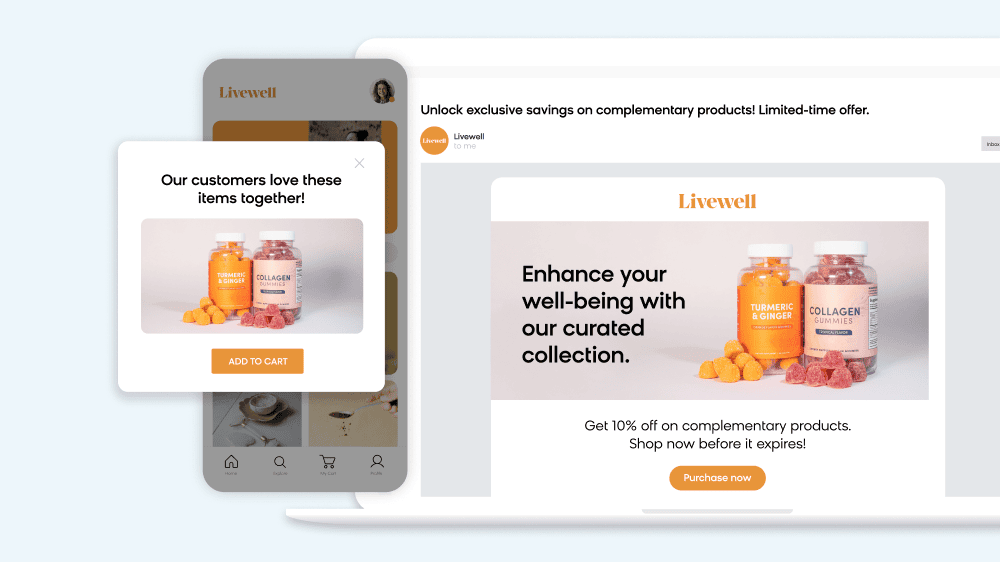
Two things set our approach apart. First, Loomi blends machine learning, rules-based AI, and generative AI rather than betting on one, so the system can predict churn, respect consent, and write copy without forcing you to choose between precision and creativity. Our marketing agent also allows you to let AI create your entire campaign from a single prompt, using all of that intelligence and data to inform the parameters.
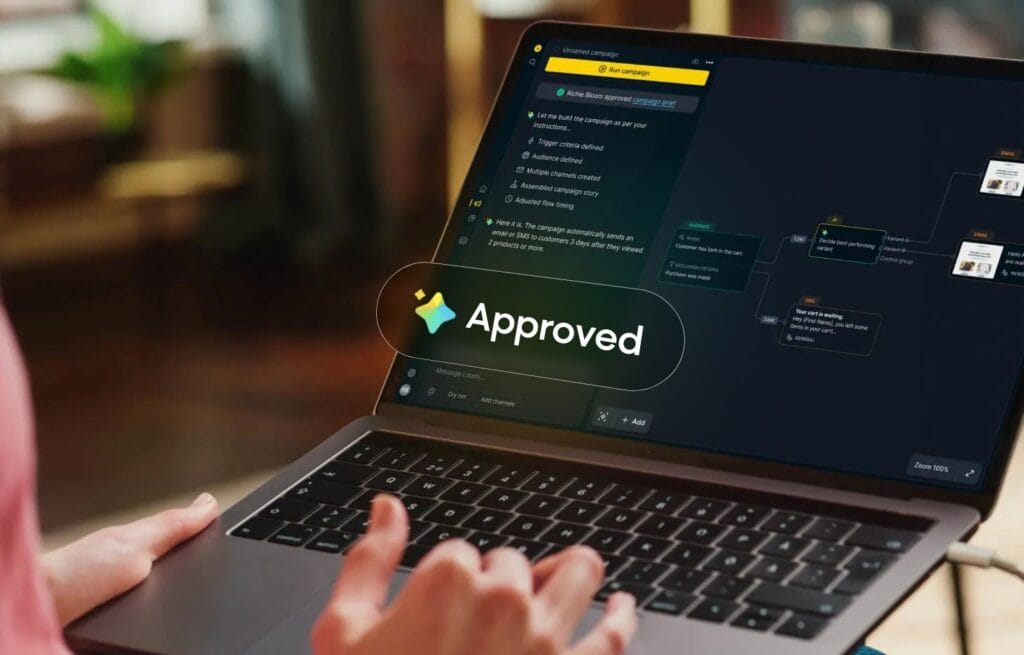
Second, for commerce brands, we unify lifecycle marketing with ecommerce search and conversational shopping in one platform, so the experience a shopper gets in their inbox and the one they get on your site are driven by the same understanding of who they are.
Ultimately, a customer engagement platform is a powerful way to turn scattered channels and siloed data into one coherent relationship with each customer. The platforms that deliver on that promise share a common foundation of unified data, layered AI, and true omnichannel orchestration.
If your engagement still runs on disconnected tools, the fastest way to see the difference is on your own data. Book a demo, and we’ll show you unified, real-time personalization working across your channels.
Frequently Asked Questions
What’s the difference between a CRM tool and a customer engagement platform (CEP)?
A CRM tool is a system of record that tracks relationships, deals, and history, and it’s built primarily for sales and service teams. A customer engagement platform is a system of action that uses real-time behavioral data to orchestrate personalized interactions across channels. Many companies use both: the CRM holds the relationship history, while the CEP activates it.
Is a customer engagement platform the same as a customer data platform (CDP)?
Not quite, though the line is blurring. A customer data platform focuses on collecting and unifying customer data into clean profiles. A customer engagement platform uses that unified data to act, orchestrating personalized experiences across channels. The strongest CEPs include CDP-grade data capabilities natively, so a separate CDP becomes unnecessary.
What are examples of customer engagement platforms?
They fall into a few groups. Platforms built for ecommerce and lifecycle marketing include Bloomreach, Braze, Klaviyo, Insider, and MoEngage. Broader enterprise marketing suites such as Salesforce Marketing Cloud and Adobe sit alongside them. Service-oriented platforms like Zendesk are sometimes grouped under the same term, though they solve the support side rather than lifecycle marketing. The right fit depends on whether your primary goal is personalization across the buying journey or service after the purchase.
How much does a customer engagement platform cost?
Pricing varies widely based on data volume, channels, contact count, and the depth of AI included. Most enterprise platforms price on a combination of these factors rather than a flat fee, so total cost of ownership, including implementation and the tools a CEP replaces, matters more than the headline license price.