
Modern automated marketing funnels have evolved through three distinct phases. Manual processes gave way to rules-based automation platforms, which now face replacement by AI-first, goal-driven orchestration. This isn’t incremental improvement — it’s a fundamental shift from static automation to intelligent autonomy.
Traditional platforms struggle with the nuances of modern shopping behaviors. Their static segments and rule-based workflows can’t adapt to real-time behavioral signals or personalize experiences at the individual product level.
For your brand to thrive, you’ll need to adopt autonomous systems that understand your business goals and independently execute strategies to achieve them. Bloomreach’s AI-powered platform represents this new model, featuring automated marketing funnel systems that don’t just follow predetermined rules but actively optimize every customer interaction to drive predictable growth.
Learn more about why static automated marketing funnels can’t capture the complexity of how modern consumers shop, and how autonomous AI systems can make all the difference.
Why the Linear Funnel Model No Longer Works
The traditional TOFU-to-BOFU progression assumes customers move predictably through awareness, consideration, and conversion stages. This framework worked when customer research was limited and purchase paths were straightforward.
However, many modern ecommerce behaviors break free from this linear assumption. Today’s customers jump between funnel stages multiple times before converting, creating complex, non-linear purchase journeys. A customer might discover a product through paid search, research alternatives on social media, and compare prices via email campaigns (before finally converting through retargeting) — all within hours.
Bloomreach addresses this complexity through a fluid, multi-layered engine that responds to signals across three core areas:
- AI-powered search and product recommendations that surface relevant items based on intent signals
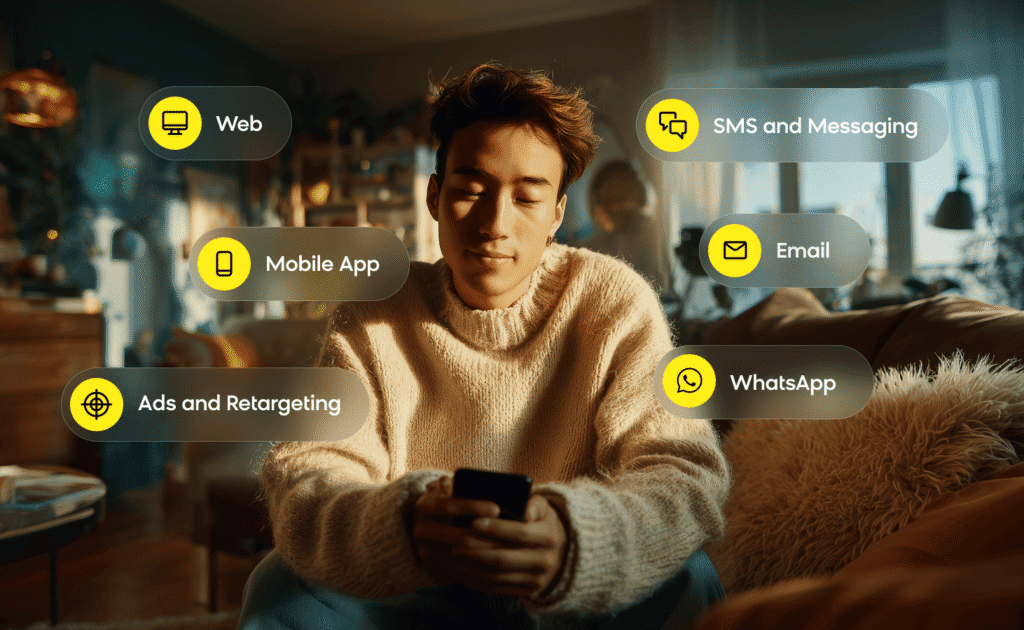
- Dynamic marketing automation (across email, SMS, web personalization, and more) that adapts to real-time behavior
- Conversational shopping that guides customers through decision-making at crucial moments

Unlike static automated marketing funnels that force customers into predetermined paths, this approach recognizes that modern commerce is circular and interconnected — customers engage with email content, return to browse products weeks later, and ultimately convert through onsite personalization.
Why Automation Isn’t Enough
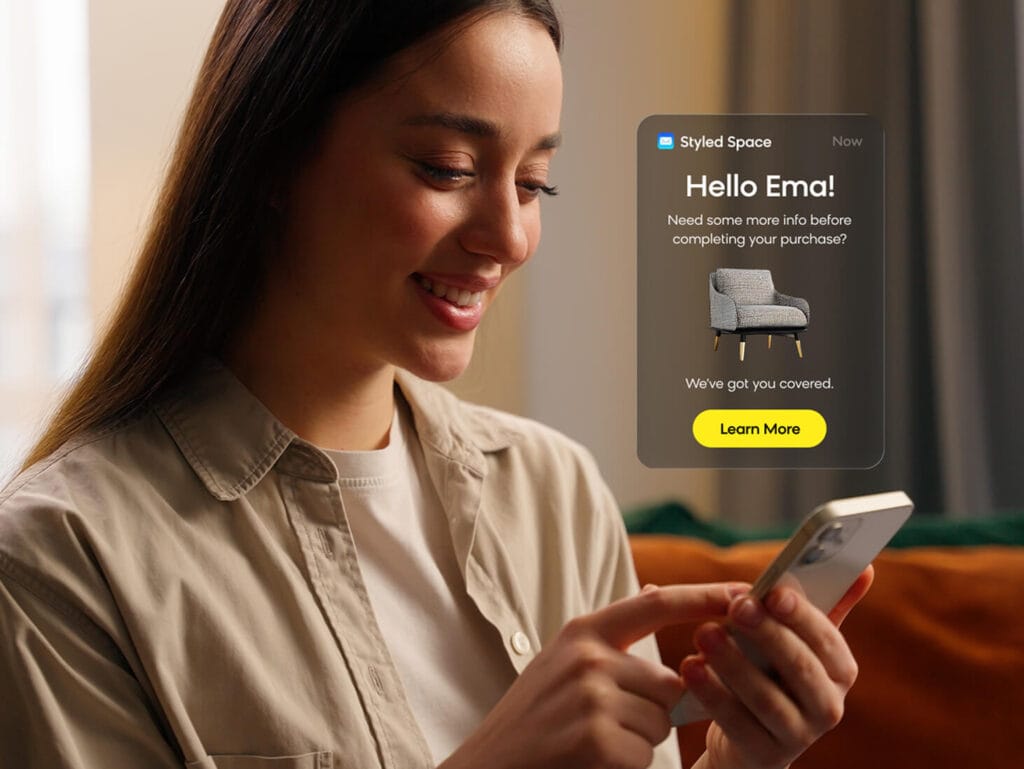
Automation executes predetermined sequences. Intelligence adapts to context. When a customer abandons their cart but continues browsing similar products, automation sends generic recovery emails. Intelligence sends personalized recommendations, contextual offers, or prioritizes immediate personal outreach based on customer value.
Traditional automated marketing funnel platforms operate on static logic trees, triggering actions based on specific behaviors without understanding the meaning behind those behaviors. This limitation becomes critical at scale — hundreds of customer segments and thousands of product SKUs create millions of possible interaction combinations that static rules simply can’t address.
Loomi AI, Bloomreach’s artificial intelligence system, bridges this gap by processing behavioral, intent, and SKU-level signals in real time. Instead of following predetermined sequences, Loomi AI analyzes each customer’s unique context and determines the optimal message, timing, and channel for engagement.
Traditional Automation vs. AI-Intelligent Funnels
| Capability | Traditional Automation | AI-Intelligent Funnels |
|---|---|---|
| Decision-Making | Rule-based | Context-aware |
| Personalization Level | Segment-based | Individual + SKU-level |
| Adaptation Speed | Manual updates | Real-time optimization |
| Data Processing | Historical triggers | Predictive modeling |
| Cross-Channel Coordination | Siloed campaigns | Unified orchestration |
| Content Optimization | A/B testing | Continuous learning |
When a customer browses winter coats but doesn’t purchase, traditional automation sends generic “complete your purchase” emails. Loomi AI, on the other hand, analyzes browsing patterns, local weather, price sensitivity indicators, and inventory levels to determine whether to send product recommendations, styling tips, size guidance, or limited-time offers.
This intelligence gap explains why many businesses see diminishing returns from automation investments. Static sequences can’t meet these expectations, while intelligent automated marketing funnel systems can.
How AI Powers Every Stage of the Modern Funnel
AI-powered automated marketing funnels don’t eliminate the awareness-consideration-conversion framework — they make each stage more intelligent and interconnected. Rather than forcing customers through rigid stages, Loomi AI identifies where each customer sits in their journey and optimizes every touchpoint accordingly.
Discovery: Intent-Driven Product Search
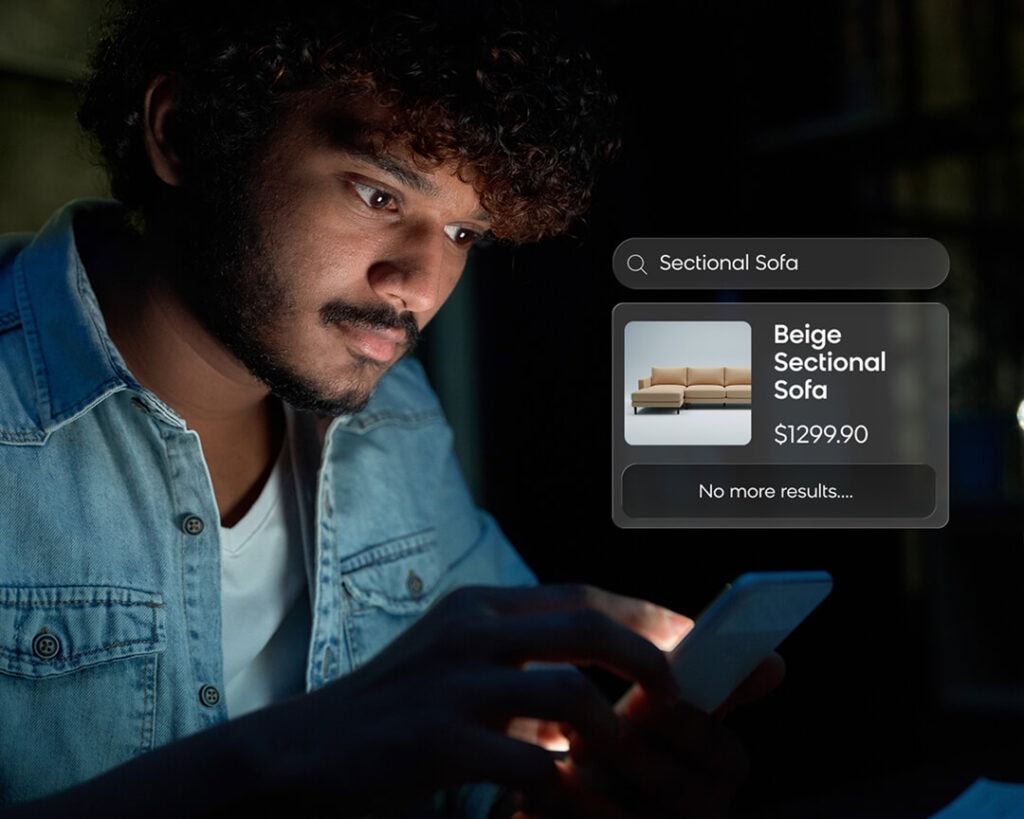
Discovery often begins when customers interact with search functionality. Traditional search returns keyword-matched results, but Loomi AI understands intent and context. When someone searches “running shoes,” the AI analyzes browsing history, seasonal patterns, price interactions, and hundreds of other signals to surface the most relevant products.
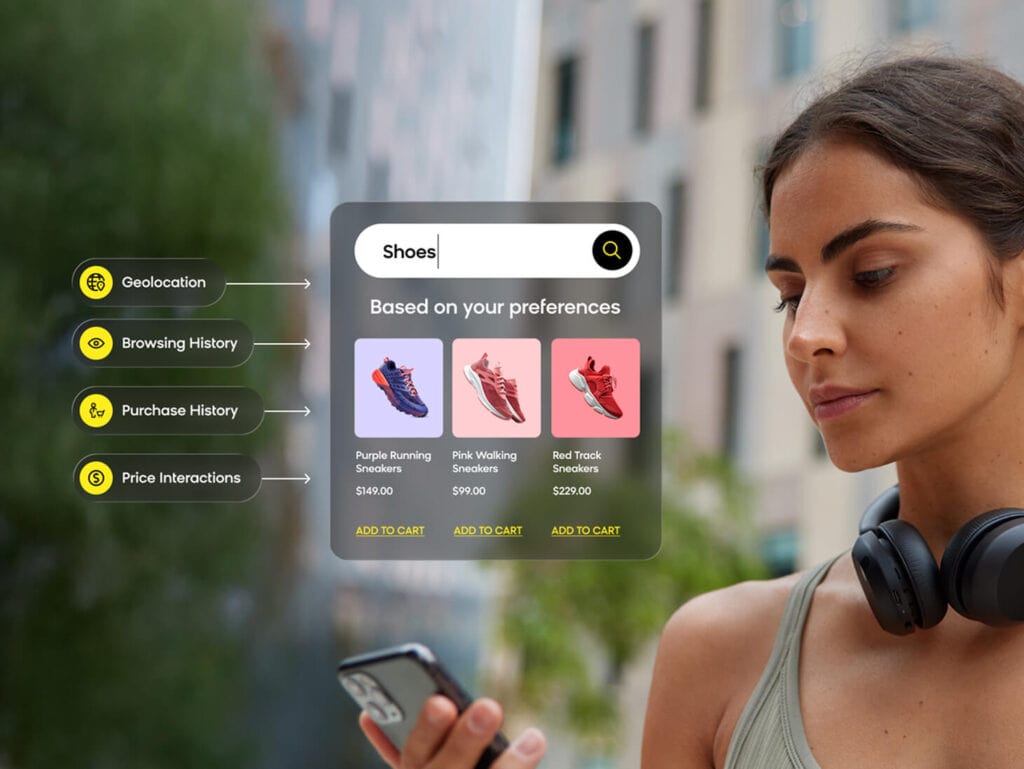
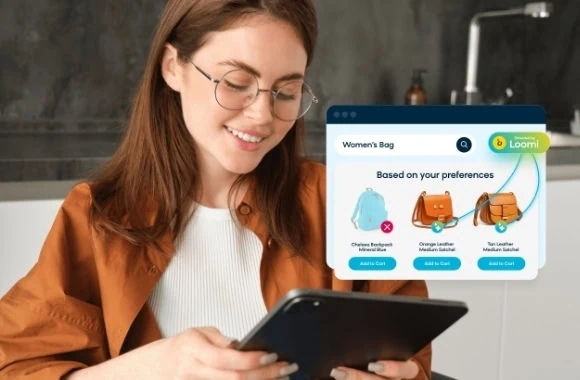
AI-driven product discovery goes beyond matching queries to products. The AI considers inventory levels, profitability, and individual preferences to rank results. Premium brand shoppers see those products prioritized, while price-sensitive customers see value options first.
Engagement: Real-Time Personalization Across Channels
The middle funnel represents the biggest opportunity for AI optimization since customers have shown interest but need guidance toward conversion. Traditional automation relies on time-based triggers and static content, while AI-powered engagement adapts to real-time signals.
Email personalization extends far beyond the subject line. Loomi AI analyzes engagement patterns, purchase history, and behavioral data to determine optimal send times, content themes, and product recommendations for each individual. If a customer typically opens emails on Tuesday mornings and responds well to styling content, the campaigns they see automatically optimize for these preferences.
SMS marketing benefits even more from AI optimization due to the channel’s immediacy and character limits. Loomi AI determines when SMS is optimal (e.g., high-intent moments, time-sensitive offers), crafts messages resonating with individual preferences, and coordinates with other channels to avoid message fatigue.
Bloomreach’s autonomous marketing features dynamically adjust product recommendations, banners, and content based on real-time behavior. Returning customers see different content than first-time visitors, and high-value customers receive different benefits (e.g., priority access to new products or exclusive offers) compared to discount seekers (e.g., latest sales).
Conversion: The Right Nudges To Complete the Purchase
Bottom-funnel optimization focuses on removing friction and providing purchase confidence. Traditional conversion tactics rely on generic urgency — limited-time offers, scarcity messaging, social proof, etc. AI-powered optimization personalizes these elements based on what motivates each individual customer.
Clarity, Bloomreach’s conversational shopping agent, provides real-time assistance during crucial decision moments. Rather than offering generic FAQs, Clarity understands specific products customers are considering and provides personalized guidance — explaining size differences, suggesting complementary products, or addressing specific concerns based on browsing behavior.
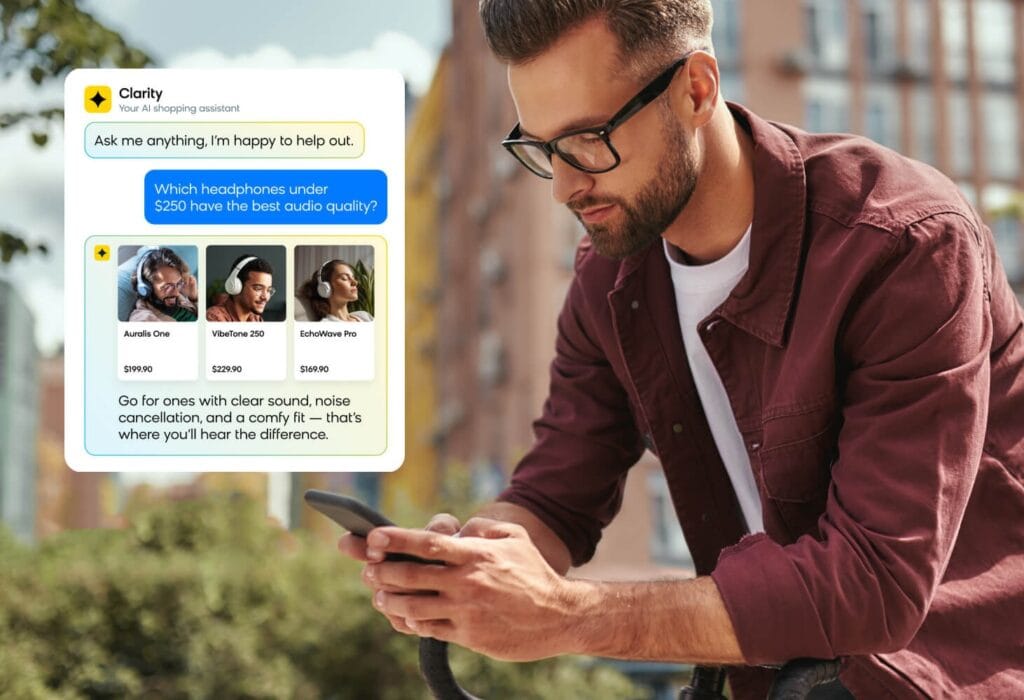
Using AI is key to creating more sophisticated on-site nudges that convert. Instead of showing identical “free shipping” banners to every visitor, the system might show inventory alerts to high-intent customers, styling tips to multi-category browsers, or size guides to customers showing uncertainty signals.
Post-Purchase: Driving Retention and Loyalty
If you want customers to keep coming back, you’ll need to look beyond conversions and into retention and loyalty. AI-powered post-purchase optimization focuses on building long-term value rather than simply promoting additional products.
With AI, you can reach your customers on the channels they prefer with the value-driven messaging they want, ensuring you’re building a relationship instead of merely facilitating transactions.
You can also use predictive loyalty flows to anticipate customer needs based on purchase patterns and their lifecycle stage. For example, seasonal item purchasers receive timely replenishment reminders, and customers who are still exploring receive diverse product recommendations to expand category interest.

Traditional vs. Autonomous: A Feature Comparison
The gap between traditional automation and autonomous AI becomes clear when comparing specific capabilities. Most businesses underestimate this difference, assuming automated marketing funnel platforms provide similar functionality with minor variations.
Real-Time Decisions vs. Scheduled Campaigns
Traditional platforms excel at scheduled delivery but struggle with real-time decisions. If a customer abandons their cart at 2 p.m., static systems will wait for a predetermined amount of time before sending recovery emails. During this gap, customers might return to browse related products, showing continued interest that changes the optimal messaging strategy.
Bloomreach’s autonomous system recognizes continued engagement and adapts accordingly. Instead of sending generic cart abandonment emails, it might display personalized product recommendations during browsing sessions or send styling tips addressing potential areas of hesitation.
Product Intelligence at Scale
Traditional automated marketing funnel platforms segment customers into broad categories — “high spenders,” “frequent browsers,” “price-sensitive buyers” — applying generic rules to each segment. This approach breaks down when customers exhibit complex behaviors that don’t fit into neat categories.
Loomi AI’s product intelligence analyzes individual relationships with specific SKUs, brands, and categories. It understands customers might be price-sensitive for everyday items but willing to spend premium amounts for special occasions. This SKU-level intelligence enables personalization that traditional segmentation can’t achieve.
Unified Data vs. Integration Complexity
Most businesses using traditional platforms struggle with data silos. Customer behavior data sits in Google Analytics, purchase history in ecommerce platforms, email engagement in automation tools, and social media interactions in advertising platforms. Connecting these sources requires complex integrations that often break or provide incomplete pictures.
Bloomreach’s native customer data engine captures all customer interactions within a unified system. This integration enables AI to consider the complete customer context when making decisions, rather than optimizing based on partial data from individual channels.
Omnichannel Coordination vs. Channel Silos
Traditional platforms manage individual channels effectively but struggle with cross-channel coordination. Customers might receive email promotions, see conflicting website offers, and get different SMS messages, creating confusion rather than cohesive experiences.
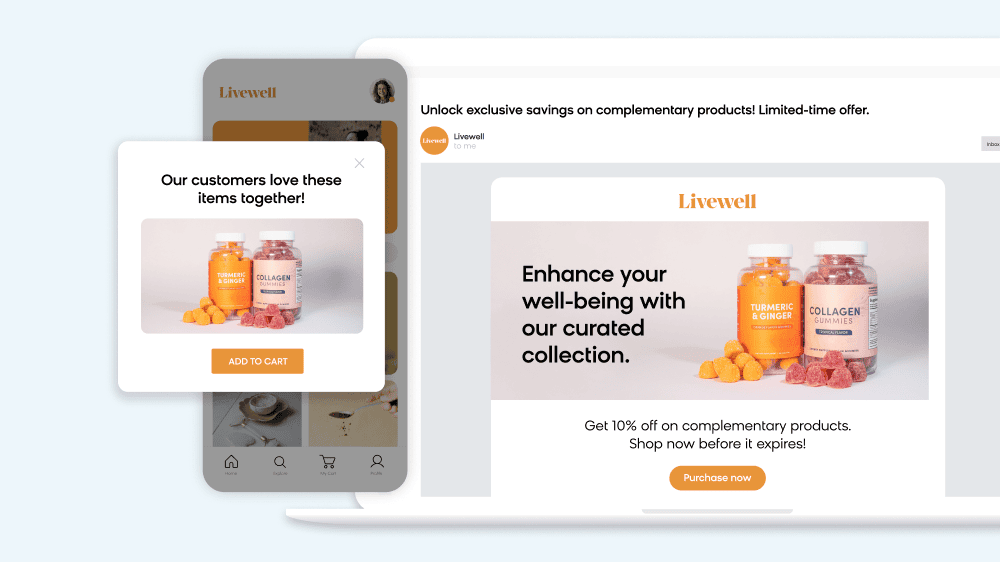
Autonomous systems orchestrate all touchpoints to create consistent, reinforcing experiences. If customers engage with winter coat emails, websites personalize to show complementary accessories, and SMS campaigns focus on styling tips rather than competing for attention with unrelated products.
Winning With AI-Powered Automated Marketing Funnels
The evolution toward autonomous automated marketing funnels reflects broader changes in customer expectations, technology capabilities, and competitive dynamics. Businesses understanding and adapting to these shifts will capture big wins and greater advantages.
1. Stage-Based → Situational Marketing
Traditional funnel approaches assume customers progress through predictable stages (i.e., awareness, consideration, conversion), remaining in each stage long enough for marketers to deliver appropriate content. This assumption never perfectly matched reality, but it worked well enough when customer research was limited and purchase processes were slower.
Now, situational marketing can adapt to real-time context rather than predetermined stages. AI analyzes immediate signals — current browsing behavior, recent interactions, time of day, device type, location, etc. — to determine optimal messaging regardless of where customers theoretically sit in traditional automated marketing funnels.
A customer browsing winter coats at 10 p.m. on mobile receives different content than someone researching the same products at 2 p.m. on desktop, even with identical purchase histories. Evening mobile browsers might be planning for tomorrow’s weather and need immediate availability information, while afternoon desktop researchers could be comparing options for future purchases and want detailed feature comparisons.
2. Manual Logic → Adaptive Journeys
Traditional automation requires marketers to anticipate customer behavior and create rules addressing various scenarios. This manual logic works for simple, predictable interactions but breaks down when customer behavior becomes complex or unexpected.
Consider customers who abandon carts, receive recovery emails, click through without purchasing, browse related products, leave again, then return via organic search three days later. Traditional automation might send another cart recovery email, not recognizing that customer intent evolved from specific product consideration to broader category exploration.
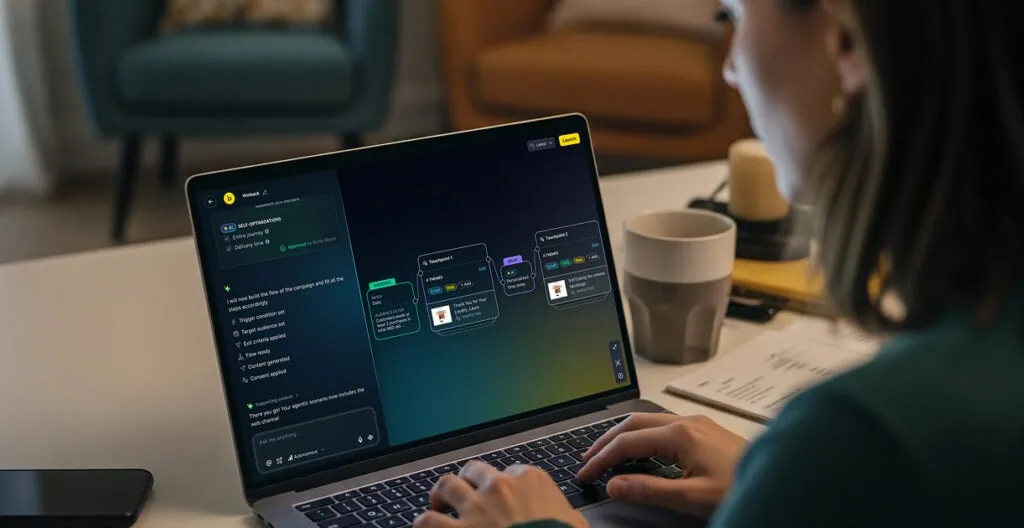
Micro-adaptive journeys adjust in real time based on continuous behavioral feedback. Loomi AI doesn’t follow predetermined paths but creates thousands of micro-decisions that adapt each customer’s experience moment by moment.
When cart abandoners return via organic search, the AI recognizes this behavioral change and adjusts accordingly. Instead of continuing cart recovery sequences, it might provide category education, show related product options, or offer styling assistance — whatever the AI determines will best serve current customer needs.
3. Workflow-Oriented → Outcome-Led Creativity
Traditional marketing organizations structure teams around workflow management (campaign creation, email design, automation setup, performance analysis). This workflow orientation made sense when marketing technology required significant manual management.
Autonomous AI systems eliminate most workflow management, allowing teams to focus on outcome-driven creativity. Instead of building email sequences or managing A/B tests, marketers focus on brand strategy, creative concepts, and customer experience innovation.
AI handles the execution — things like optimal send times, subject line variations, audience segmentation, and cross-channel coordination — while human creativity focuses on emotional connection, brand differentiation, and strategic positioning.
Marketing teams become strategy air traffic controllers rather than workflow managers. They define brand voice, identify market opportunities, and create emotional narratives while AI ensures these creative concepts reach the right customers through optimal channels at the perfect time.
Use Bloomreach To Evolve Your Automated Marketing Funnels
Companies using autonomous automated marketing funnel approaches consistently achieve superior results: higher conversion rates, increased customer lifetime value, reduced operational complexity, and improved customer satisfaction. More importantly, they position themselves for continued success as customer expectations and competitive dynamics continue evolving.
The choice facing modern marketers isn’t whether to adopt AI-driven optimization, but how quickly they can transition from static automation to autonomous intelligence. Companies delaying this transition risk being left behind by competitors delivering more relevant, personalized, and effective customer experiences.
With Bloomreach, you get automated marketing funnels powered by agentic AI, empowering you to focus on building customer relationships and thinking creatively rather than fighting manual roadblocks. Learn more about how you can drive meaningful growth by scheduling a personalized demo today.