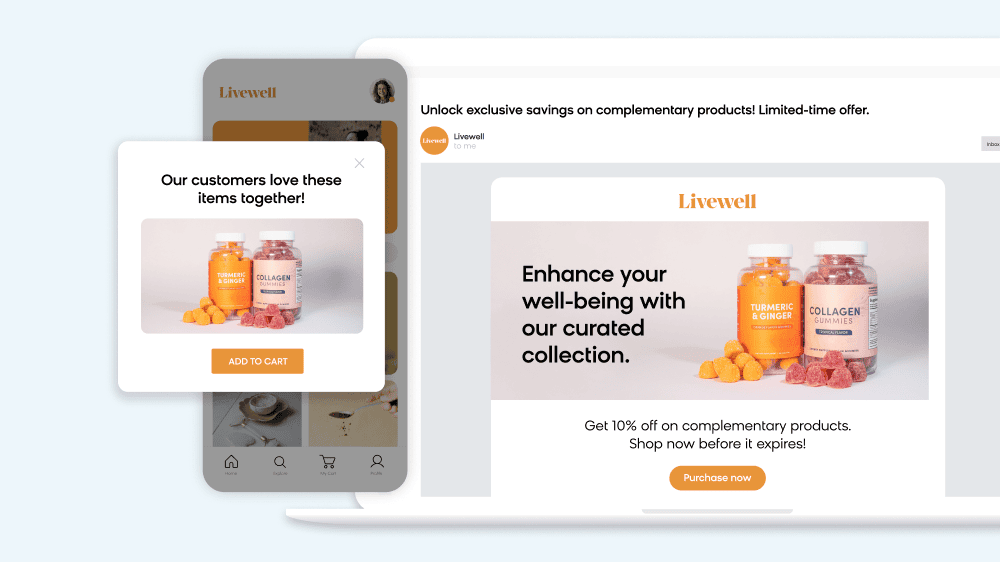
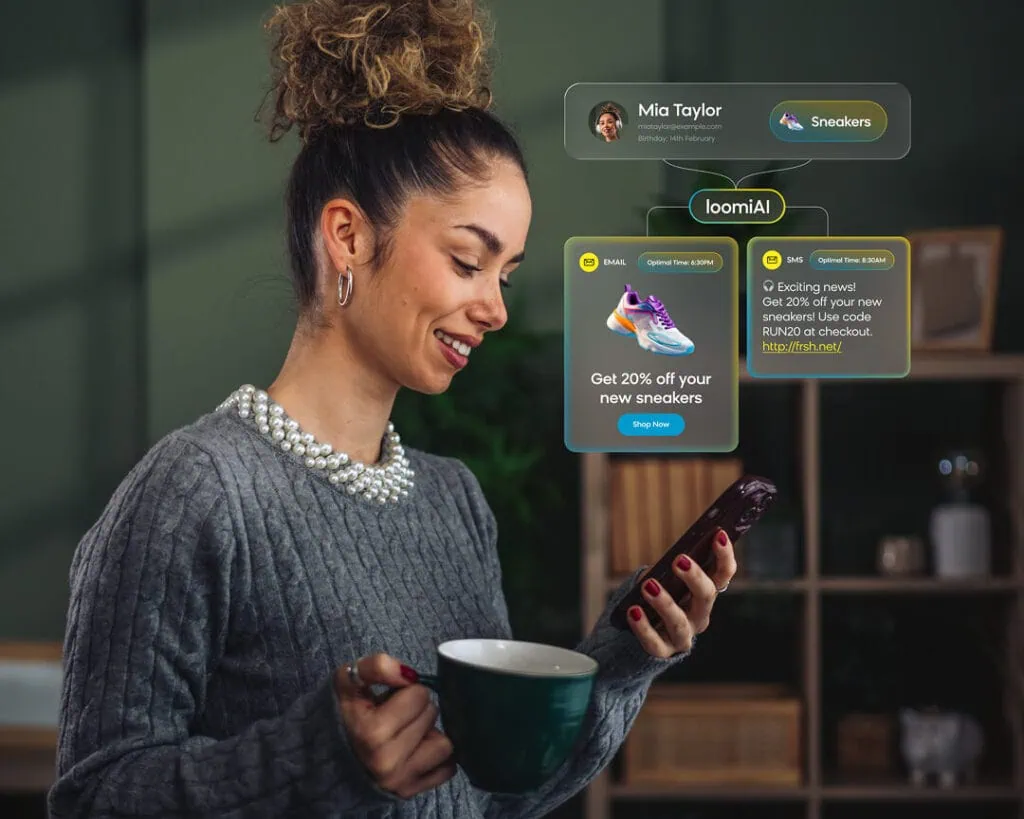
If you’ve spent the last two years adding tools to your martech stack (e.g., an email platform, a search tool, a web personalization layer, a CDP, an analytics overlay), you’ve probably noticed that they don’t talk to each other the way they should. There are plenty of times when a customer who sees personalized products in search then gets a generic email moments later. That gap between expectation and execution is where the best ecommerce personalization platforms in 2026 make their case.
The leading platforms in 2026 are no longer just delivering personalization: a new wave is building it autonomously. Agentic AI tools can now generate full campaigns, segment audiences, and optimize journeys from a plain-language prompt, without manual rule-writing. The market still spans a wide spectrum: on one end, single-purpose specialists that do one thing exceptionally well (search, email, experimentation); on the other, unified systems that deliver marketing automation, onsite personalization, and search discovery from a single AI intelligence layer. Both approaches serve real needs, and the right fit depends on where your business is today and what you need personalization to cover.
Let’s look at what the best ecommerce personalization platforms offer today and how they can fit with your strategies and priorities.
What Is an Ecommerce Personalization Platform?
An ecommerce personalization platform is software that uses customer behavioral data, purchase history, and real-time signals to tailor the shopping experience for each individual visitor. This personalization includes product recommendations, search results, email content, web overlays, push notifications, and SMS, all shaped by what that specific shopper has done, bought, or shown interest in.
The underlying mechanism is generally pretty similar: data collection feeds into a unified customer profile, which an AI or ML model then analyzes to predict intent and deliver the most relevant experience across channels. The key distinction from older segmentation tools is that modern platforms don’t apply static rules — they continuously learn from new behavior and adapt recommendations accordingly.
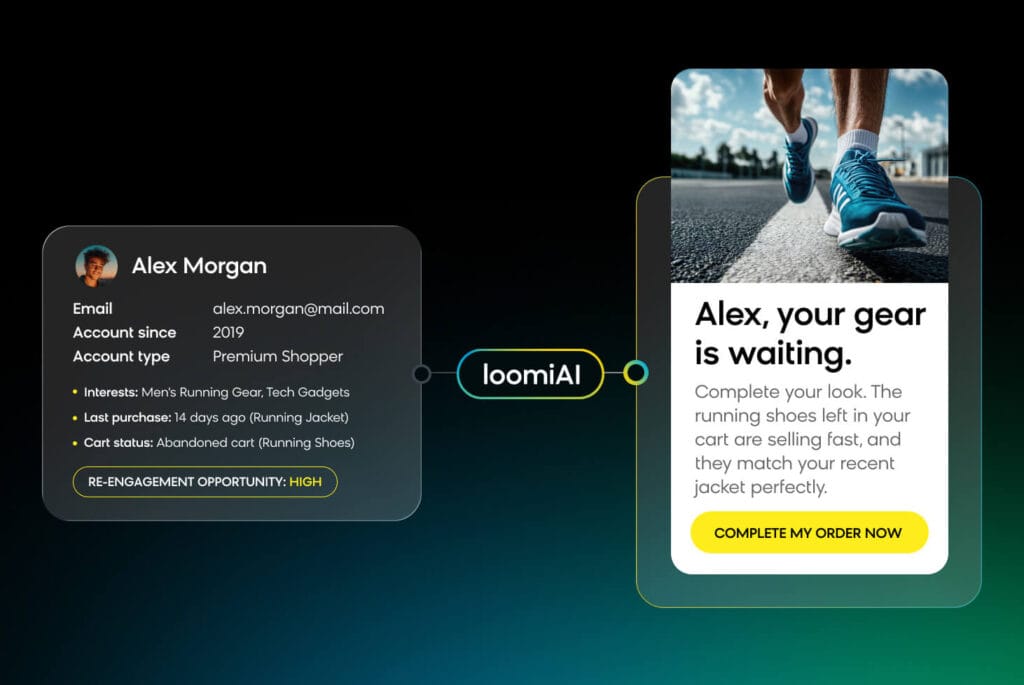
A strong personalization engine sits at the core of any serious platform, connecting data inputs to personalized outputs, which in turn affects metrics like conversion rates, average order value (AOV), and customer lifetime value (CLTV).
The quality of a platform’s commerce data infrastructure determines whether personalization feels instantaneous or stale. Platforms that collect, unify, and act on product and customer signals in real time set the ceiling. Those working from batch-processed snapshots can only personalize based on yesterday’s shopper.
What To Look for in Ecommerce Personalization Software
When evaluating ecommerce personalization software, it’s important to know what you should compare. These seven criteria map to the columns in the comparison table later in this guide and reflect the capabilities that separate genuinely powerful ecommerce personalization software from tools that look comprehensive on a feature page but fall short in practice.
Real-Time Customer Data Layer or Built-In CDP
Does the platform unify behavioral, transactional, and channel data in real time without requiring a separate CDP? Real-time personalization requires a live data layer. Platforms that rely on batch data syncs will always be personalizing based on who the customer was yesterday, not who they are right now.
AI/ML-Driven Decisioning
Does the AI adapt recommendations autonomously, or does it just execute rules you’ve prewritten? Look for platforms that predict intent, optimize send times, and segment automatically based on behavioral patterns. Machine learning personalization that improves continuously is meaningfully different from a rules engine with a machine learning label attached.

Cross-Channel Activation
Can the platform deliver personalization across email, SMS, push, web overlays, and search from a shared data layer, or only within one channel? Point solutions create data silos that break the experience. A shopper who browses a product on-site and then receives a completely unrelated email the next morning is experiencing a fragmented stack, not a personalized one.
Ecommerce Search Personalization
Does the platform personalize search results and category pages on-site, or only marketing messages? This is a capability that many marketing-first platforms simply don’t offer. However, search is often the highest-intent moment in a shopping session. The ability to adapt rankings to individual behavior in real time is a capability that varies significantly across platforms and is worth verifying during evaluation.
A/B Testing and Experimentation
Can marketing teams run and analyze personalization experiments without developer involvement? Built-in experimentation closes the loop between what you’re personalizing and whether it’s actually working. Without it, optimization becomes guesswork.
Ease of Use and Marketer Self-Service
Can your team build, launch, and iterate on personalized campaigns without filing IT tickets? Platforms that require heavy developer involvement slow down execution regardless of how powerful they are on paper. A good benchmark: can a marketer create a new behavioral segment and trigger a campaign in under an hour?
Enterprise Scalability and Integration Depth
Does the platform handle millions of customer profiles without degrading performance, especially during peak traffic times like Black Friday? Does it integrate cleanly with your commerce infrastructure (Shopify, Salesforce Commerce Cloud, SAP, Magento)? Understanding ecommerce personalization tools at an integration level matters as much as the features themselves when you’re operating at scale.
The 10 Best Ecommerce Personalization Platforms in 2026
Platform assessments draw on vendor documentation, published product capabilities, and publicly available user reviews from G2 and Gartner Peer Insights.
1. Bloomreach: Best for Enterprise Omnichannel Personalization (Unified Marketing + Search)
Bloomreach offers an agentic personalization platform serving 1,400+ global brands. Its approach to AI ecommerce personalization is structural: it natively unifies marketing automation (email, SMS, web personalization, push notifications, paid ads) and ecommerce search and discovery under a single agentic platform, Loomi. Loomi connects to touchpoints across the entire customer journey to create unique and seamless experiences on an individual basis.

Key features:
- Unified marketing automation: Email, SMS, push, web personalization, and paid media retargeting orchestrated from one platform with a shared customer data layer — no separate CDP required.
- Ecommerce search and discovery: Loomi personalizes search results, category rankings, and product recommendations on-site in real time, adapting to individual in-session behavior as it happens.
- Loomi marketing agent: Autonomously generates fully built multi-channel campaigns from a single prompt, handling audience segmentation, content personalization, journey logic, and timing automatically.
- Loomi conversational agent: An AI shopping assistant that guides customers through complex product selections via natural conversation on-site.
Real results:
Here are just a few examples of what Bloomreach delivers for real brands:
- Sofology unified its online and offline customer data through Loomi and saw a 16% conversion rate from personalized welcome campaigns, 7% higher average order value, and 35% click-through rates.
- Sideshow runs search and marketing automation from the same Bloomreach platform. The result: 90% uplift in conversions from search, 50% uplift in SMS click-through rate, and 30 hours saved per week.
- Regatta used AI-powered personalized search and category ranking to drive 4.04% more revenue per visitor, 4.82% higher add-to-cart rates, and 1.14% greater AOV.
- Bluebell Group uses Shopify integration with Bloomreach to power real-time personalization across Asia, generating 2% of total ecommerce sales from abandoned cart automation, 12–15% from EDM, and 5.5% from gifting campaigns.
A Forrester Total Economic Impact study* independently conducted by Forrester Consulting found that companies using Bloomreach can see up to a 251% ROI over three years, with payback within 6 months.
*The Forrester TEI study was commissioned by Bloomreach and independently conducted by Forrester Consulting. Actual results may vary.
Best for: Mid-market and enterprise ecommerce brands that want marketing automation and search personalization under one platform, without assembling a multi-vendor stack.
2. Insider: Best for Cross-Channel Lifecycle Marketing Campaigns
Overview
Insider is a growth management and cross-channel marketing platform focused on multichannel campaign orchestration across web, mobile app, email, SMS, and WhatsApp. It serves a broad range of retail and ecommerce brands globally, with particular strength in mobile engagement and lifecycle campaign building.
Key features:
- Cross-channel journey builder covering web, app, email, SMS, and WhatsApp from a single interface
- On-site personalization via banners, pop-ups, and behavioral overlays
- Predictive segmentation using behavioral and demographic signals to identify high-intent cohorts
- AI-driven product recommendations and content personalization across touchpoints
Best for: Ecommerce teams that want a cross-channel lifecycle marketing platform with strong mobile and WhatsApp engagement capabilities.
3. Dynamic Yield: Best for Experimentation-Led Personalization
Overview
Dynamic Yield is a personalization and experimentation platform with deep roots in A/B testing and multivariate experimentation for ecommerce sites, with capabilities spanning product and content recommendations, audience segmentation, and cross-channel personalization across web, mobile, email, and advertising.
Key features:
- Advanced A/B and multivariate testing with a visual editor accessible to non-technical marketing teams
- Personalized product recommendations delivered across web and app surfaces
- Audience segmentation and behavioral targeting with flexible rule-based and algorithmic approaches
- Integration with Mastercard data for purchase behavior signals beyond owned first-party data
Best for: Brands with established experimentation programs that want to connect testing directly to personalization decisions, particularly in retail and financial services contexts.
4. Nosto: Best for Shopify and Magento Ecommerce Personalization
Overview
Nosto is an ecommerce personalization platform built primarily for Shopify, Shopify Plus, and Magento merchants. Its focus is on product recommendations, onsite behavioral targeting, and personalized content across the shopping journey, with a setup process designed for commerce teams rather than developers.
Key features:
- AI-powered product recommendations surfaced on product pages, category pages, cart, and post-purchase
- On-site content personalization with segmentation built around purchase behavior and browsing patterns
- Native Shopify and Magento integrations with low-code setup for fast deployment
- A/B testing for recommendation placements to optimize positioning and format
Best for: Shopify and Magento merchants looking for fast-to-deploy, platform-native product recommendation and onsite personalization without a heavy enterprise implementation.
5. Klaviyo: Best for Email-First Personalization for DTC Brands
Overview
Klaviyo is a marketing automation platform widely adopted by DTC ecommerce brands, with strengths in email and SMS marketing driven by tight Shopify and BigCommerce data integrations. Its personalization capabilities are primarily focused on marketing channel execution.
Key features:
- Email and SMS flows with behavioral triggers, including cart abandonment, browse abandonment, and win-back sequences
- Segmentation based on purchase history, predicted customer lifetime value, and engagement frequency
- Product recommendation blocks in emails powered by catalog and order data
- Prebuilt automations and templates designed for fast DTC deployment with minimal technical setup
Best for: DTC brands on Shopify or BigCommerce that want sophisticated email and SMS personalization running quickly, with channel-focused execution rather than onsite search or product discovery.
6. Algolia: Best for Search and Discovery Personalization
Overview
Algolia is a search and discovery platform offering AI-powered site search, browse personalization, and product recommendations. It is widely used by ecommerce engineering teams for its API-first architecture and high-performance search indexing that handles massive catalog scale with low latency.
Key features:
- AI-native search with typo tolerance, synonym handling, and relevance tuning at the index level
- Personalized search ranking based on individual user behavior and session signals
- Recommend API for product recommendations, including frequently bought together, related items, and trending products
- Developer-friendly API-first architecture with detailed documentation and broad SDK support
Best for: Engineering-led ecommerce teams that want high-performance, customizable search and discovery infrastructure with strong developer tooling and the flexibility to build custom experiences on top of a powerful search layer.
7. Salesforce Marketing Cloud: Best for CRM-Native Enterprise Personalization
Overview
Salesforce Marketing Cloud is an enterprise marketing platform tightly integrated with Salesforce CRM. It personalizes campaigns across email, mobile, advertising, and social using CRM data as the primary signal source, making it a natural fit for organizations that have already standardized on the Salesforce ecosystem.
Key features:
- Einstein AI for predictive audience segmentation, send-time optimization, and content selection at scale
- Journey Builder for cross-channel campaign orchestration tied to CRM lifecycle events
- Deep integration with Salesforce CRM, Service Cloud, and Commerce Cloud for unified customer context
- Data Cloud (CDP) for unified customer profiles across the full Salesforce ecosystem
Best for: Enterprise organizations already running on Salesforce CRM and Commerce Cloud that want marketing personalization tightly coupled with CRM data and customer lifecycle stages.
8. Adobe Experience Cloud: Best for Omnichannel Enterprise Marketing at Scale
Overview
Adobe Experience Cloud is a suite of enterprise marketing, analytics, and personalization tools, including Adobe Target for experimentation, Adobe Journey Optimizer for cross-channel campaigns, Adobe Real-Time CDP, and Adobe Analytics. Adobe Experience Cloud covers marketing, analytics, and personalization across a broad set of tools and integrations designed for large organizations.
Key features:
- Adobe Real-Time CDP for unified customer profiles aggregated across all data sources and systems
- Adobe Target for A/B testing, multivariate testing, and experience personalization across digital surfaces
- Adobe Journey Optimizer for cross-channel campaign orchestration spanning email, push, in-app, and SMS
- Deep integrations across the Adobe Creative and Analytics ecosystem for content-to-campaign workflows
Best for: Large enterprises with significant martech investment, dedicated Adobe practices, and personalization needs spanning digital experience management and marketing execution at global scale.
9. Optimizely: Best for Experimentation and Content-Driven Personalization
Overview
Optimizely is a digital experience platform with deep roots in web experimentation and A/B testing. It has expanded into content management, commerce, and personalization, making it a strong option for brands where content strategy and editorial experience are central to the customer journey. It is strongest where content strategy and experimentation are central priorities rather than channel-level marketing automation at scale.
Key features:
- Established A/B testing and feature flagging capabilities with strong statistical rigor
- Content management system with personalization layered into content delivery across pages and components
- Data platform for audience segmentation and behavioral analytics tied to content performance
- Commerce capabilities via Optimizely Commerce Cloud for brands that want CMS and commerce on one platform
Best for: Content-driven ecommerce brands and digital publishers that want to run sophisticated experimentation programs alongside personalized editorial and product experiences.
10. Monetate: Best for Real-Time Decisioning and Personalization Testing
Overview
Monetate is a personalization and testing platform focused on real-time web experience decisioning. It has been adopted by retail and financial services brands for its ability to serve personalized content, recommendations, and layouts at scale based on real-time behavioral and contextual signals. Its strength is onsite personalization and decisioning rather than full-stack marketing orchestration.
Key features:
- Real-time decisioning engine that serves personalized content, product recommendations, and page layouts based on live visitor context
- A/B and multivariate testing with strong statistical controls for high-traffic sites
- Automated personalization using machine learning to match experiences to visitors without manual rule management
- Prebuilt connectors for common ecommerce platforms to accelerate implementation
Best for: Ecommerce brands that want a dedicated real-time decisioning layer for onsite personalization and testing, particularly in retail and financial services verticals.
How To Choose the Right Ecommerce Personalization Platform
These four questions can help you figure out which capabilities actually matter for your situation.
Question 1: What is your primary personalization use case?
Start by separating marketing channel personalization (email, SMS, push) from onsite search and product discovery. The platforms on this list specialize in different areas: some focus on channel-level marketing, some on onsite search, and a smaller number cover both from a shared data layer.
If your priority is channel-based personalization, Klaviyo, Insider, and Bloomreach all serve it well, but at different scales and with different levels of automation depth. If your priority is onsite search and product discovery, Algolia, Bloomreach, and Nosto are the most purpose-built options. If you need both working from the same data layer, Bloomreach is designed to support that from a single AI-driven platform, with marketing automation and search personalization sharing the same data and no separate CDP or search integration required.
Question 2: Do you need to unify customer identity across channels, or is your data already clean?
This is a requirement that many teams don’t surface until late in the buying process. If your customer data is fragmented (different identifiers across your ecommerce platform, email tool, and on-site behavior), you need a platform with a built-in data layer that resolves identity across sources. Attempting personalization on top of fragmented, unreconciled data degrades quality regardless of which platform you choose.
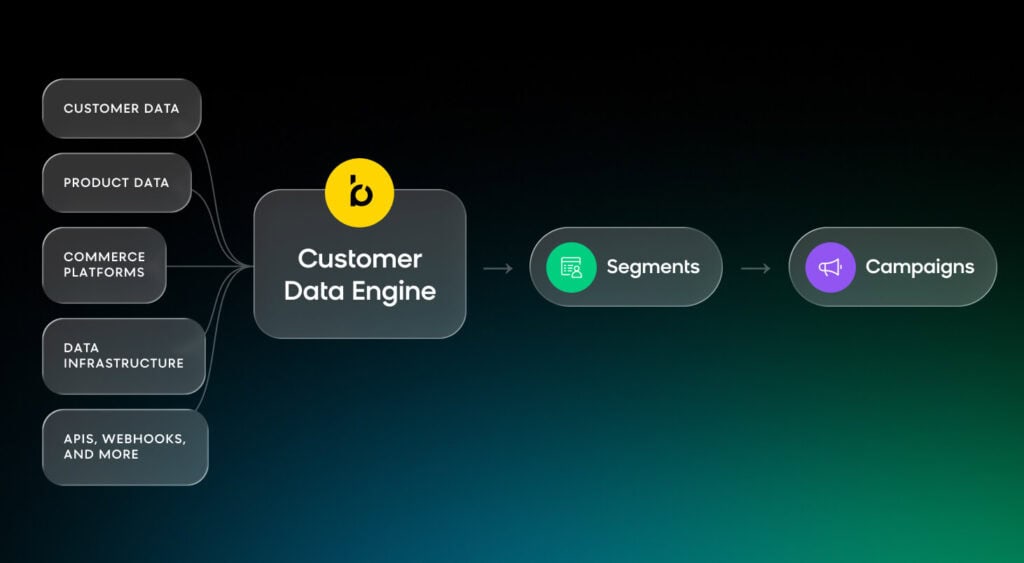
Platforms with built-in CDPs or unified data layers (Bloomreach, Insider, Salesforce Marketing Cloud, Adobe Experience Cloud) handle identity resolution in-platform. Platforms without one (Nosto, Klaviyo, Algolia) work best when fed clean, pre-unified data, or require a separate CDP investment to perform at full capability.
Ecosystem compatibility still matters: if you’re standardized on Salesforce or Adobe, those platforms integrate most naturally with your existing workflows. But if there’s no strong lock-in, evaluate on data layer capability first, then on feature depth.
Question 3: Are you a growing mid-market brand or a global enterprise?
Your answer here will shape both platform selection and implementation expectations. For SMB or early DTC brands, Klaviyo and Nosto offer fast setup, manageable costs, and lower implementation overhead. For mid-market brands scaling toward enterprise, Bloomreach, Insider, and Dynamic Yield serve that growth stage without requiring a platform switch. For global enterprises with complex data architecture, Bloomreach, Salesforce Marketing Cloud, and Adobe Experience Cloud all handle enterprise-grade scale, compliance requirements, and multi-region deployment.
Question 4: Do you need a point solution or a unified platform?
This is the central question in the current market for ecommerce personalization tools. Running separate tools for email, search, and web personalization means managing multiple data models, reporting systems, and customer segments. A unified platform reduces that operational overhead by keeping all three on a single platform.
If you need personalization in one channel or one use case, most platforms on this list will do the job. Evaluate based on feature depth for that specific use case.
If you need personalization to work across marketing channels and onsite search and product discovery, with a single customer profile informing all of it, Bloomreach is purpose-built to support that, with marketing automation and search running on the same AI layer and no separate vendor required.
See Ecommerce Personalization in Action With Bloomreach
Bloomreach’s Loomi platform combines AI-powered marketing automation (email, SMS, web, paid ads) and ecommerce search and product discovery in one place. By bringing together your customer data, predictive models, and channel activation, Loomi gives you a complete picture of every customer’s intent and delivers truly personalized experiences across every touchpoint.
See Loomi in action today — schedule a personalized demo to learn how you can start personalizing at scale.
Frequently Asked Questions About Ecommerce Personalization Platforms
What is ecommerce personalization software?
Ecommerce personalization software uses customer data (behavioral signals, purchase history, real-time on-site activity) to tailor the shopping experience for individual visitors. This includes product recommendations, search results, email content, website overlays, and SMS messages. Modern platforms use AI and machine learning to continuously improve personalization accuracy rather than relying on static rules that require manual updates.
What’s the difference between a personalization platform and marketing automation?
Marketing automation focuses on orchestrating campaigns across channels (email, SMS, push) based on customer behavior and lifecycle stage. It answers the question of when and where to send. A personalization platform adapts the actual content, products, and experiences a shopper sees, covering both the timing and channel of delivery and the substance of what is delivered. The strongest platforms combine both: channel automation and real-time experience personalization from a single platform, so what a shopper sees in their inbox reflects what they were doing on-site moments earlier.
How do you measure ROI from an ecommerce personalization platform?
Key metrics include revenue per visitor (RPV), conversion rate, average order value (AOV), click-through rate on personalized content, and revenue attributable to automated campaigns. The specifics vary by what you’re personalizing. Search result personalization shows up in RPV and add-to-cart rates, while email personalization shows up in CTR and attributed revenue. Platforms that provide built-in analytics tying personalization activity to business outcomes make attribution straightforward. Without that, you’re often measuring engagement metrics that don’t connect clearly to revenue.
Do ecommerce personalization platforms work for B2B as well as B2C brands?
Most platforms on this list are optimized for B2C ecommerce, but several, including Bloomreach and Salesforce Marketing Cloud, support B2B use cases effectively. B2B personalization typically centers on account-level segmentation, industry-based product recommendations, and multi-stakeholder journey orchestration rather than individual consumer behavioral targeting. If B2B is a significant use case, verify that the platform’s data model and segmentation logic can accommodate account hierarchies and buyer committee dynamics, extending beyond individual consumer profiles.
How long does it take to implement an ecommerce personalization platform?
Implementation timelines depend on platform complexity, catalog size, and how much integration work your existing stack requires. Simpler, integration-native tools like Nosto or Klaviyo can be deployed in days to a few weeks on Shopify. Enterprise platforms like Bloomreach, Salesforce Marketing Cloud, and Adobe Experience Cloud typically require 4–12 weeks for a complete setup, but that investment delivers meaningfully greater capability depth, personalization breadth, and scalability once live. The more useful question during evaluation is to separate time to go live from time to full value. They are often very different timelines, and both matter when calculating total implementation cost.