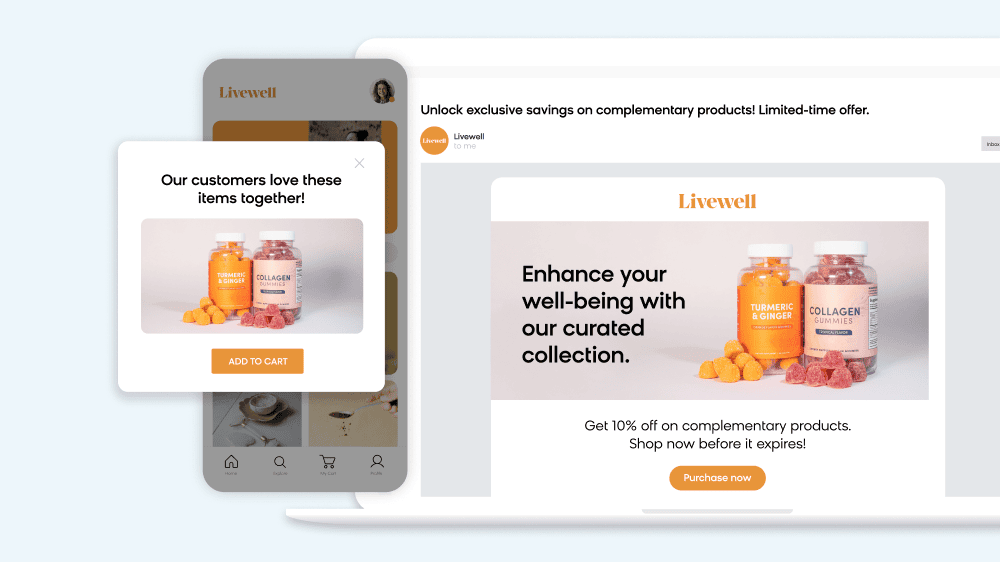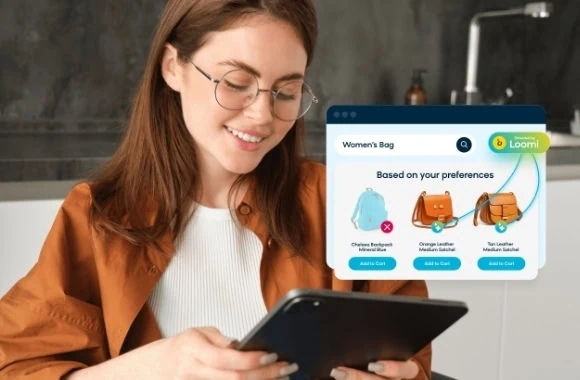

Almost every Shopify brand we work with right now has AI tools running. Almost none of them have true AI personalisation.
That distinction sounds subtle. It isn’t.
I’ve sat across from enough ecommerce teams to recognise the moment. Teams walk us through their stack — ecommerce flows, Shopify’s native recommendations, a loyalty app, maybe a post-purchase upsell tool — and there’s a quiet confidence in the room. The infrastructure feels modern. The tooling feels sophisticated. And yet the retention numbers aren’t moving. Email open rates are flat. Repeat purchase rates are underwhelming. The customer experience, when you actually go through it yourself, feels generic.
The instinct is usually to optimise the tools. Rebuild the flows. A/B test the subject lines. Swap the recommendation widget. But in most cases, that’s not the problem. The problem is what the AI is working with — and it’s more fundamental than most teams want to hear.
The False Confidence Trap
Here’s the assumption that gets brands into trouble: because the tools are running, the data is connected.
The ESP is sending the right email at the right time. Shopify’s algorithms are surfacing relevant products. The loyalty program is rewarding the right customers. Each of those things might be true in isolation. But “each tool working” is not the same as “AI personalisation.”
Every tool in a typical Shopify stack has its own data model. Its own logic. Its own version of who the customer is.
The ESP knows what emails someone opened. Shopify knows what they bought. Your loyalty app knows their points balance. Your recommendation engine knows what they’ve clicked. But none of those systems knows what the others know — and none of them knows the full picture.
The AI isn’t making unintelligent decisions. It’s making decisions with incomplete information, pattern-matching against fragments of a customer that were never designed to fit together.
The gap shows up in situations like this: a customer who has spent over £1,200 across four orders in the past year visits your store the day after picking up a click-and-collect order in person. They browse a new collection and leave without buying. Two hours later, they get a “we miss you” re-engagement email with a 15% discount.
That email wasn’t wrong by accident. It was wrong because the tool sending it had no idea an in-store transaction happened yesterday, no idea this person is one of your highest-value customers, and no idea they were browsing new arrivals — not clearance. Every individual system did its job. The outcome was still bad.
That isn’t a campaign problem. It’s a data architecture problem.

Where the Leaks Actually Live
To fix the problem, you have to be honest about where fragmentation actually lives in a typical Shopify stack. In our experience, it almost always breaks down along four fault lines.
Transactional data lives in Shopify. Order history, purchase frequency, AOV, product categories — it’s all there, and Shopify’s own tools draw on it well. But it’s a historical record. It tells you what someone did, not what they’re doing.
Browse and behavioural signals live somewhere else. Whether you’re using a dedicated analytics layer, a recommendation tool, or a third-party search platform, the signals about what customers are looking at right now — what they’re hovering over, what they’re comparing, what they’ve searched for three times — exist in a separate system. That system rarely talks to your email platform in real time.
Email engagement data sits in your ESP. Whichever platform you use, it holds a rich picture of how customers interact with your communications. Open rates, click patterns, what content resonates. Valuable data. But it’s largely invisible to the tools making decisions on-site.
Loyalty data is siloed in its own app. These platforms know a tremendous amount about your most valuable customers. Tier status, points balance, redemption history, referral behaviour. Almost none of that data flows in real time to the systems personalising your homepage or triggering your automations.
What Real-Time Unified AI Actually Looks Like
The shift worth understanding isn’t about adding another tool. It’s about changing what the AI has access to when it makes a decision.
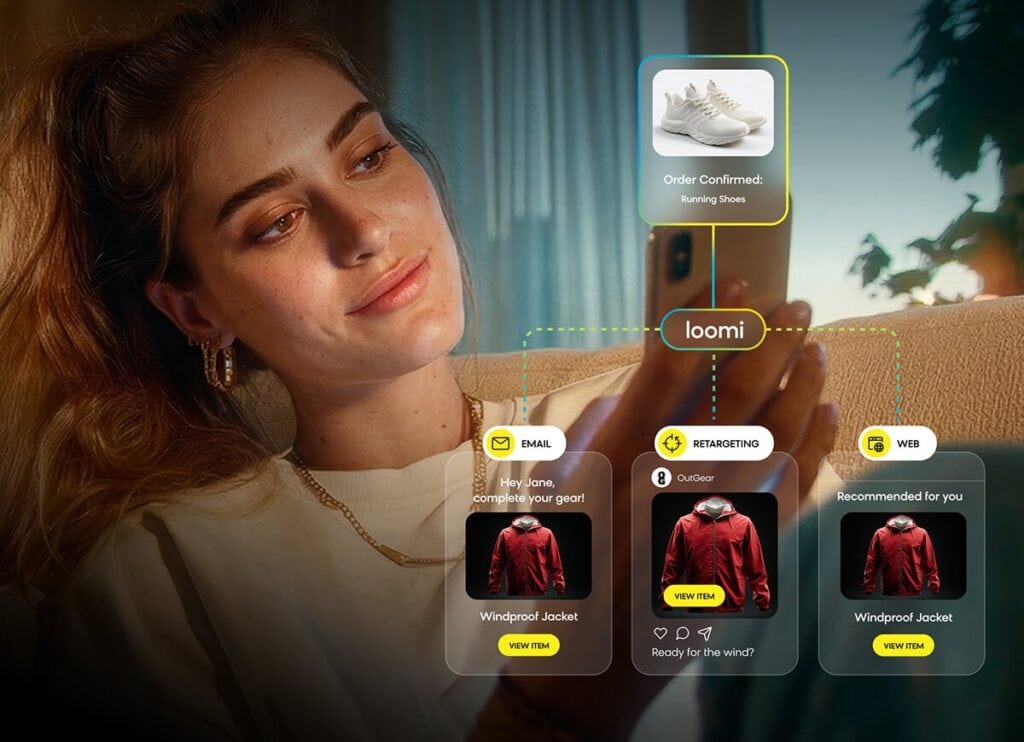
Most personalisation tools react to what someone bought. A unified AI infrastructure understands what someone is doing right now — across every touchpoint, including before they’ve even identified themselves.
The practical difference is significant.
A shopper who consistently buys at full price and is browsing new arrivals shouldn’t see a promotional banner. A price-sensitive customer who has abandoned two carts in the past month, and who is browsing the same category again today, probably should. Those are two different decisions, and they require knowing both the historical pattern and the current behaviour simultaneously. Most stacks can do one or the other. They can’t do both.
The same logic applies to anonymous visitors. Most personalisation only kicks in after a customer has converted — once there’s an account, a cookie, an email address to anchor to. A unified approach means that someone’s first visit can be personalised based on acquisition source, on-site behaviour, and real-time signals, not just after they’ve identified themselves.
And when optimisations happen in one channel — the best send time for a particular segment, or the search ranking for a particular product — they should inform every other touchpoint automatically. In a fragmented stack, a win in email stays in email. In a unified system, a win anywhere lifts performance everywhere.
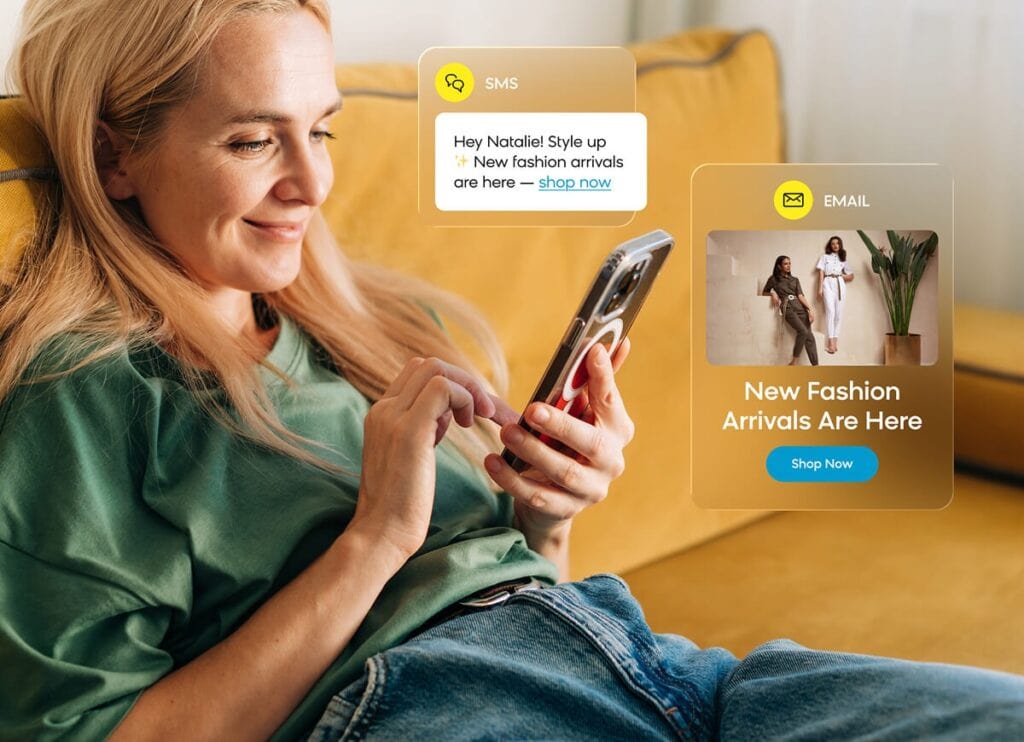
What changes for the customer is subtle but cumulative. The experience feels like it understands them. Not because a recommendation was technically accurate, but because it was contextually right — at the right moment, at the right price point, in the right channel.
This is the standard that platforms like Loomi are built toward: not AI that sits on top of your data stack, but AI that’s embedded in a unified data layer from the start, so the intelligence has access to everything simultaneously. The result isn’t faster automation. It’s actually smarter decisions — because the decisions are being made with a complete picture.
Most Brands Don’t Know How Fragmented Their Data Is
This is the part most teams find uncomfortable — and the most important thing to understand.
The brands we work with aren’t flying blind. They’re drowning in data. Most ecommerce teams have more metrics, more reports, and more dashboards than they have time to read. The problem isn’t a lack of signals. It’s that the signals live in systems that were never designed to talk to each other, and so the picture they add up to is never quite complete.
The fragmentation isn’t always obvious until someone maps it. When we sit down with a brand and trace the actual data flows across their stack — what each tool knows, when it knows it, and what it can’t see — the blind spots start to surface.
Here’s what a data architecture audit typically uncovers:
Segments that rely on stale data. A “high-value customer” segment built on purchase history from the past six months, with no real-time update when someone makes a large purchase today. The customer is being treated as a prospect while they’re already a loyalist.
Automations that fire on the wrong signal. A browse-abandonment flow that triggers based on a single session, with no knowledge that this customer has browsed that category twelve times and always buys in-store. The email isn’t moving them closer to a purchase. It’s noise.
Recommendation logic that ignores the most useful context. A product recommendation engine ranking by collaborative filter (“people like you bought this”) while ignoring the fact that this specific customer has already bought three items from that range and is clearly looking for something new.
Loyalty data that’s invisible to the personalisation layer. High-tier loyalty members getting the same on-site experience as new visitors, because the loyalty app and the storefront don’t share data in real time.
No single source of truth for customer lifetime value. Different tools using different methodologies to classify customers, which means a “VIP” in Klaviyo might be classified as “lapsed” in the loyalty app. The customer gets contradictory messaging depending on which system triggers first.
None of these are catastrophic in isolation. Collectively, they represent a consistent drag on every KPI that matters: conversion rate, repeat purchase rate, email revenue, average order value.
The honest question that always comes up in these audits: how much revenue are these gaps actually costing? In most cases, the answer is more than the team expected — not because the tools are failing, but because the architecture they’re running on was never designed to add up to a coherent whole.
The Next Step
If any of this resonates, the right move isn’t to swap out your tech stack. It’s to understand exactly where the gaps are before making any decisions about what to change.
Learn more about how Shero Commerce can help you fix these gaps or request a demo from Bloomreach to see Loomi in action.