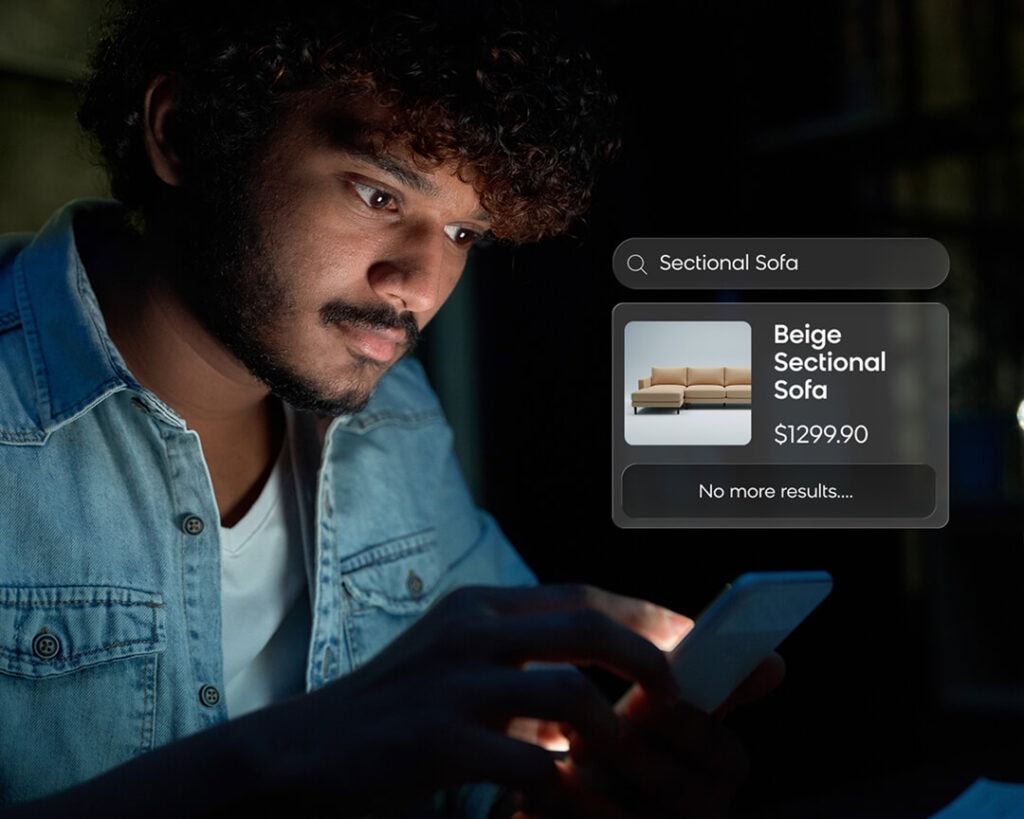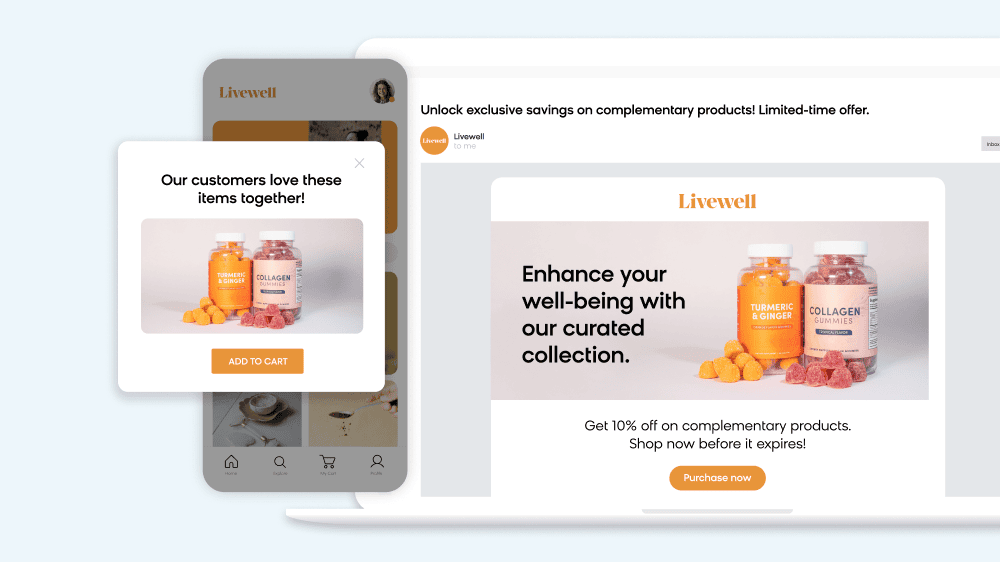

Most ecommerce brands are evaluating the wrong type of chatbot for their actual goal. Support chatbots and AI shopping agents get listed side-by-side as if they solve the same problem, but they don’t. One is built to reduce support load, while the other is built to increase revenue. This can lead to costly confusion: brands might pick a support bot when they need a sales agent (or vice versa), deploy it, measure the wrong KPIs, and conclude that chatbots don’t work. Brands that match the tool to their actual goal — support efficiency or revenue conversion — see measurable results.
In this post, we’ll explore ecommerce chatbots in detail, outlining the different types and highlighting some of the top tools.
What Is an Ecommerce Chatbot?
An ecommerce chatbot is a software tool that uses automated conversation (via text, voice, or both) to help online shoppers and support ecommerce teams in real time. The term has been around long enough that it now covers a wide spectrum of capabilities, and that spectrum is exactly what makes evaluating chatbots tricky.
Early chatbots worked through decision trees and keyword matching. A shopper typed “return” and got a scripted response about return policies, or they were instructed to press 1 for shipping, press 2 for cancellations, etc. This had its uses, but it was limited — one unexpected phrase and the whole thing fell apart.
Modern AI chatbots for ecommerce are built differently. They use large language models and natural language processing to understand intent rather than just keywords. When a shopper asks, “Do you have anything that would work for a 10-year-old who just got into hiking?” a capable AI chatbot understands the question and surfaces relevant products. It doesn’t wait for a keyword match.

The core use cases that run across both types include answering product questions, tracking orders, processing returns, making product recommendations, and guiding shoppers toward checkout. The volume of adoption is accelerating as more brands recognize that automated conversation can operate at a scale that human agents alone cannot match.
The phrase “ecommerce chatbot” now encompasses everything from a basic FAQ widget to a fully autonomous conversational commerce agent that actively participates in selling. The right ecommerce chatbot for any given brand depends on which part of that spectrum their actual goals sit. That spectrum is exactly why the category needs a clearer framework.
Two Types of Ecommerce Chatbots (And Why the Distinction Matters)
To be fully informed during your evaluation process, you need to understand the distinction between chatbot types. This is the single most important thing to understand before you evaluate any tool.
Tier 1: Support and Service Chatbots
The primary goal of a tier 1 chatbot is to reduce support ticket volume. These tools are designed to answer common post-purchase questions (e.g., “Where’s my order?”), handle returns and cancellations, and surface FAQ content without routing customers to a live agent. In a retail chatbot context, think of them as the digital equivalent of a well-staffed customer service desk.
Typical users are customer service teams, support managers, and SMB store owners who are spending too much time on repetitive queries. Tier 1 tools typically use rule-based flows supplemented by natural language processing, and they integrate well with helpdesk platforms like Zendesk, Gorgias, and Intercom.
Their strength is speed to value: fast to deploy, with measurable ROI through ticket deflection rates and CSAT scores. The inherent limitation is that they’re reactive by design. They respond to problems, but they don’t drive discovery or close sales.
Tier 2: AI Shopping Agents
Tier 2 tools are built around a different objective entirely: replicating the experience of a knowledgeable in-store sales associate. The goal is to understand what a shopper is looking for, surface the right products, handle comparisons and objections, and guide the customer through to purchase.
AI shopping agents are the right category for mid-market and enterprise ecommerce brands focused on conversion rate, average order value, and revenue per visit. They use large language models trained on product catalogs and customer data, understand context across a multi-turn conversation, and personalize in real time based on session behavior and purchase history.

The key shift from tier 1: the goal moves from “resolve the problem” to “close the sale.” As agentic AI gets even better, these shopping agents will help drive conversational shopping at scale.
Why the Distinction Matters
Neither tier is inherently better — they just answer different questions for different parts of the business. A brand drowning in support tickets needs a tier 1 chatbot. A brand trying to lift conversion on high-consideration products needs a tier 2 solution. Some brands need both, but they should evaluate each against separate success metrics, not treat them as interchangeable.
The eight tools in this list span both tiers. Each entry is labeled so you can match the tool to your actual goal.
What To Look for in an Ecommerce Chatbot
Before you evaluate specific ecommerce chatbot tools, define what you’re evaluating against. These six criteria matter across both tiers, though their relative weight shifts depending on your primary goal.
- The ability to understand conversational queries. Can the chatbot understand how real shoppers phrase questions (e.g., “something waterproof for hiking under $150”) rather than matching on keywords alone? The gap between tools on this front shows up on product-specific queries, not generic FAQs. Any decent tool can handle a question on return policy. It’s when a shopper asks something conversational and catalog-specific that the differences become obvious.
- How integrated it is with the product catalog. A chatbot that can’t see your live inventory, product attributes, and pricing can’t make relevant recommendations. It’s worth checking whether the integration acts in real time or by using batched data. A tool trained on a nightly catalog export doesn’t know about same-day stock changes, which creates a class of bad recommendations that’s hard to diagnose after deployment.
- The level of personalization. Can the tool use session behavior, purchase history, or browsing signals to tailor responses? This is what separates a scripted FAQ bot from an AI shopping agent. Without personalization, every shopper gets the same answer regardless of context.
- How it handles handoff to human operators. When a conversation exceeds the bot’s ability, can it route to a live chat agent with full conversation context intact? Poor handoffs (where the customer has to repeat everything they’ve already said) negate the experience the chatbot was supposed to create.
- Analytics and reporting. Can you see what shoppers are asking, where conversations drop off, and what measurable impact the bot has on conversion or average order value? This criterion is consistently underweighted at evaluation time: teams get focused on the interface and don’t think hard enough about what data they’ll need to prove ROI six months later. If the tool can’t support an A/B test, you’ll be making optimization decisions based on gut feel.
- Compatibility with your platform and channels. Does the tool integrate with your ecommerce platform (Shopify, Salesforce Commerce Cloud, SAP, Magento, etc.) and the channels your customers actually use? This criterion is often overweighted in evaluations: brands assess for channel coverage they don’t have meaningful traffic from. Match the tool to where your customers are now, not where you’d like them to be.
The Best AI Chatbots for Ecommerce
The tools below are grouped by tier. In the table, each entry includes a “Best For” label in the heading so you can skip to the tools relevant to your situation.
Tier 1: Support and Service Chatbots
These five tools are built primarily around support efficiency: reducing ticket volume, handling post-purchase queries, and automating repetitive service workflows.
Tidio: Best for Small Ecommerce Stores and Shopify Merchants
Tier: Tier 1 (support/service) with light tier 2 capabilities
Tidio is one of the most widely used ecommerce chatbot platforms for small to mid-sized stores, particularly those on Shopify or WooCommerce. It combines live chat, a rule-based chatbot builder, and an AI layer called Lyro that automatically handles common customer questions. For stores that need quick deployment and don’t have a dedicated CX team, Tidio’s plug-and-play setup and prebuilt templates make it a practical starting point. Brands with complex product catalogs or advanced personalization requirements will likely need to look elsewhere as they scale.
Intercom: Best for Customer Support Automation at Scale
Tier: Tier 1 (support/service)
Intercom is a customer communications platform with a chatbot product called Fin AI, powered by large language models and designed primarily to resolve support queries without human intervention. It’s a strong fit for ecommerce brands managing high support ticket volumes who need a bot that can be trained on a custom knowledge base to deliver accurate, brand-appropriate answers. Intercom’s pricing and positioning reflect its enterprise-grade ambitions, and its core strengths are in support efficiency rather than proactive sales conversion.
Chatfuel: Best for Converting Meta Ad and Comment Traffic Into Conversations
Tier: Tier 1 (support/service); funnel-side capture
Chatfuel is built around one specific job: capturing traffic from Meta ads, comments, and DMs and converting that traffic into product conversations. The focus is funnel-side automation. An ad click triggers a Messenger flow, a comment on Instagram triggers a DM, and the bot can showcase products and route customers toward purchase. It’s a specialist tool for brands running serious paid social or comment-heavy organic strategies on Facebook and Instagram.
Gorgias: Best for Ecommerce-Native Helpdesk With Chatbot Capabilities
Tier: Tier 1 (support/service)
Gorgias is built for ecommerce brands, functioning primarily as a helpdesk that includes chat and chatbot capabilities (rather than a standalone chatbot platform that plugs into a helpdesk). Gorgias centralizes all customer conversations (email, chat, social, SMS) in one place, and its automations are built around ecommerce-specific workflows like order edits, returns, and refunds. It’s a strong consolidation choice for support teams, though the chatbot functionality is an extension of the helpdesk rather than a standalone AI engine.
ManyChat: Best for Multichannel Marketing Automation Across DM, SMS, and Email
Tier: Tier 1 (support/service); marketing-side automation
ManyChat is built for ongoing marketing automation. It combines DM automation, broadcast campaigns, drip sequences, list building, and SMS and email follow-up in a single platform, which is useful for DTC and influencer-led brands that treat social as a primary marketing channel and need to run nurture campaigns or segmented broadcasts from one hub rather than capturing a single ad-funnel touchpoint.
Tier 2: AI Shopping Agents
These three tools are built around conversion: proactively engaging visitors, surfacing the right products or qualifying the right intent, and guiding them through to purchase rather than waiting to be asked.
Bloomreach (Loomi Conversational Agent): Best for Brands Focused on AI-Driven Conversion and Revenue at Scale
Tier: Tier 2 (AI shopping agent); enterprise and mid-market brands
Loomi conversational agent is Bloomreach’s AI shopping agent, and is designed to actively participate in the shopping journey. The shopping agent identifies what a shopper needs, surfaces relevant products before they give up, and personalizes the conversation using the full context of a customer’s session and history.
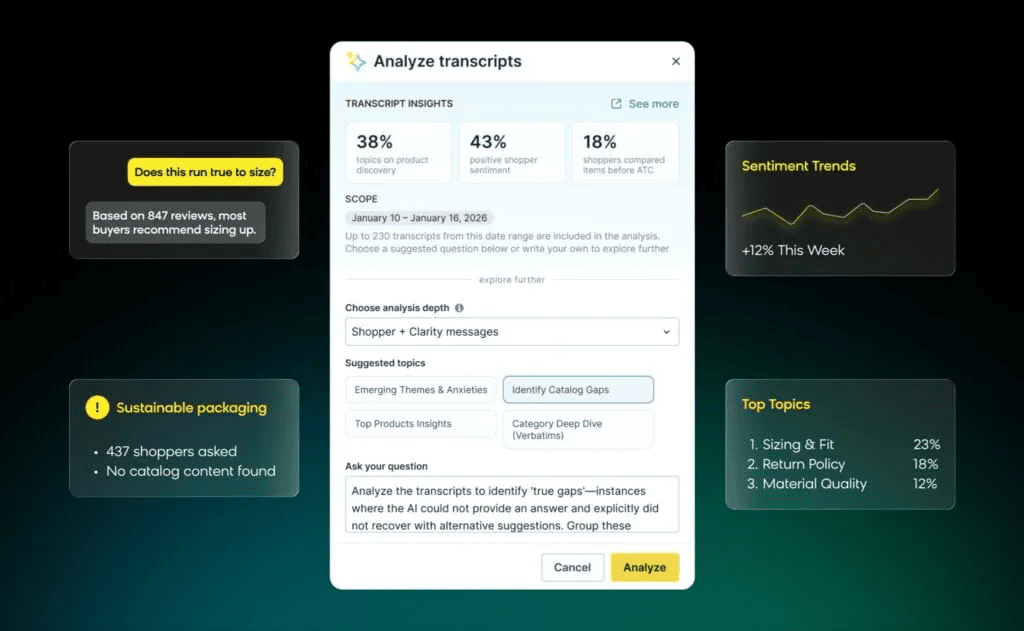
What sets Loomi conversational agent apart is that recommendations aren’t from an AI running its own logic in a parallel system. It’s pulling directly from your merchandising rules and strategies, so it can surface the personalized ranking you’ve already developed. Additionally, you get insights into what your customers are asking, so you can identify gaps in your catalog and further optimize the site experience.
And, if the conversational agent needs to pass the shopper to a customer service rep, they get seamlessly routed into your existing service environment (e.g., Sierra) with the full context (products viewed, cart contents, conversation history, etc.). This means the support agent can pick up where the shopper left off without requiring them to repeat themselves.
When a shopper is ready to buy, Loomi conversational agent does the same thing — it hands off the cart directly into your existing checkout flow, so customers don’t have to wait for redirects or re-enter details.
Key capabilities:
- Proactive and reactive conversational engagement across site experiences, including product detail pages and category pages
- Deep product catalog integration with real-time inventory and attribute awareness
- Personalization using in-session behavior and full customer history, including signals beyond session start
- Quiz and guided selling flows for high-complexity product categories
- Bazaarvoice and PowerReviews integration so the agent can surface real customer reviews mid-conversation for social proof
- Sierra integration for seamless human handoff: the support agent picks up the conversation with full context, so customers don’t have to repeat themselves
- Conversational insights dashboard with transcript analysis, voice-of-customer trend tracking, and sentiment data; the conversation data can be queried in natural language to surface catalog gaps, objections, and friction points
Results from Bloomreach customers:
Defender, a marine retailer specializing in marine supplies, inflatable boats, and outboard motors, deployed Loomi conversational agent on product detail pages, allowing shoppers to type a question or select conversation-starter prompts to engage the agent. The result was a nearly 3% increase in add-to-cart rate and over 3% increase in mobile add-to-cart rate.
The Foschini Group (TFG), a large South African retail group, ran a Black Friday A/B test using Loomi conversational agent and saw a 35.2% increase in online conversion rate, a 39.8% increase in revenue per visit, and a 28.1% reduction in exit rate.
Rep AI: Best for Shopify-Native Mid-Market Stores Without Custom Infrastructure
Tier: Tier 2 (AI shopping agent); Shopify-only
Rep AI is a Shopify-only AI shopping assistant that engages visitors proactively, triggered by behavioral signals like time on page, scroll depth, and exit intent. It positions itself as an AI concierge capable of handling both pre-purchase sales conversations and post-purchase support queries, with the ability to recommend products from your Shopify catalog and guide shoppers toward checkout. Rep AI is built for mid-market Shopify brands that want to add an AI shopping layer without deeper platform investment.
Drift (Salesloft): Best for B2B Ecommerce and High-Consideration Purchases
Tier: Tier 2 (AI shopping agent); B2B focus
Drift was built for B2B conversational marketing and is a well-established option for ecommerce brands selling high-consideration products with longer sales cycles (enterprise software, manufacturing equipment, B2B wholesale). Its playbooks are designed to qualify leads, route conversations to the right sales rep, and book meetings directly from the chat window.
Quick Reference: All 8 Tools at a Glance
| Tool | Best For | Tier |
|---|---|---|
| Tidio | Small ecommerce stores and Shopify merchants | Tier 1 |
| Intercom | Customer support automation at scale | Tier 1 |
| Chatfuel | Converting Meta ad and comment traffic into conversations | Tier 1 |
| Gorgias | Ecommerce-native helpdesk with chatbot capabilities | Tier 1 |
| ManyChat | Multichannel marketing automation across DM, SMS, and email | Tier 1 |
| Bloomreach (Loomi conversational agent) | Brands focused on AI-driven conversion and revenue at scale | Tier 2 |
| Rep AI | Shopify-native mid-market stores without custom infrastructure | Tier 2 |
| Drift (Salesloft) | B2B ecommerce and high-consideration purchases | Tier 2 |
How To Choose the Right Ecommerce Chatbot for Your Business
Here are four questions you should ask yourself to turn the above factors into a decision.
What is your primary goal: support efficiency or sales conversion? If the main problem is support volume, ticket deflection rate, and agent burnout, start with a tier 1 tool. If the main problem is conversion rate, average order value, or shoppers leaving without finding what they want, a tier 2 AI shopping agent is the right category. Trying to solve a conversion problem with a support chatbot is a category mismatch. The KPIs don’t align, the features don’t align, and the deployment strategy won’t either. Define the primary goal first, then evaluate tools.
What does your tech stack look like? A chatbot that doesn’t connect with your ecommerce platform, your CRM, or your product catalog will create more operational work than it saves. Shopify merchants have the widest range of compatible options. Brands on enterprise platforms (e.g., Salesforce Commerce Cloud or SAP) should prioritize tools with documented, production-grade integrations at that stack level before getting to feature comparisons. Real integration depth, not surface-level API connections, is what separates tools that perform in production from ones that look compelling in a demo.
What is the complexity of your product catalog? Simple products with low purchase friction (e.g., apparel, consumables, subscription goods) can often be served well by lighter-touch tools. High-complexity products such as large equipment, consumer electronics, home furnishings, or B2B product configurations benefit most from AI agents that can navigate attributes, handle comparisons, and guide customers through real decision-making. The higher the consideration, the more a tier 2 agent’s ability to hold a multi-turn, contextual conversation pays off. A virtual shopping assistant that understands your catalog deeply delivers more value than one that can only answer surface-level questions.
How will you measure success? Define your KPIs before you choose a tool, not after you’ve deployed it. Support chatbots are measured on ticket deflection rate, first-contact resolution, and CSAT. AI shopping agents are measured on add-to-cart rate, conversion rate, revenue per visit, and exit rate. Knowing your measurement framework in advance ensures you’re evaluating tools against criteria that actually matter, not retrofitting metrics to justify a purchase you’ve already made.
Take Conversational Commerce Further With Bloomreach
If your goal is to improve conversion metrics and drive revenue growth rather than deflect support tickets, Loomi conversational agent is built to support that work. Our conversational agent connects to our personalization and product discovery solution, so every conversation is informed by the same signals shaping the broader shopping experience. That’s what makes conversational commerce an impactful sales channel.
If you’d like to see Loomi conversational agent drive conversion for your catalog, book a demo to see what it’s capable of.
Frequently Asked Questions
What is the best chatbot for ecommerce?
There is no single best ecommerce chatbot because the answer depends entirely on which problem you’re trying to solve. The right ecommerce chatbot is the one that aligns with your primary goal. For small Shopify stores focused on customer support, Tidio or ManyChat are practical starting points with low setup friction. For brands selling through Instagram and social channels, Chatfuel and ManyChat are built for that context. For ecommerce brands focused on AI-driven conversion and guided selling at scale, Bloomreach’s Loomi conversational agent is designed specifically for that outcome. The most reliable starting point is defining your primary goal (support efficiency or revenue conversion) before you evaluate any specific tool.
How do ecommerce chatbots work?
Ecommerce chatbots use natural language processing to understand what a shopper is asking and generate a relevant response. Earlier tools used decision trees and keyword matching, which worked for predictable queries but failed when shoppers phrased questions naturally. Modern AI chatbots use large language models trained on product catalog data, customer history, and behavioral signals to personalize responses in real time. When a shopper asks, “Do you have something waterproof for under $100?” a capable AI shopping agent can surface specific products from live inventory, compare options based on attributes, and guide the shopper toward a purchase decision, rather than returning a generic keyword-matched result.
What’s the difference between a chatbot and an AI shopping agent?
A traditional ecommerce chatbot is primarily reactive: It waits for a customer to ask a question and responds based on a predefined knowledge base or decision tree. An AI shopping agent is proactive and context-aware. It monitors session behavior, engages shoppers at key moments (before they exit, when they’re stuck comparing products, when they’ve been on a page for an unusual amount of time), and guides them through a personalized purchase journey rather than waiting to be asked. The distinction matters because the two tools are designed to solve different problems. Chatbots reduce support load, while AI shopping agents are built to increase revenue. Using one to do the other’s job can lead to poor results.
Can ecommerce chatbots improve conversion rates?
Yes, but the impact varies significantly by tool type and how well it’s integrated into the shopping experience. Support chatbots improve conversion indirectly, by reducing friction in the post-purchase experience and answering pre-purchase questions that might otherwise stall a sale. AI shopping agents are designed specifically to improve conversion metrics. Bloomreach’s Loomi conversational agent delivered a 35.2% increase in online conversion rate, 39.8% increase in revenue per visit, and 28.1% reduction in exit rate for TFG, and a nearly 3% increase in add-to-cart rate for Defender across its product detail pages. Results depend heavily on catalog integration depth, where in the journey the agent is positioned, and whether the tool is measuring the right outcomes from the start.