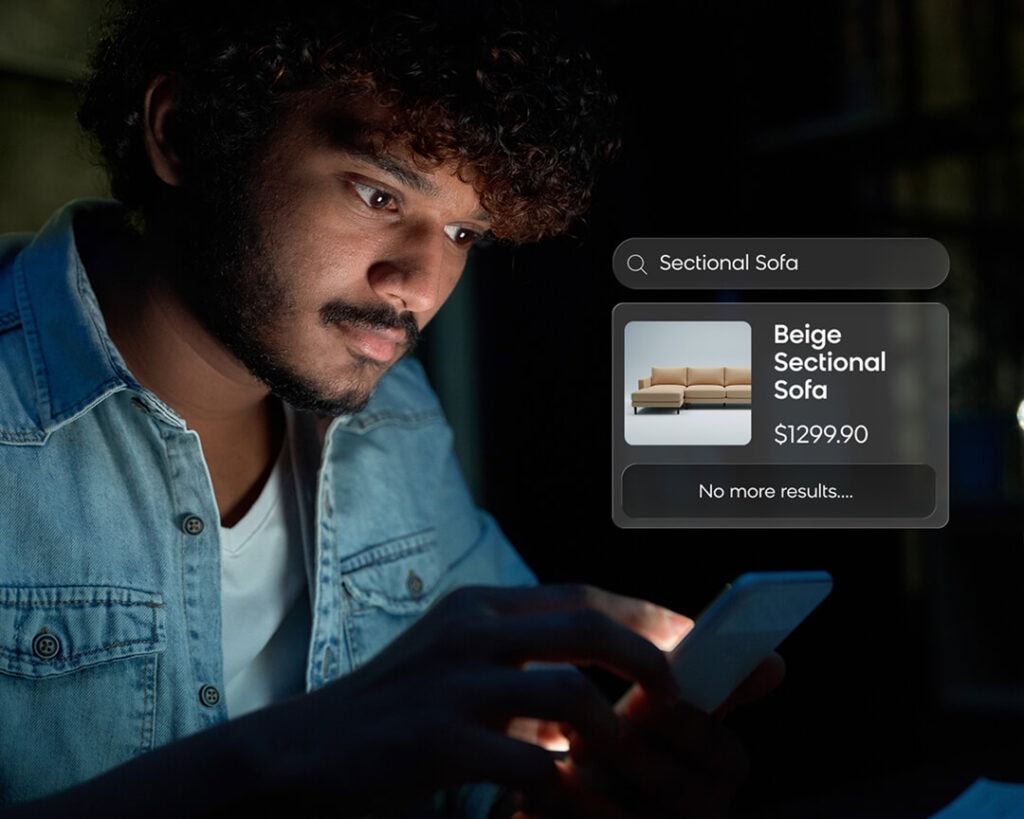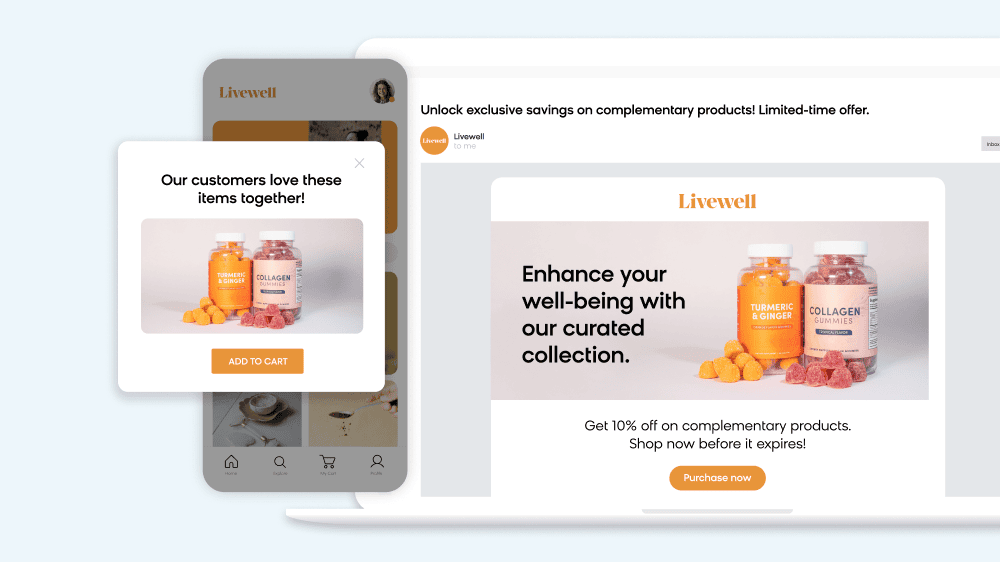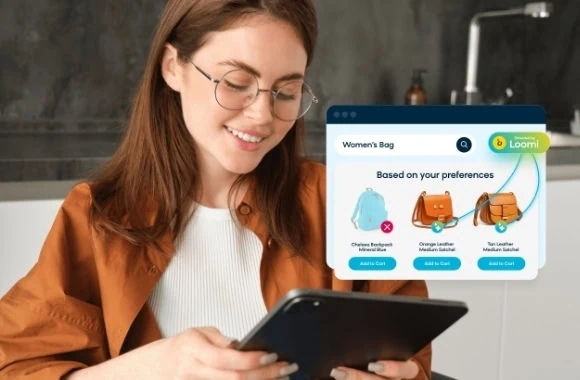

Amazon’s launch of Alexa for Shopping in May 2026 signals a broader acceptance of AI shopping assistants. It’s no longer a matter of whether you should embrace this technology — it’s a matter of how. In particular, how do you choose the best AI shopping assistants to research and ultimately implement on your own site?
This guide segments tools by who they’re actually built for, based on merchant type, budget, and tech stack. Read on for more details on the top AI shopping assistants, with verified results from retailers who’ve deployed them.
What Is an AI Shopping Assistant?
An AI shopping assistant is software deployed on a retailer’s own ecommerce site that uses natural language processing and conversational AI to help shoppers find products, answer questions, and complete purchases. This is distinct from third-party consumer shopping apps that aggregate across the web. The tools in this guide live on your site under your brand, working for your conversion funnel.
What’s the Difference Between a Chatbot and an AI Shopping Assistant?
The distinction between a traditional chatbot and a modern AI shopping assistant matters more than most merchants realize. A rule-based chatbot follows a decision tree: it matches keywords to scripted responses. If a shopper asks something outside that decision tree, the bot fails. An AI shopping assistant understands intent, accesses live product catalog data, and maintains context across a conversation. It can handle product discovery and research, something a chatbot simply can’t do.

The core jobs an AI shopping assistant performs for shoppers include:
- Product discovery: Surfacing relevant items based on stated preferences and behavioral signals, even when the shopper doesn’t know exactly what they’re looking for
- Guided recommendations: Asking clarifying questions to narrow down options, replicating what a good in-store associate does
- Cart assistance: Addressing hesitation before a shopper abandons
- Order and product support: Answering questions about availability, sizing, compatibility, and shipping without requiring a support ticket
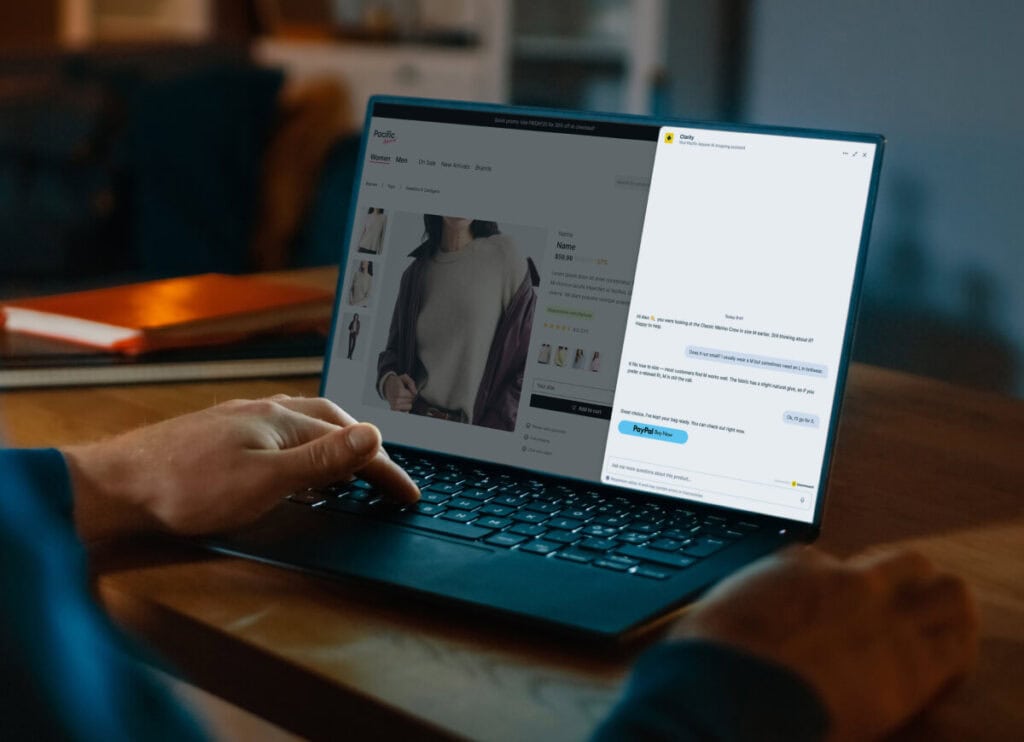
In practice, these assistants appear in several formats: a widget or overlay on a product detail page (PDP), a proactive chat trigger on a category page, a post-search conversational layer that refines results, or a floating assistant that activates on exit intent. Understanding what conversational shopping actually looks like in deployment helps clarify which format fits your use case before you start evaluating tools.
What To Look for in an AI Shopping Assistant for Ecommerce
Before comparing specific tools, it’s worth establishing what actually separates a strong AI shopping assistant from one that looks good in a demo but underperforms in production. These six criteria are the ones that matter most for merchants evaluating options seriously:
Deep Catalog and Merchandising Integration
An ecommerce AI assistant is only as useful as the product data and merchandising rules it can access. Some tools work from a simplified product feed, enough to handle basic queries but insufficient for complex questions about compatibility, materials, or more nuanced sizing. Others integrate directly with a full product catalog, including real-time inventory, attribute data, and variant-level information.
For merchants with large or technically complex catalogs (e.g., apparel with size/fit considerations, electronics with compatibility requirements, marine gear with safety specifications), shallow catalog integration will only generate answers that are either wrong or unhelpfully vague.
Additionally, the product catalog isn’t the only thing that’s important for an AI shopping assistant. The agent also needs to be connected to the merchandising strategies that help rank and surface specific products to create truly personalized experiences for every shopper.
Use of Personalization Signals
A generic AI shopping assistant returns the same product suggestions to every shopper. A personalized one adjusts based on browsing history, past purchase patterns, and what a shopper has done in the current session. The difference shows up in how relevant the recommendations are, which greatly increases the likelihood of conversion. Ask any vendor you’re evaluating: Which signals does the assistant use, and how does it weigh in-session behavior vs. historical data?
Proactive vs. Reactive Engagement
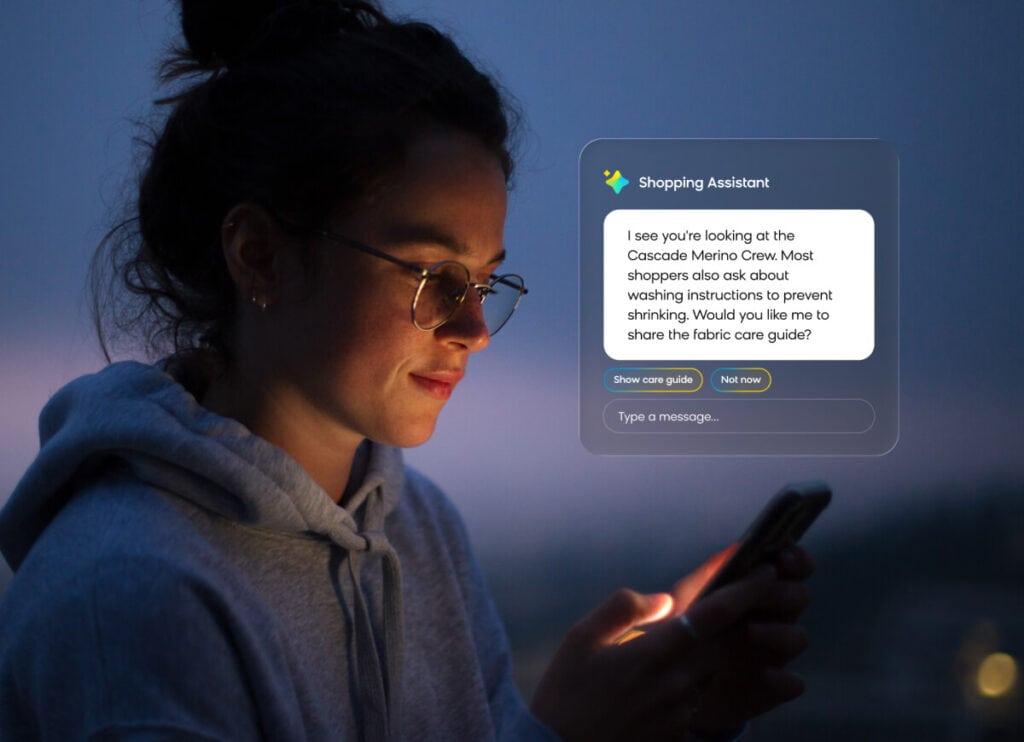
Most assistants are reactive: they wait to be asked. The strongest tools also engage proactively, initiating conversations at high-intent moments. This includes when a shopper has lingered on a PDP without adding to cart, when they’re showing exit-intent signals, or when a returning visitor lands on a category page they’ve browsed before.
Bloomreach’s Loomi conversational agent, for example, can initiate conversations on product and category pages even when a shopper hasn’t typed a search query, engaging browsers who might otherwise leave without a prompt. This capability, targeting non-searching shoppers, is a meaningful differentiator for brands where a significant portion of sessions never reach the search bar.
Platform and Integration Fit
A Shopify-native tool that works in five minutes won’t serve a brand running a custom headless front end. Equally, an API-first enterprise platform will overcomplicate things for a DTC merchant who needs quick deployment. The right architecture depends entirely on your tech stack. Before evaluating features, ask yourself: What integration model does this tool require, and do we have the engineering resources to support it?
Make sure you’re thinking through your conversational shopping strategy before you really start exploring solutions.
Measurement and Attribution
If you can’t tie the AI assistant’s interactions to specific metrics (e.g., conversion rate, revenue per visit, add-to-cart rate, exit rate), you can’t prove ROI, and you can’t improve the experience. Any vendor worth deploying should give you session-level attribution that lets you compare assisted vs. unassisted shopper behavior. Without that, you’re flying blind.
Omnichannel Capabilities
For brands with physical retail locations, wholesale channels, or multiple digital storefronts, an assistant that operates in isolation from that broader context will deliver limited value. The best enterprise implementations give the AI shopping assistant context from across channels, treating the current web session as one input among many.
The Best AI Shopping Assistants for Ecommerce in 2026
The solutions below are grouped by who they’re actually built for. Read the “Best for” label first. If your situation doesn’t match, skip to the segment that does. This is a segmented guide, not a ranked list.
Product assessments draw on vendor documentation and published capabilities. All factual claims about specific tools are sourced to the vendor’s own website.
If you’d like to explore broader chatbot solutions as well, be sure to check out our guide on the best AI chatbots for ecommerce, or explore the different categories of AI in ecommerce to understand where AI shopping assistants fit relative to recommendation engines, search AI, and other tools.
| Tool | Best for | Platforms |
|---|---|---|
| Bloomreach’s Loomi conversational agent | Enterprise retail with complex catalogs | Platform-agnostic: Shopify, Magento, BigCommerce, headless, custom |
| Rep AI | Small and growing Shopify merchants | Shopify |
| Manifest AI | Mid-market Shopify brands wanting a broader AI agent platform | Shopify |
| Klaviyo AI Shopping Assistant | Growing DTC brands already on Klaviyo | Shopify |
| Gorgias | Support-centric DTC teams | Shopify |
| Tidio | Small and growing ecommerce stores | Shopify, WooCommerce, BigCommerce, Wix |
Bloomreach’s Loomi Conversational Agent
Best for: Enterprise retail brands with large or complex product catalogs
Loomi conversational agent is a data-native option for merchants where catalog complexity and deep personalization actually matter. It’s built on top of Loomi’s unified product and customer data engine, which means the assistant has real-time access to full catalogs, behavioral signals, and purchase history from the moment of deployment, rather than a curated subset of your inventory.
The conversational model is designed around guided discovery. The agent initiates conversations, asks qualifying questions to understand shopper intent, and surfaces recommendations based on both stated preferences and observed behavior in the session. It doesn’t wait for a shopper to type a query: it activates proactively on PDPs and category pages, engaging browsers at the moments when they’re most likely to need help and most likely to convert.
Most importantly, Loomi conversational agent is the only solution powered by a combination of a real-time CDP, a search engine, and merchandising rules, making it very effective at guiding consumers through the entire end-to-end shopping experience.
The Loomi conversational agent also lives within a broader conversational ecosystem, so if the agent needs to hand off to a customer service rep, the rep will get the full context of the conversation without requiring the shopper to repeat themselves. The agent can also pull in user reviews or move the conversation directly into checkout without any extra clicks or opening new tabs.

For brands with complex assortments across multiple storefronts or omnichannel operations, the architecture is built to scale. It’s a platform-level capability designed for merchants running sophisticated ecommerce operations.
Brands have already seen big success with the conversational agent. TFG (The Foschini Group), South Africa’s largest fashion and lifestyle retail group, deployed Loomi conversational agent on Bash, its ecommerce platform, and measured results among shoppers who interacted with the agent during Black Friday. That group saw a 35.2% higher conversion rate, a 39.8% higher revenue per visit, and a 28.1% reduction in exit rate.
A large US office supplies retailer also implemented the Loomi conversational agent on its site and drove $10M in incremental annual revenue.
Explore the Loomi conversational agent to learn more.
Rep AI
Best for: Small and growing Shopify merchants focused on sales conversions
Rep AI’s tool is purpose-built for Shopify merchants and uses behavioral signals to identify shoppers who are likely to leave, then initiates a conversation to reengage them before they exit.
The brand’s focus is on converting browsers into buyers through product recommendations and real-time objection handling. For small and growing DTC brands running on Shopify that want a conversion-focused overlay without a complex integration project, Rep AI fits that brief. Its deep Shopify-native integration means setup is fast, and the tool works within the Shopify ecosystem without custom engineering.
Manifest AI
Best for: Mid-market brands (primarily on Shopify) wanting a broader agentic AI platform
Manifest AI’s product is structured as a platform of 500+ prebuilt AI agents rather than a single chatbot. Brands can deploy specialized agents (like a fit predictor for size recommendations, conversation flows for high-consideration categories, or post-purchase follow-up) and configure or extend them through a no-code studio.
Manifest AI is more about control, offering more configurable agent surfaces and integrating with existing helpdesks like Gorgias and Zendesk, so brands aren’t forced to swap out their support stack to add conversational shopping.
This could be a good fit for Shopify brands that have outgrown a single-purpose chatbot and want granular control over how AI engages shoppers across PDPs, category pages, and post-purchase moments.
Klaviyo AI Shopping Assistant
Best for: Growing DTC brands that already use Klaviyo for email and SMS
Klaviyo’s AI Shopping Assistant is the conversational layer of the broader Klaviyo customer agent suite. It runs as a 24/7 virtual assistant that handles product questions, order status, and personalized recommendations across chat, SMS, and email. The same agent can converse on-site, follow up via text, and continue the journey via email without losing context.
The fit is strongest for brands already running Klaviyo email and SMS, and want to extend their existing data layer into conversational shopping.
For growing DTC brands that already have Klaviyo as their marketing backbone, adding the shopping assistant is a less disruptive deployment than introducing a standalone conversational platform on top of an unrelated data foundation.
Gorgias
Best for: Support-centric DTC ecommerce teams
Gorgias started as a customer support helpdesk and has expanded its AI capabilities to include shopping assistance, which makes it a natural fit for DTC teams that want a single platform handling both reactive support and proactive selling.
The practical value for high-volume support teams is deflection: Gorgias AI handles routine inquiries (order status, return policies, shipping timelines) automatically, freeing human agents to focus on conversations that require judgment.
Tidio
Best for: Small and growing ecommerce stores
Tidio combines AI chat with live chat in an affordable, accessible package. For brands that aren’t ready to invest in enterprise AI but want to move past a static FAQ page, Tidio offers a practical entry point.
The AI component, Lyro, handles product questions, order tracking, and product recommendations. Platform coverage is broad, including Shopify, WooCommerce, BigCommerce, Wix, and others. The combination of wide platform support and accessible pricing makes Tidio a good choice for smaller ecommerce operations that want AI-assisted chat without enterprise pricing or complexity.
How To Get Started With an AI Shopping Assistant
Choosing the right tool is just step one. Getting deployment right is where the difference between a strong rollout and one that underdelivers is usually determined. These five steps apply regardless of which tool you select.
Step 1: Define the Primary Job You Want the Assistant To Do
Discovery and recommendations, cart recovery, and support deflection each map to different categories of a tool. A support-first platform like Gorgias excels at the third, while Loomi conversational agent is purpose-built for the first two, including proactive abandoned cart recovery within the shopping session rather than after the fact.
Picking the use case before evaluating tools prevents the most common deployment mistake: buying a support-focused product when your actual problem is low PDP conversion.
Step 2: Audit Your Catalog and Data Readiness
An AI shopping assistant’s quality of output is directly proportional to the quality of the product data it works with. Brands with incomplete attribute data, missing product descriptions, or inconsistent taxonomy will find that even a sophisticated AI returns recommendations that don’t land.
Before or alongside deployment, audit for: how complete your attributes are across variants, the accuracy of your descriptions for complex products, and the consistency of your taxonomy. Fixing catalog gaps first means the AI assistant performs from day one rather than improving slowly as errors get identified.
Step 3: Be Intentional About Where To Deploy
PDPs, category pages, search results, and cart pages serve different shopper moments and require different assistant behaviors. Starting with the highest-intent surface (typically the PDP, where shoppers have already indicated interest in a specific product) concentrates your early results on the moments that matter most.
Loomi’s non-searching shopper engagement capability makes category pages proactively initiate conversations, reaching browsers who haven’t yet searched but are signaling intent through their navigation behavior. Expanding to additional surfaces after proving PDP impact is a more controlled approach than deploying everywhere at launch.
Step 4: Set Measurement Baselines Before You Go Live
You can’t prove lift without a baseline. Before deployment, document your current conversion rate by page type, revenue per visit, add-to-cart rate, and exit rate. After launch, compare AI-assisted sessions against unassisted sessions using the same metrics.
Step 5: Plan for Iteration, Not a Launch Event
The first deployment is a starting point. Review conversation logs regularly to identify where shoppers drop off or ask questions that haven’t been answered well. Those gaps are your product roadmap for the assistant. Brands that treat the launch as the finish line miss the increasing improvements that come from ongoing refinement, especially as agentic commerce technology continues to improve.
Which AI Shopping Assistant Is Right for You?
The right AI shopping assistant isn’t the one with the longest feature list. It’s the one that fits your catalog, your tech stack, and the specific point in the buyer journey where you’re losing conversions.
If you’re a small or growing Shopify brand focused on conversion, Rep AI was built for you. If you’ve outgrown that and want a broader AI agent platform with more configurable surfaces, Manifest AI fits the mid-market Shopify tier. If your team already runs Klaviyo for email and SMS, extending into Klaviyo’s AI Shopping Assistant keeps everything on one data layer. If your team lives in Gorgias for support, adding its AI shopping capabilities is the path of least resistance. For small stores getting started, Tidio offers real capability without enterprise pricing.
But for brands with complex catalogs, large assortments, and meaningful enterprise requirements (where catalog depth, behavioral personalization, and proactive engagement all need to work together), that category of tool is different. Loomi’s conversational agent was built for that context, and brands have already seen significant results in real-world use cases.
Request a demo today to see Loomi conversational agent in action.
Frequently Asked Questions
What is the difference between an AI shopping assistant and a regular chatbot?
A traditional chatbot follows a rule-based decision tree: It matches keywords to scripted responses but fails when shoppers ask anything outside the script. An AI shopping assistant uses natural language processing and machine learning to understand intent, access live product catalog data and merchandising rules, personalize responses based on shopper behavior, and carry on a context-aware conversation.
Do AI shopping assistants actually increase conversion rates?
Results vary by brand, use case, and deployment quality, but there are proven results that show they can improve conversions. For example, TFG saw a 35.2% conversion rate lift and a 39.8% increase in revenue per visit among shoppers who interacted with Bloomreach’s Loomi conversational agent during Black Friday.
Which AI shopping assistant is best for Shopify stores?
For small and growing Shopify merchants focused on conversion, Rep AI is a purpose-built option. For Shopify brands that have outgrown a single-purpose chatbot and want a configurable AI agent platform with multiple specialized agents, Manifest AI fits the mid-market tier. Tidio is a practical choice for smaller stores that want AI-assisted chat without enterprise pricing or complexity. Enterprise brands running on Shopify with large or complex catalogs may want to evaluate platform-agnostic options like Bloomreach’s Loomi, which are designed for deep product data integration and catalog-level personalization at enterprise scale.
How is an AI shopping assistant different from AI search?
AI search focuses on interpreting a shopper’s typed query and returning relevant results. It’s reactive, initiated by the shopper, and ends when results are displayed. An AI shopping assistant goes further by initiating conversations proactively, asking clarifying questions, guiding discovery even when the shopper hasn’t searched for anything, and assisting across key moments in the journey (including cart and checkout). AI search and AI shopping assistants are complementary capabilities rather than substitutes, and they each have their place in the broader AI ecosystem.
What data does an AI shopping assistant need to work well?
At a minimum, you need a complete, well-structured product catalog with accurate attributes, current inventory status, and thorough descriptions. More sophisticated AI assistants also draw on behavioral data (browsing sessions, past purchases, on-site click patterns) to personalize recommendations beyond what catalog data alone supports. The richer the product and customer data, the more relevant and contextually appropriate the assistant’s responses. Brands with gaps in catalog data should treat those gaps as pre-deployment work instead of a post-launch optimization.