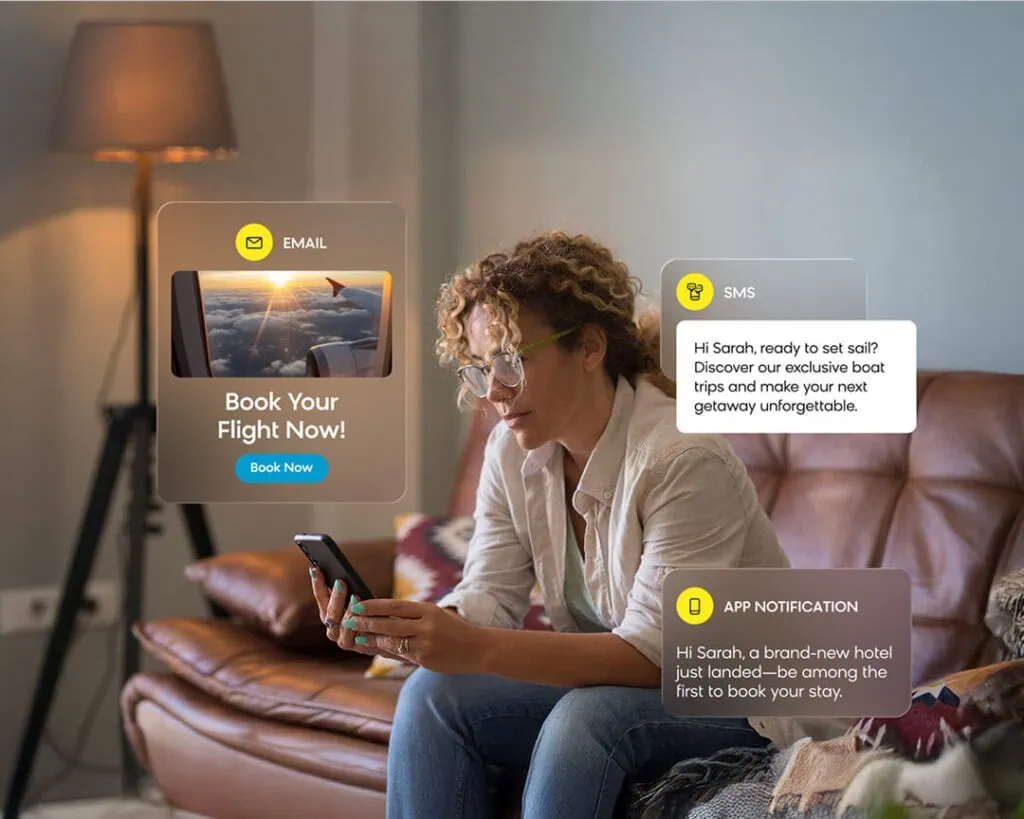
Digital consumers now expect commerce that’s contextual, seamless, and individually personalized across every touchpoint. That means you need to take a closer look at your omnichannel messaging approach and see if channels are still being treated as separate entities or as one cohesive platform.
If your email campaigns run on one schedule, SMS follows another cadence, and push notifications operate independently, then you’re going to create fragmented experiences that don’t click with customers.
To tackle these modern expectations, you’ll need an AI-native platform that can create fluid, real-time customer experiences instead of pushing shoppers through predetermined funnels. Read on to learn how you can change your omnichannel messaging strategy to adopt true personalization at scale.
From Channel Coordination to Journey Orchestration
Traditionally, omnichannel messaging simply meant being present on multiple channels. Brands would check boxes by launching email campaigns, setting up SMS automation, and deploying push notifications, but these efforts rarely worked together toward unified customer experiences.
Now, if you want to be effective with your omnichannel messaging, you need three fundamental capabilities:
- Real-time intent understanding — not just tracking the last click, but interpreting patterns across all interactions
- Context-aware personalization across the full commerce journey, from discovery through post-purchase loyalty
- Immediate responsiveness to behavior and transactional signals, enabling messaging that adapts within minutes rather than days
Many brands remain “omnichannel in ambition, multichannel in execution.” Their customer data lives in separate systems, making it impossible to understand the complete picture of individual preferences and behaviors.
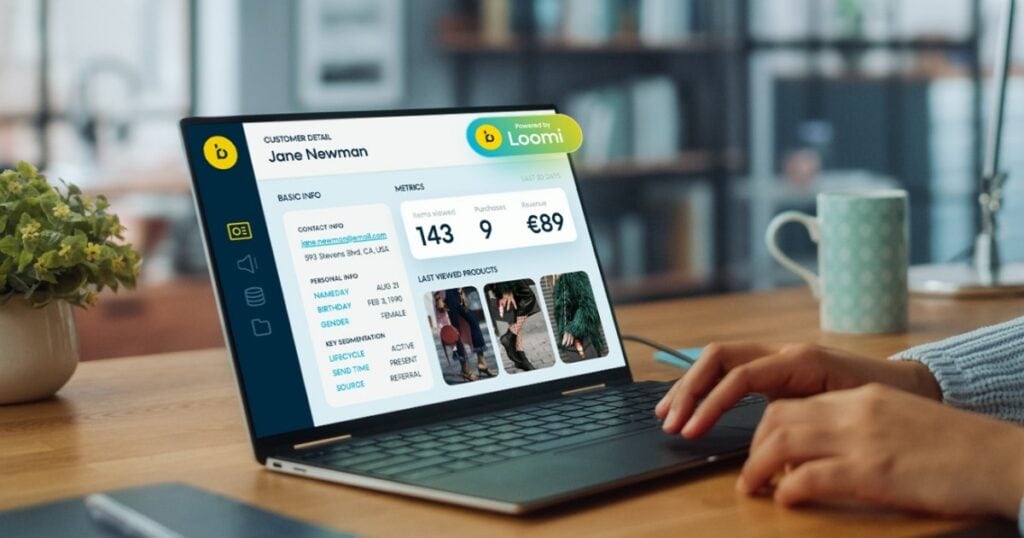
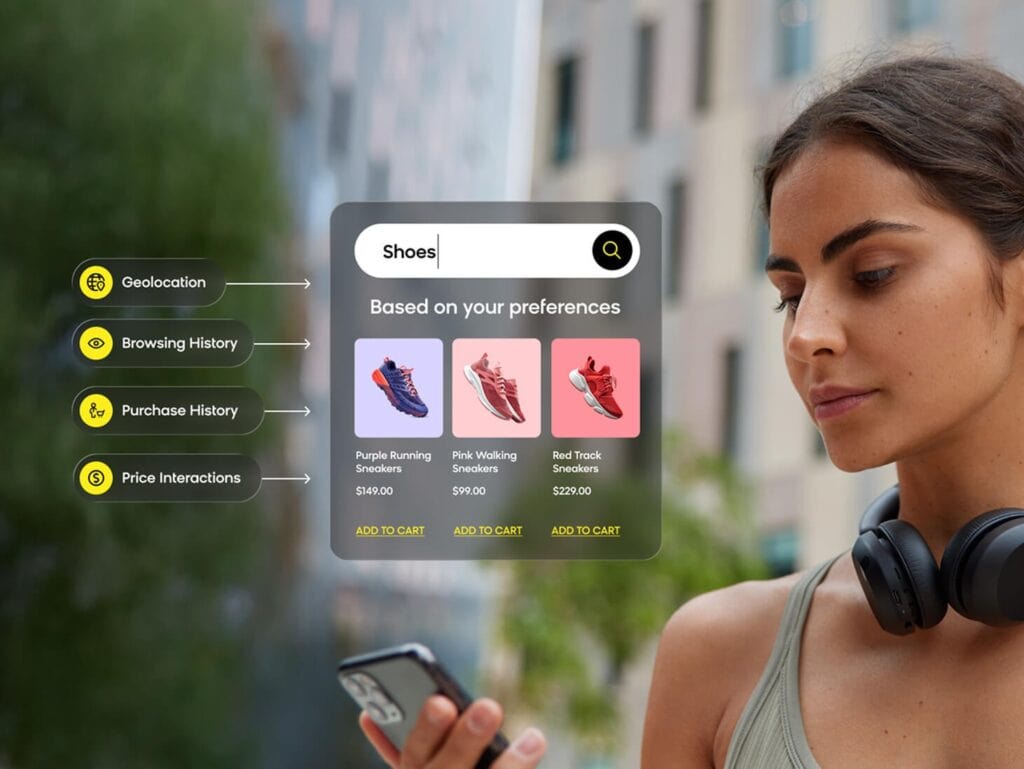
By unifying customer, product, and engagement data into dynamic profiles, you can enable AI-driven orchestration that adapts to customer behaviors. So, when a customer browses certain product categories on mobile, abandons a cart on desktop, then opens an email about related products, the AI understands these as connected behaviors rather than isolated events.
The Role of AI: From Campaign Automation to Marketing Autonomy
Many marketing tools often equate “AI” with efficiency improvements, but these often don’t go far enough in transforming marketing.
According to McKinsey research, agentic AI is expected to power more than 60% of the increased value that AI will generate from marketing deployments, representing a fundamental shift toward autonomous marketing systems.
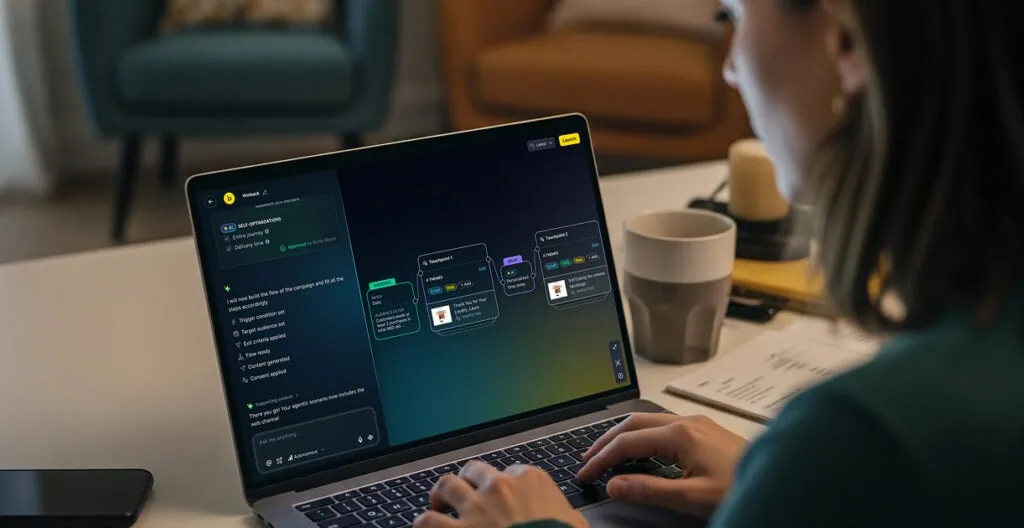
True AI-powered omnichannel messaging requires marketing autonomy, where systems make intelligent decisions without constant manual intervention. Bloomreach’s Loomi AI delivers this through three core capabilities:
Campaigns That Evolve Based on Real-Time Behavior
No manual reconfiguration needed when customer preferences shift or new products launch. The AI automatically adjusts messaging frequency, content focus, and channel priorities based on individual response patterns.
Dynamic Offers and Messaging
Offers, cadence, and messaging shift based on individual preferences, price sensitivity, and product affinities. A customer who typically purchases premium items receives different messaging and recommendations than someone who responds better to discount offers.
Adaptive Journeys
Rather than preplanned pathways, journeys continuously adapt based on real-time signals and behaviors.
This transforms marketing from reactionary to anticipatory, activating relevant messages in milliseconds rather than waiting for batch processes to run overnight.
Research shows that predictive AI can cut acquisition costs by 50%, increase revenue by 5-15%, and improve marketing ROI by 10-30% when properly implemented.
A Roadmap to Omnichannel Messaging Maturity
If you want to help your brand move beyond basic channel coordination toward more AI-native orchestration, here’s a roadmap you can follow:
Stage 1: Connect
Consolidate channel, customer, and product data into a single unified view. This foundation breaks down walls between search, marketing, loyalty, and merchandising teams, enabling a clearer understanding of each customer’s needs across all touchpoints.
Stage 2: Personalize
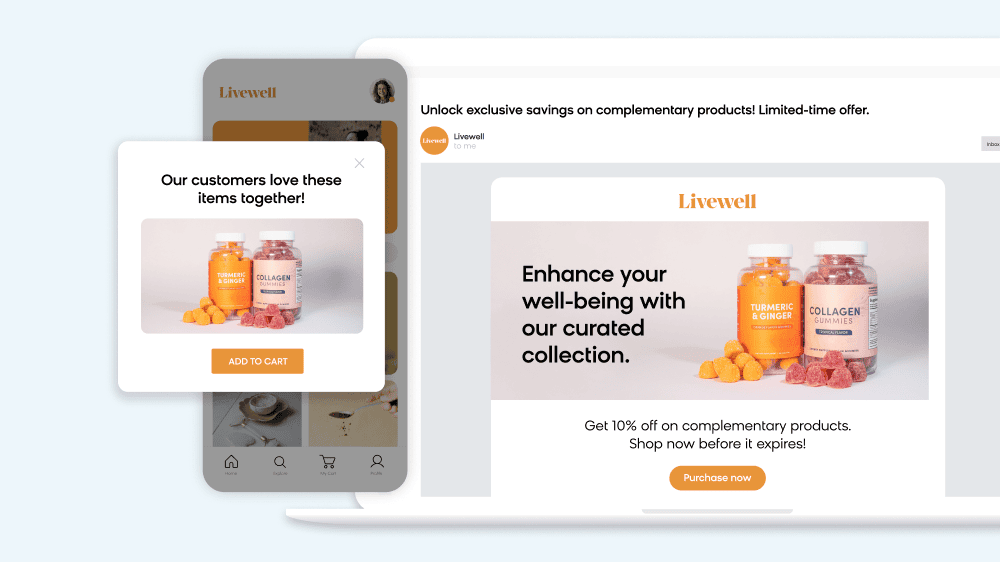
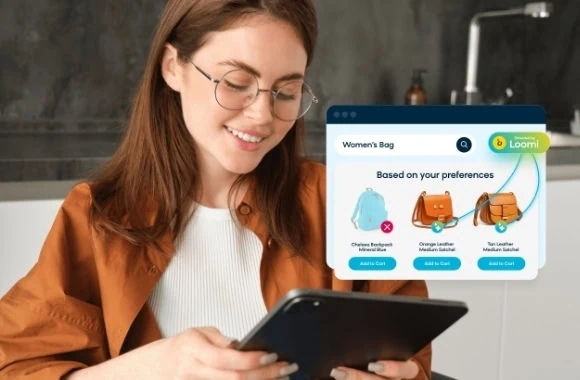
Apply dynamic segmentation and affinity scoring in real time across all customer interactions. With AI, you can create more adaptive personalization for a customer’s specific preferences for every channel (email, SMS, web, mobile app, and more).
Stage 3: Autonomize
Enable Loomi AI to autonomously determine journey logic, content selection, and messaging frequency. Loomi AI can adapt cadence, content, and touchpoints to maximize ROI without manual intervention.
The progression from multichannel to true omnichannel messaging requires sophisticated orchestration capabilities that can understand customer behavior across all touchpoints and respond with contextually relevant messaging.
Personalization in Practice: Real-Time Messaging Across the Customer Journey
Bloomreach executes omnichannel personalization across every phase of the customer journey — from initial awareness through long-term loyalty. Here’s how our platform helps you in each stage:
Awareness Stage
Touchpoints are activated based on real-time behavior rather than scheduled campaigns. When someone completes a quiz, reaches an interest threshold, or demonstrates specific browsing patterns, Bloomreach can automatically trigger the most relevant messaging for the appropriate channels.
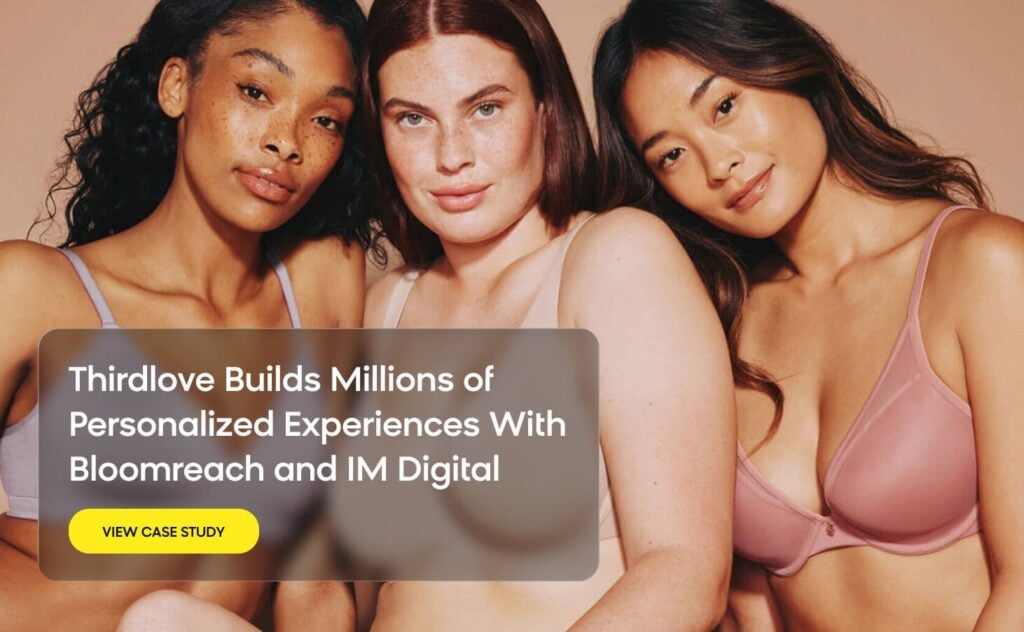
Thirdlove exemplifies this approach by creating real-time segments based on evolving customer archetypes. As customers interact with content and products, their profiles update dynamically, triggering personalized messaging that reflects their current interests rather than past behaviors.
Consideration Stage
Search results, category pages, and messaging campaigns are dynamically tuned to recent browsing patterns rather than historic sessions. Loomi AI understands that customer interests evolve and adjusts recommendations accordingly.
Adlibris demonstrates this with AI-driven recommendations powered by live affinity scoring. The brand tracked reading preferences across genres and formats, automatically adjusting book recommendations and promotional messaging as customer tastes developed, resulting in 200% ROI improvements compared to traditional approaches.
Conversion Stage
Customers may need an extra nudge to help them convert and push past points of hesitation (e.g., PDP abandonment, cart drop-off with high-value items, or extended consideration periods). With conversational shopping, brands can replicate the in-store experience online by answering questions and providing proactive guidance.
Defender used conversational shopping to help shoppers finalize their purchases. Because marine sports are a high-consideration, high-expertise field, the brand used Bloomreach Clarity to address any lingering questions to give customers the confidence that they’re buying the right product. As a result, Defender was able to boost add-to-cart rates by roughly 3%.

Drive Greater Results With AI-Driven Omnichannel Messaging
Omnichannel messaging is now much more than simply sending messages across more channels. It requires synchronized, responsive customer experiences that feel natural and helpful rather than intrusive or irrelevant.
AI-powered orchestration means marketing doesn’t chase customer behavior — it meets customers exactly where they are in their decision-making process. Bloomreach and Loomi AI enable brands to move from scheduled campaigns to situational conversations across the entire customer lifecycle.
For marketing to resonate, you need to understand when, why, and how messages fit into each customer’s needs in the moment. Bloomreach empowers you to create personalized omnichannel messaging that converts more consistently.
Get started in improving your omnichannel strategy today — schedule your personalized demo to see Bloomreach in action.