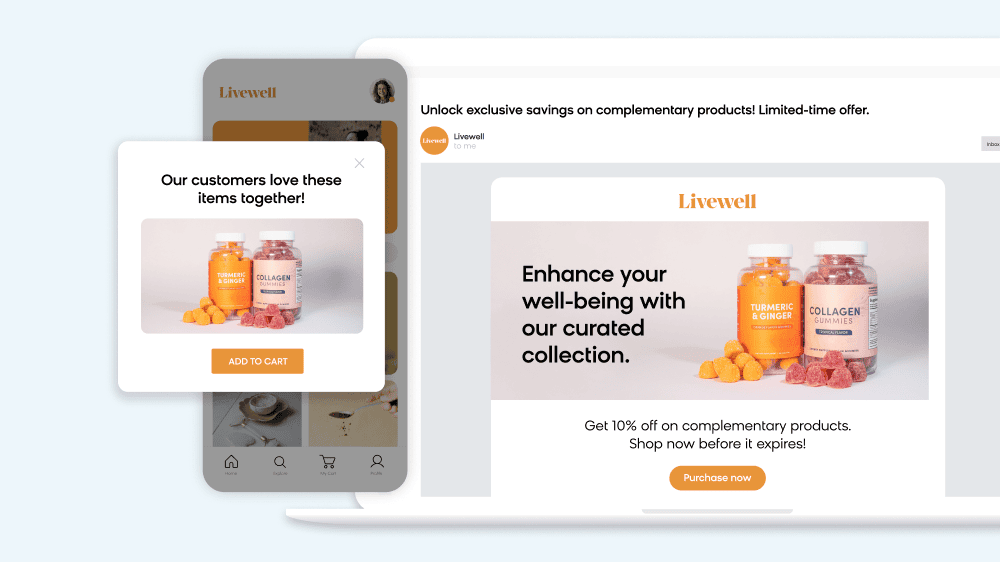

Most “AI for marketers” behaves like a helpful intern: it can draft content and campaigns, but you still have to select audiences, choose variants, set timing, and keep tuning as the business shifts. That creates slow learning loops and a permanent execution backlog.
Loomi marketing agent changes the unit of work from drafts to outcomes. It’s a multi-agent system that turns a plain-English goal into a complete, end-to-end, brand-safe journey — and then keeps optimizing it.
The Problem Behind the Hype
Drafts aren’t the bottleneck; orchestration is. Marketers lose time stitching together audiences, decisions, content, channels, timing, and constant experiments. Without a system that learns in production, even great drafts decay into static workflows.
If orchestration is the real blocker, the solution can’t be a better draft. It has to be a system that runs the work. That’s the gap Loomi is built to close.
What We Mean by a “Marketing Agent”
At Bloomreach, agentic AI takes initiative, makes decisions, and acts toward goals — completely autonomous, adaptable, self-optimizing, and resourceful. In practice, Loomi marketing agent works as a team; they use your customer data to coordinate tasks and finish the work (not just suggest it).
Simply put: Prompts create drafts, while agents create outcomes.
Brands like Sideshow and Revolution Beauty are already seeing material gains, from 5x revenue per email to double-digit revenue growth from Loomi-built campaigns.
Definitions are helpful, but outcomes are better. Here’s how Loomi marketing agent turns a goal into a live journey that keeps learning.
How Loomi Marketing Agent Works
1) Goal → Options
You set an objective (e.g., “Increase first-to-second purchase rate”). Instead of jumping straight to a plan, Loomi surfaces several ways to get there, with pros and cons, channels, and effort.
Example paths it might offer:
- Post-purchase nurture (education + cross-sell) via email + on-site
- Time-boxed incentive for high-intent cohorts via email/SMS
- Reengage with relevance (recommendations based on last viewed/bought)
- Loyalty nudge (points/status unlock to drive the 2nd order)
You can simply pick a path (or combine a couple) and tweak constraints.
2) Options → Plan
Based on your selection, Loomi returns an editable campaign brief: who to target, what to say, where and when to deliver, plus brand and budget guardrails.
3) Plan → Build
A lead/orchestrator agent delegates to specialist agents (e.g., audience, content, personalization, channel/timing, optimizer) and assembles the journey. Specialists can call sub-agents for schema/queries, recommendations, and template injection.
4) Build → Preview
Before anything runs, Loomi renders a customer journey preview showing who’s included, which variants will run, decision points, and timing windows. Expand any node to see rationale, tweak copy and targeting, adjust test windows, or toggle decisions. It’s a clear, editable, brand-safe draft.
5) Preview → Run
On approval, Loomi publishes the journey to your existing marketing stack so it uses your current channels, policies, and limits. Sends, delays, branches, and guardrails behave exactly as they do today — now assembled for you and fully auditable.
6) Run → Learn
After launch, the system introduces tests (A/B or contextual), retires weak options, adjusts timing and variants, and keeps moving the KPI — continuously, not quarterly.
That smooth sequence isn’t magic — it’s a team. Under the hood, specialized agents share context, divide the work, and hand results back to the orchestrator.
Beyond the Chatbot: How the Multi-Agent Architecture Actually Works
Most marketing “AI” is a single bot you chat with. Helpful, but it thinks and acts like one person. Loomi marketing agent operates differently. It’s a multi-agent system, which is more like a well-run team where each member has a job, the right tools, and shared context. That’s how we go from a vague goal to a working, brand-safe journey in minutes.
- Specialists with real jobs. Think audience builder, analytics expert, email architect, and more. Each agent owns a narrow responsibility, so it can go deep. For example, one is great at finding the right people, another is great at writing within your brand voice, and another knows when and where to deliver.
- Shared context, scoped on purpose. Agents don’t rummage through everything. Each one sees only what it needs. The copy/email agent can read brand voice, tone, and approved templates, while the audience or timing agents can’t. Analytics agents get schemas and performance history, while content agents only get the insights they should use. This “least-access” model keeps outputs on-brand while protecting sensitive assets and speeding up decisions.
- Tools they can actually use. This isn’t free-form text generation. Agents call concrete tools: They’ll query customer and product data, generate or validate Jinja logic, choose the right recommendations, and produce copy under brand constraints. Output isn’t “AI text,” it’s assets your stack can run.
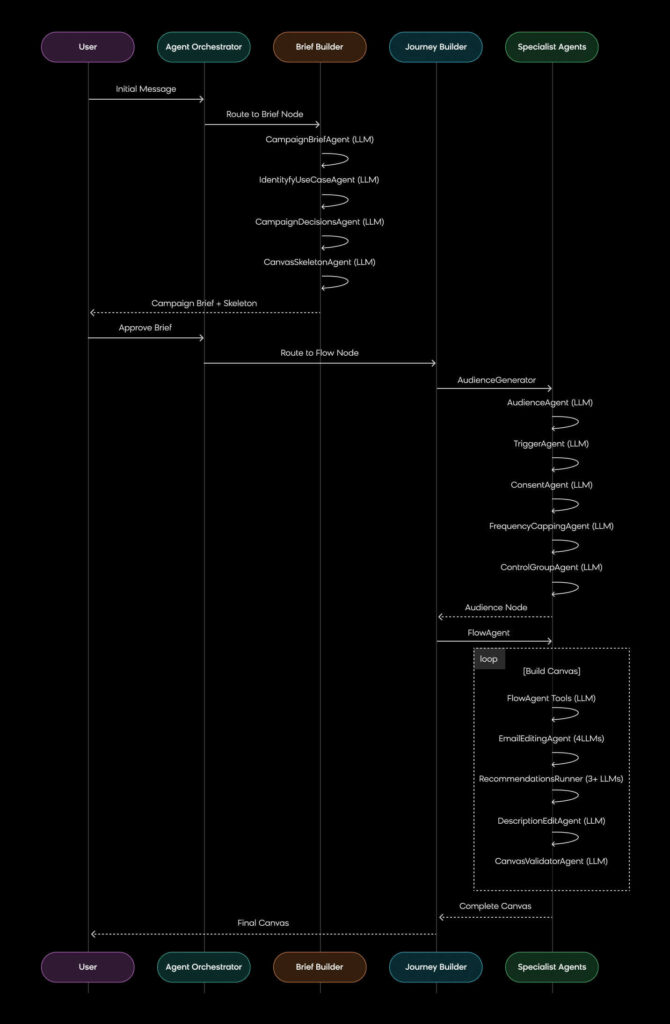
What This Looks Like in Practice
- Orchestrator (canvas agent): This is your project manager. You say “launch a birthday program.” The orchestrator turns that into a plan: trigger (birth date), audience (people with birthdays coming up), experience (email + optional weblayer), and then assigns work to the right specialists.
- Validation loop (analytics + schema): Before anyone builds, the AI checks reality. Do we actually have a birth_date field? If not, it doesn’t hallucinate; it suggests a fix (e.g., add a collection touchpoint), so the program is grounded in data you own.
- Builder agents:
- Audience agent composes the segment using approved queries against your schema — no hand-wavy targeting.
- Content/email agent writes inside your brand rails. Layouts use locked HTML blocks (header, footer, hero) so design stays pixel-perfect, and the AI only fills content slots (copy, product picks, dynamic snippets) where variation belongs.
- Assembly (Jinja and logic): Personalization often needs code. A Jinja expert agent adds the right logic (“last viewed product,” “days since purchase”), the analytics agent supplies the data source, and the content agent stitches together the final asset. Finally, the orchestrator drops it into the journey, ready to run.
The result isn’t just a pretty draft — it’s a finished, deterministic flow your team can approve, launch, and watch improve.
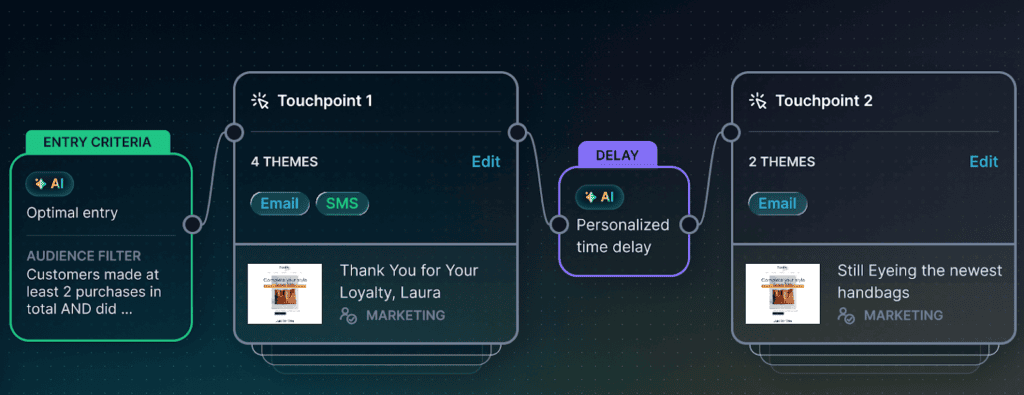
Once you see the team in action, the gap with “assistants” becomes obvious: assistants hand you parts; agents ship the whole program.
Why This Is Categorically Different From “Assistants”
Most “AI assistants” help you start. Loomi helps you ship. Here are the practical differences you’ll feel:
- From prompts to outcomes. An assistant hands you a draft asset and leaves the wiring to you. Loomi assembles the whole campaign — who to target, what to say, which channel to use, and when to send — so you’re approving a live journey, not collecting files.
- Continuous optimization, not set-and-forget. Static flows decay. Agents watch campaign performance and keep adjusting delays, variants, and even structure. If a timing window cools off or a variant stalls, the AI pivots without waiting for a quarterly refresh.
- Personalization at the system level. Real personalization isn’t giving some recommendations; it’s giving different people different paths through the journey. Agents make per-person decisions across steps — timing, channel, offer — so “best” can vary by user and moment.
- Data-native, not URL-native. Some tools will just crawl your website to guess brand voice, products, and recommended campaigns. It’s fast, but shallow. It doesn’t know your unified profiles, order history, inventory, or existing system emails, so it can suggest duplicative or off-base programs. Loomi is data-native. It works inside your first-party data and execution engine: customer attributes, events, catalog, and the deterministic blocks that actually send messages. That’s how it respects your defaults (e.g., avoids duplicating order confirmations) and optimizes for outcomes you care about.
- Enterprise guardrails by design. Brand-locked templates keep layouts consistent. Policy checks and approval thresholds gate high-impact changes. Budgets and frequency caps protect audiences. Every decision is traceable, so you can explain what happened and why.
Shipping once is table stakes. The edge comes from shipping smarter every day, which is where decisioning and contextual personalization kick in.
Decisioning That Learns — Contextual Personalization Inside Journeys
Most teams still crown a single “average winner.” Loomi marketing agent doesn’t. They learn who needs what (and when), and apply those decisions inside your journeys across email, SMS, push, and web.
- Start with a clear objective. Point the system at real outcomes (conversion, revenue, margin). Use higher-volume proxies (clicks, micro-conversions) where you need faster feedback to get the loop moving.
- Decide where to experiment. Not every node needs testing. Pick the high-leverage spots — send-time windows, creative variants at key touchpoints, or channel choice when there’s a real trade-off (e.g., push vs. email for time-sensitive offers).
- Explore, then exploit (and repeat). Begin with a few sensible options. Let Loomi learn quickly, retire weak performers, and add new contenders. As it gathers signals, it shifts from one-size decisions to contextual personalization, where the “winner” can differ by person and moment.
- Use the signals that matter. Decisions are informed by attributes, demographics, real-time behavior, location, purchase history, campaign activity, and loyalty status. This means that “send now” for a high-intent browser might become “wait until evening” for a casual window-shopper.
- Keep it inside the journey. These choices aren’t one-off tests; they’re embedded as a node, so the whole flow can optimize message + channel + timing end-to-end.
- Stay within guardrails. Budget and frequency caps protect audiences, brand/policy checks keep outputs on voice, and human-in-the-loop approvals gate high-impact changes. You get speed without losing control.

A key characteristic of agents is their ongoing learning. That’s why we treat tracing, evaluations, and approvals as first-class parts of the product.
Quality, Observability, and Control
Agentic systems aren’t “set and forget.” We treat quality and tracing as top priorities:
- Tracing: Inspect agent and tool calls, inputs and outputs, and latencies. Think of this as an agentic system debugger for visibility and root-cause analysis.
- Evaluations: End-to-end and per-agent checks (generation success, ready-to-use, editability, build time, consistency), with automated scoring and human review.
- Brand safety: Locked templates, policy checks, and auditability. Humans still approve high-impact changes.
These choices land where customers actually experience them. And because Loomi works inside your existing systems, each decision is grounded in reality — not guesswork.
Built Where Decisions Happen
Loomi doesn’t guess from the sidelines — it works inside the systems you already use to run marketing (where profiles, events, catalog, consent, and automations live). That’s why agent decisions are grounded, brand-safe, and easy to audit: journeys compile to the same primitives your team trusts (segments, waits, decisions, sends).
This is different from URL-native tools that crawl a website to infer brand and campaigns. They offer a quick start, but they’re often shallow: They don’t see unified identities, purchase history, inventory, or which system emails already go out, so they might suggest duplicative or off-base programs.
What marketers get:
- No duplicate or off-base communications. Agents are aware of the confirmation/receipt flows your ESP already sends and will avoid recommending lookalike messages that create noise or confusion
- Decisions grounded in reality. Targeting, offers, and timing are informed by actual behavior, SKU availability, margin constraints, and returns patterns — not just what’s visible on your homepage
- Consent and brand safety by default. Journeys inherit your consent states, opt-outs, frequency caps, and policy rules, while generated content stays within locked templates and approved voice guidelines
- Faster iteration with clean handoffs. Because journeys compile to the same primitives your team trusts, marketers can jump in to edit, approve, and roll back without special tooling
- Closed-loop learning. Performance writes back to the same source of truth, so agents learn from real outcomes (clicks, conversions, revenue) and improve the next decision automatically
Bottom line: URL-native tools can draft something that looks on-brand. Loomi ships programs that are on-brand, on-policy, and aligned with how your business actually runs.
Put it all together and here’s what a real day looks like: one goal, a working plan, and continuous improvement without the usual rebuilds.
A Day in the Life of a Marketer
Goal: “Increase repeat purchases from first-time buyers this month.”
1) Brief
You describe the outcome you want. Loomi returns a short plan you can edit: who to target, what to say, and a safe timing window (e.g., test 2-6 hours after first purchase). It feels like a creative brief you didn’t have to write.
2) Build
Behind the scenes, agents split the job:
- The audience agent composes the segment against your real schema (with no guesswork)
- The content agent drafts on-brand variants and slots in recommendations
- The channel/timing agent chooses where and when the message should land
3) Approve and launch
You tweak copy, adjust the test window, and hit publish. Everything compiles to the same building blocks your stack already uses (segments, waits, decisions, sends), so it’s familiar and auditable. And most importantly, you’re still in control of the process.
4) Optimize
As results come in, Loomi adjusts the flow as needed: retiring weak variants, leaning into what works, and adapting timing per context. You see performance improve without the usual rebuilds.
Zooming back out, this is the day-to-day impact: faster launches, more programs, and personalization that finally touches who/what/where/when — not just subject lines.
Proof It Moves the Needle
Early pilots show the same pattern in the wild. For example, Sideshow saw roughly 2x value per email delivered after moving key lifecycle programs to agent-assembled flows. At the same time, iteration cycles sped up because tests ship as part of the work, not as a separate project.
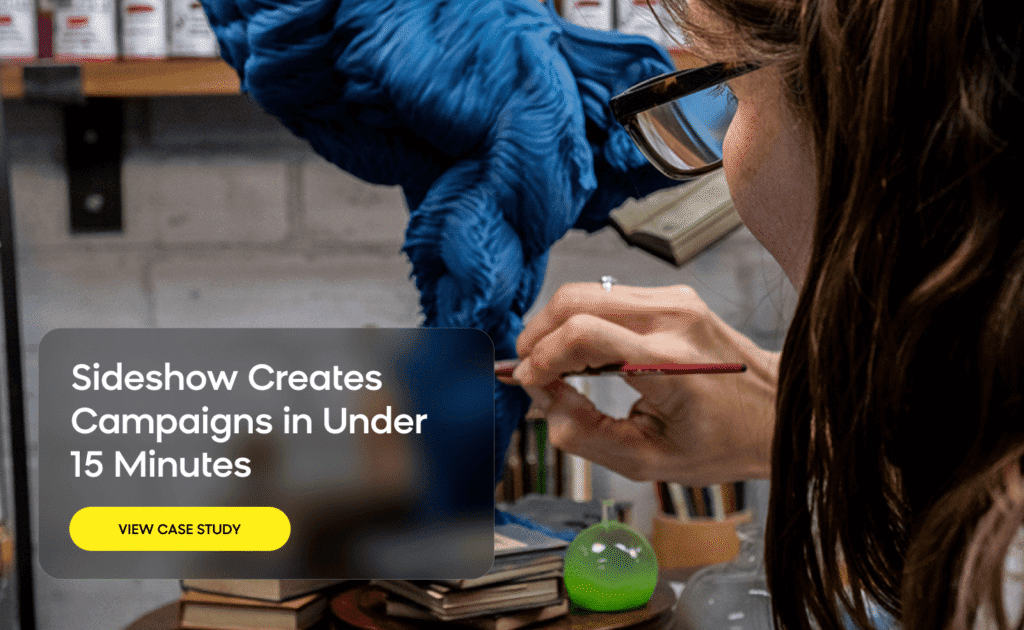
As agents take on execution, the marketer’s job shifts from wiring journeys to setting goals, taste, and constraints the AI can run with.
Why Choose Loomi for Agentic Marketing
Loomi isn’t an AI panel bolted onto the side. It’s an agentic brain that sits inside the systems you already use to run marketing — where customer profiles, events, product data, consent, and automations actually live.
That’s why it can use your real context, assemble complete programs, and finish the work with guardrails and explainability. The result: teams move from sporadic, rules-driven personalization to continuous, goal-driven engagement. See Loomi marketing agent in action and start transforming your marketing.