Reengagement email campaigns have long been treated as a necessary cleanup exercise — a final attempt to win back inactive customers.
But that mindset no longer fits the realities of modern ecommerce.
Today’s customers move fluidly across channels, expect personalized value at every touchpoint, and disengage for reasons far more nuanced than an arbitrary period of inactivity.
As digital behaviors evolve, so must the strategies designed to reengage customers. Instead of relying on rigid rules and generic messaging, leading brands are shifting toward AI-driven, intent-based reactivation that adapts to each customer’s journey in real time.
Reengagement is no longer a defensive tactic — it’s a proactive retention strategy that strengthens customer relationships long before they reach the brink of inactivity.
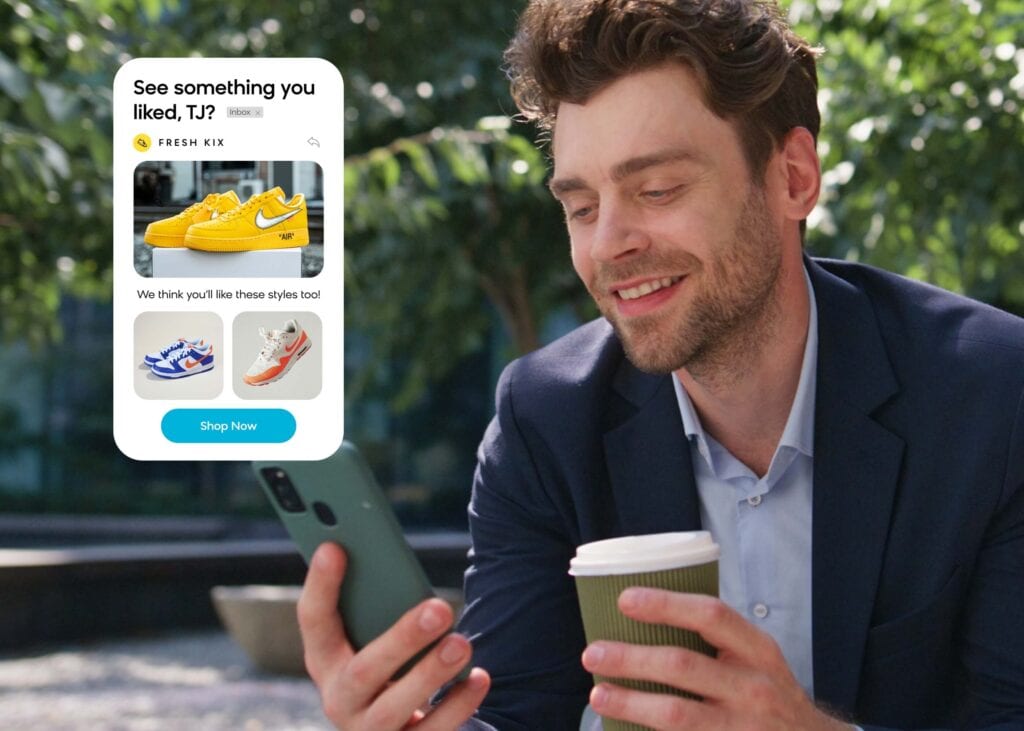
The Challenge of Reengagement Email Campaigns
The biggest conundrum for any email reengagement strategy is the fact that the odds of keeping your audience’s attention are against you.
Research shows that email lists naturally accumulate inactive users over time — with average unsubscribe rates sitting at 0.1-0.3% per campaign across most industries.
And in addition to these deliberate unsubscribers, there are customers who gradually drift away and stop engaging with campaigns. These silent disengagers don’t purposefully opt out, but they’re not interacting with your brand.
It’s these stagnant customer relationships that pose the biggest threat to revenue, and that convention reengagement methods consistently struggle to rekindle.
Why Traditional Reengagement Email Campaigns Fall Short
Most traditional reengagement strategies were built for a very different era of email marketing and suffer from several critical limitations that prevent them from delivering optimal results:
- Inflexible inactivity windows that miss early warning signs of disengagement, waiting until customers have been inactive for 90-180 days — when the relationship has already deteriorated significantly.
- Manual workflows that limit the speed and scale of campaigns, making it impossible to personalize at the individual level or respond to real-time behavioral changes.
- Email-only approaches that result in fragmented customer experiences, ignoring the reality that customers interact across multiple channels and touchpoints.
- Static content that ignores prior engagement history, purchase intent, and individual preferences, leading to irrelevant messaging that further drives disengagement.
- Generic messaging that treats all inactive subscribers the same, regardless of their value, preferences, or likelihood to reengage.
Most of these limitations stem from legacy solutions, which simply weren’t built for today’s customer journeys. They operate on static rules rather than behavioral intelligence, meaning they can’t detect subtle shifts in engagement or adapt messaging on the fly.
But modern ecommerce brands can’t afford to be hindered by these limitations. Reengagement is no longer about rescuing lapsed users; it’s about anticipating intent shifts early and responding with timely, personalized experiences that keep customers engaged long before they fade out.
Understanding and Preventing Customer Disengagement
Effective reengagement starts long before a customer stops opening emails. It begins with understanding why disengagement happens — and having the intelligence to spot those signals early.
Modern ecommerce brands generate vast amounts of first- and zero-party data across channels: browsing behavior, purchase history, engagement frequency, product affinity, channel preferences, and more. But without a way to connect these signals, brands are left reacting to disengagement instead of preventing it.
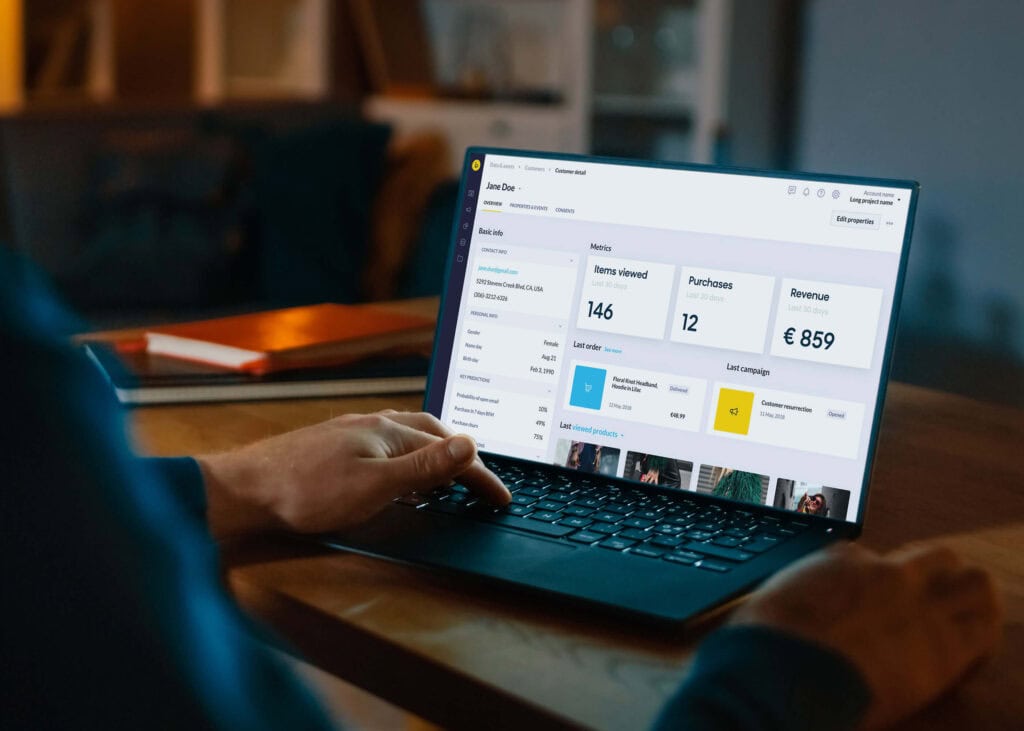
Unified Profiles Turn Data Into Context
Ecommerce companies need a solution that consolidates every customer interaction into a single customer view — one real-time source of truth that accurately reflects each customer’s relationship with your brand.
This gives marketers a complete picture of how each customer behaves, what they care about, and how their engagement patterns are evolving — helping you highlight the most important disengagement indicators, such as:
- Declining engagement velocity and interaction rates across touchpoints
- Shifts in channel usage patterns
- Reduced browsing or purchase frequency, and any deviation in purchase intervals
- Changes in product affinity, browsing history, or category interests
This is exactly what Bloomreach’s all-in-one personalization platform offers. With our powerful data engine unifying and organizing all your data into real-time intelligence, you have a proven, data-driven foundation for early intervention and effective reengagement.
AI Unlocks Real-Time Reengagement
With a unified understanding of your customer relationships, AI can put your data to work and scale reengagement in ways that manual workflows never could.
Instead of relying on static rules or waiting for predefined thresholds to launch reengagement campaigns, your marketing team can leverage AI to continually evaluate behavior and predict when a customer is at risk of drifting away — it can orchestrate the right message to the right customer at the right time, unlocking true personalization at unprecedented speed and scale.
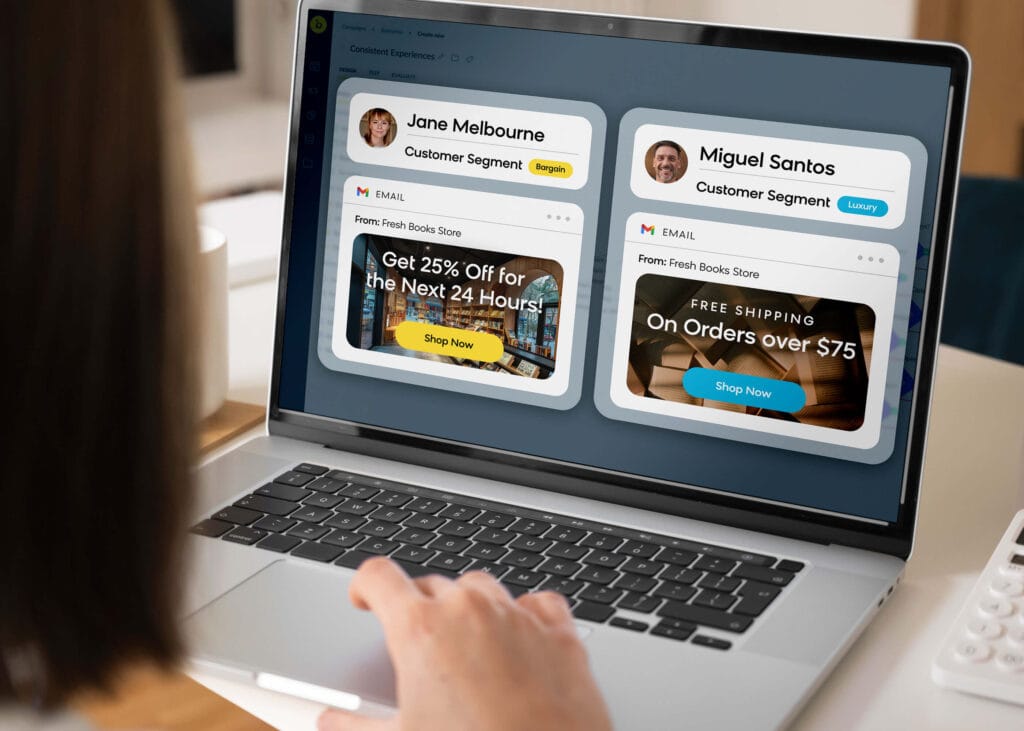
To unlock this level of intelligence, brands need an AI solution built specifically for ecommerce. Loomi AI delivers exactly that.
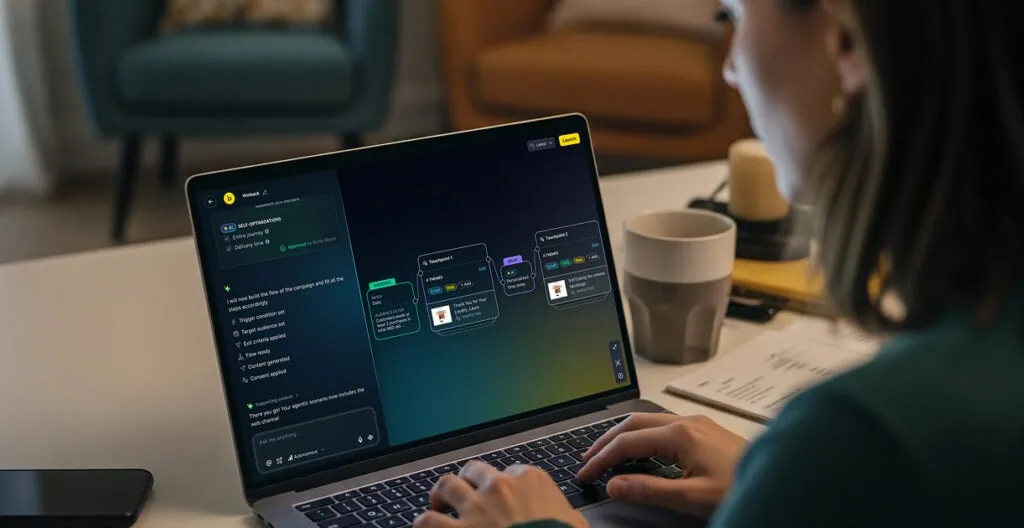
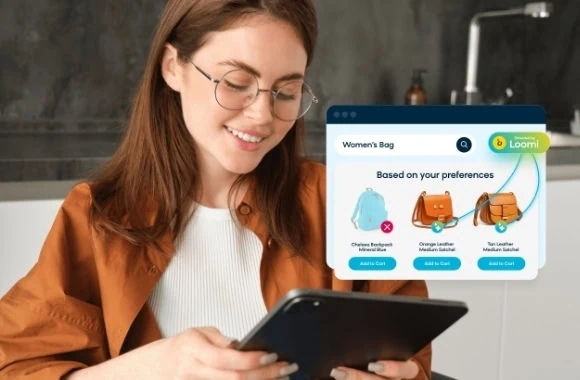
Trained on 15+ years of data about how customers shop, search, and engage, Loomi AI uses sophisticated models and workflows to make end-to-end personalization intuitive, instantaneous, and scalable. It’s purpose-built to help brands deliver the moments that matter most for engagement, adapting journeys dynamically based on each customer’s behavior and intent.
With capabilities like dynamic disengagement scoring, affinity modeling, and intent prediction, Loomi AI can:
- Detect early signs of fading interest from customer behavior
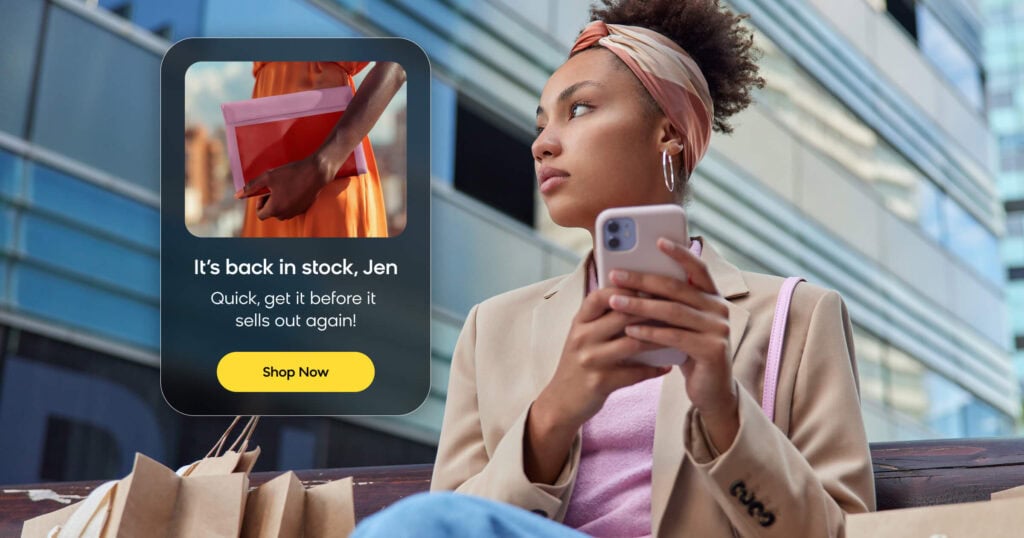
- Trigger personalized reengagement journeys automatically
- Send campaigns on the best channel based on recent activity
- Tailor content based on real-time customer intent, not outdated assumptions
- Adjust campaign cadence and messaging to avoid fatigue
This evolution from reactive campaigns to predictive, autonomous orchestration is what allows brands to prevent disengagement — not just respond to it.
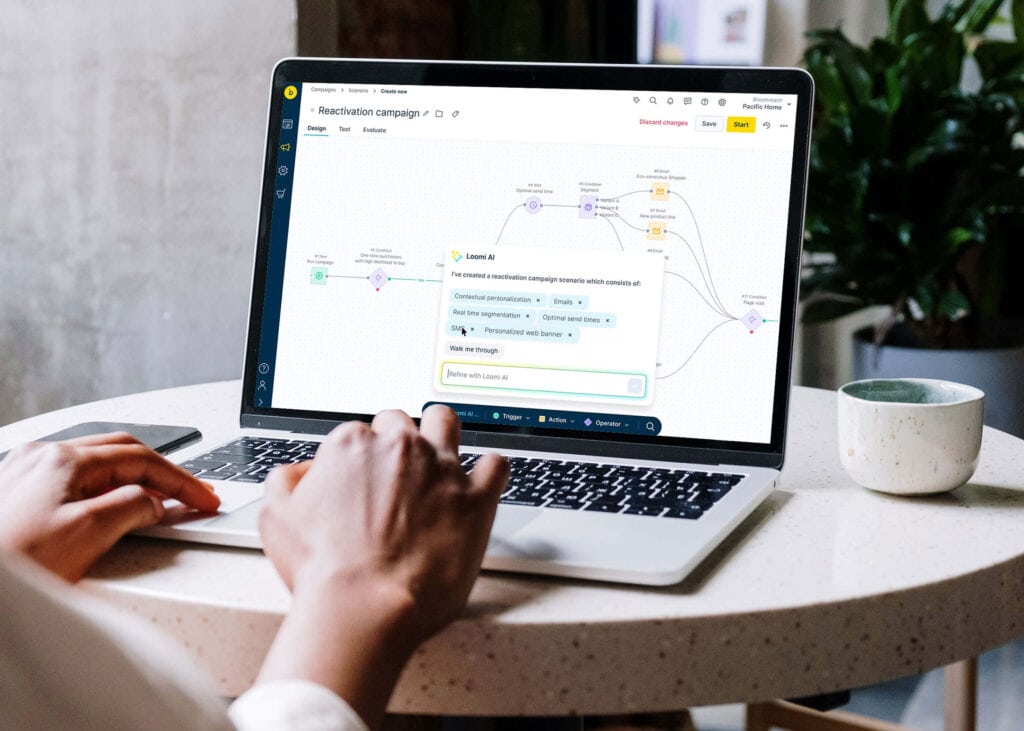
Reengagement Email Campaigns That Evolve: Smarter Timing, Smarter Channels
With an AI-powered solution, your reengagement email campaigns can move beyond traditional playbooks and adapt to the realities of modern customer behavior.
As your customers shift their interests, channels, and engagement patterns, your campaigns shift with them — delivering timely, personalized touchpoints that are far more nuanced, dynamic, and profitable.
Lifecycle-Based Triggers
Customer disengagement doesn’t happen overnight, and it certainly doesn’t follow a predictable 30-, 60-, or 90-day window.
Modern reengagement strategies recognize this and segment customers based on their current lifecycle stage and intent signals, not static inactivity periods. For example:
- Early Disengagers may still browse your site or engage on mobile while email activity declines. They often require a shift in channel or content — not aggressive win-back messaging.
- Dormant Subscribers (30–90 days) may show no recent signals but still have reactivation potential based on historical affinity and purchase behavior.
- At-Risk, High-Value Customers exhibit slipping engagement velocity within high-CLV segments. These customers warrant immediate, personalized intervention.
- Long-Lapsed Loyalists may have lower recency but historically strong brand affinity, making them excellent candidates for tailored reactivation.
By understanding these lifecycle nuances, brands can time their outreach far more precisely — and far more effectively.
Omnichannel Orchestration That Meets Customers Where They Are
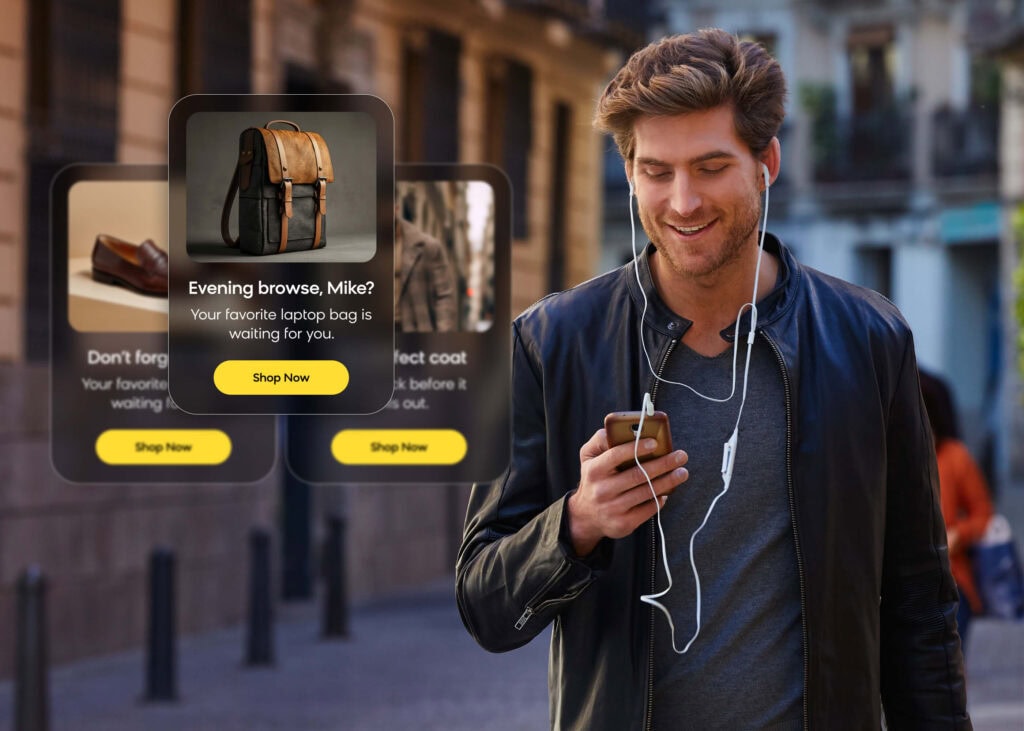
Because customers shift between channels constantly, email alone can’t carry the weight of modern reengagement. AI-powered campaigns can incorporate behavioral signals to determine the best channel — or combination of channels — to reconnect with each individual customer.
Examples include:
- Email decline + recent SMS engagement: Shift engagement efforts to SMS or mobile push notifications for better visibility.
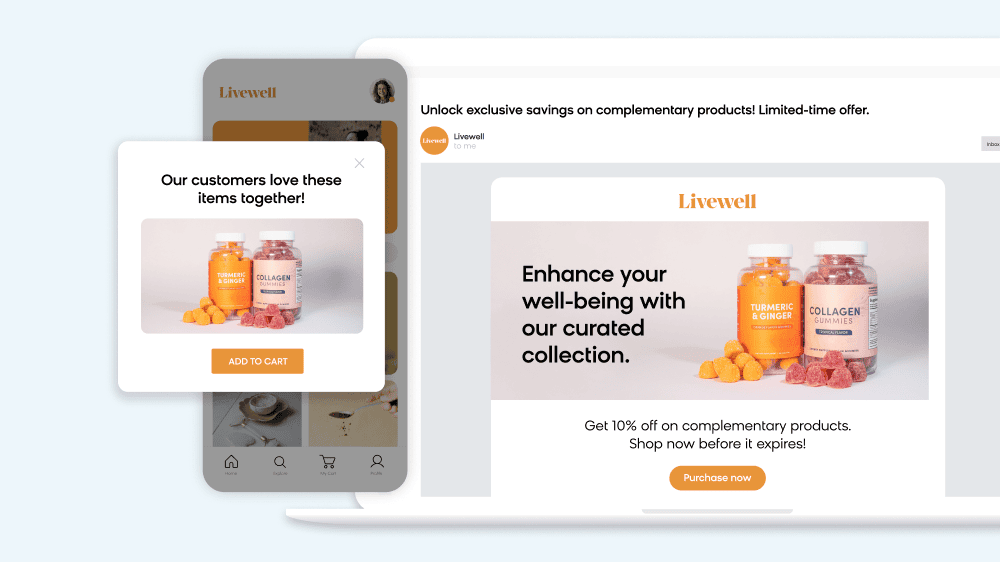
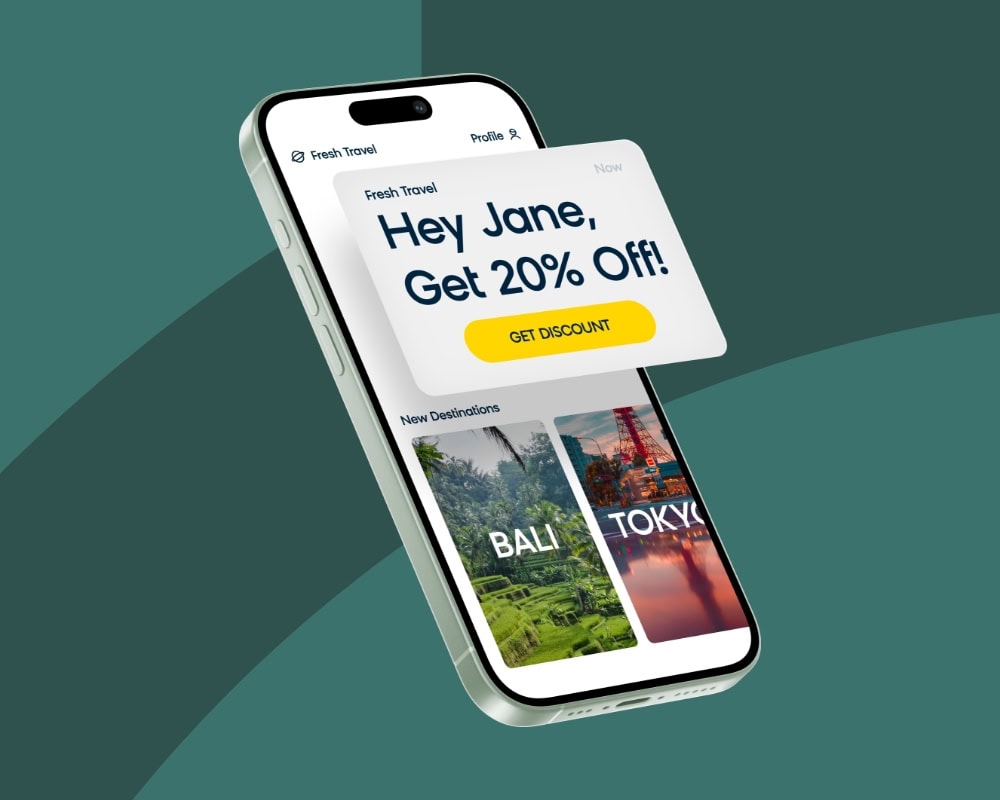
- Inactive in email but browsing actively on-site: Trigger personalized onsite banners, exit-intent overlays, or recommendation modules.
- Cross-channel disengagement: Launch a coordinated, multi-touch reactivation sequence that escalates intelligently without overwhelming the customer.
This omnichannel adaptability ensures brands speak to customers where they are most receptive, strengthening engagement and preserving deliverability.
Measuring Reengagement Email Campaign Success: Modern KPIs That Matter
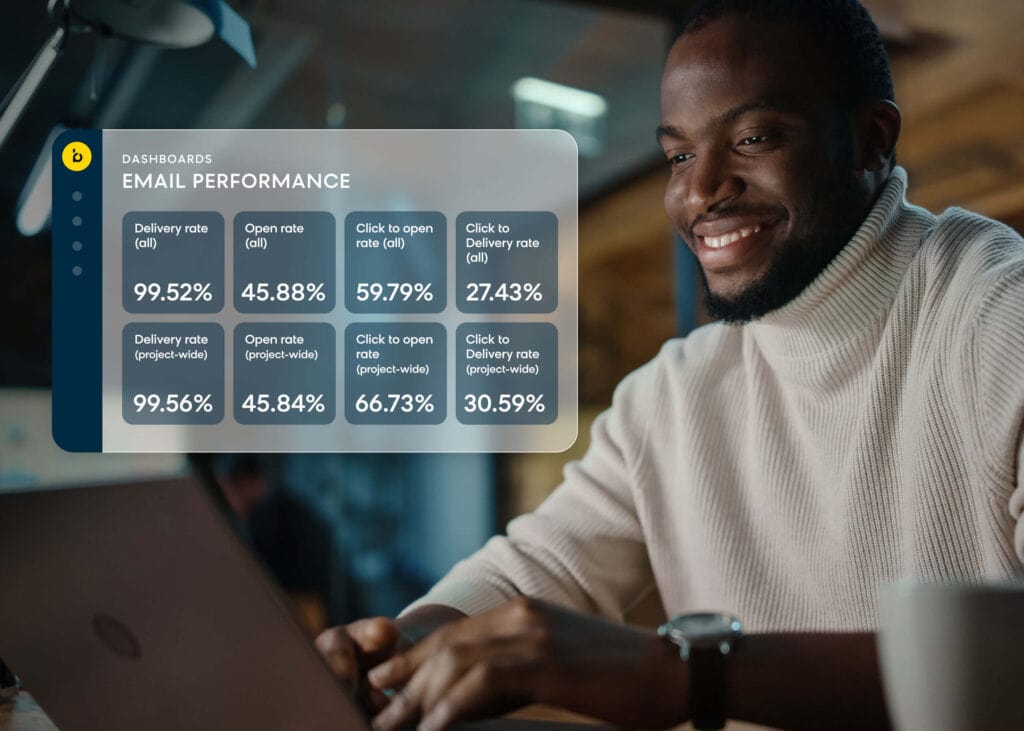
As reengagement strategies evolve, so must the way brands measure their impact. Traditional metrics like opens and clicks offer only a surface-level view of performance — and often fail to capture whether a campaign truly reestablished an active, valuable relationship with the customer.
Modern reengagement success is measured not by momentary engagement, but by sustained behavior change, improved deliverability, and long-term customer value.
Context Matters: Benchmarking for Today’s Landscape
Industry benchmarks show email open rates typically range from 19% to 39%, with personalized, behavior-driven content consistently outperforming generic messaging by 20%.
But even the strongest benchmarks only tell part of the story. Reengagement campaigns function differently than promotional sends — and their success hinges on timing, relevance, and the quality of your underlying customer data.
That’s why evaluating reengagement emails requires looking beyond the inbox and understanding how customers reenter their lifecycle journey.
Advanced Performance Metrics for Modern Reengagement
With an AI-powered reengagement strategy, brands can measure performance using richer, more actionable KPIs, such as:
- Reactivation Rate by Lifecycle Segment: Understand which customer groups respond best to different campaign approaches and refine strategies for each.
- Customer Lifetime Value (CLTV) of Reengaged Users: Assess the long-term revenue contribution of customers brought back into the fold, rather than evaluating campaigns on short-term conversions.
- Long-Term ROI by Cohort: Track how newly reengaged customers behave over 3-, 6-, or 12-month windows to quantify sustained impact.
- Deliverability and Sender Reputation Improvements: Measure how AI-driven list refinement and smarter targeting increase inbox placement and overall program performance.
- Retention Curve Recovery: Analyze how quickly reengaged customers return to healthy engagement patterns — not just whether they clicked once.
- Funnel Continuation Rate: Track how many reactivated users go on to browse, purchase, or engage across other channels, validating reengagement as part of a broader customer journey.
These metrics provide actionable insights for optimizing both immediate campaign performance and long-term customer relationship strategies, moving beyond vanity metrics to business impact measurement.
Ready To Transform Your Reengagement Email Campaigns?
Customer retention is evolving — and the brands that thrive will be the ones that move beyond reactive, rule-based campaigns toward intelligent, AI-driven reengagement.
Bloomreach’s all-in-one personalization platform empowers teams to reconnect with customers earlier, more effectively, and with true one-to-one personalization that traditional tools simply can’t match. It unifies all your data, channels, and customer journeys to deliver timely, relevant experiences that prevent disengagement before it happens — all powered by Loomi AI.
If you’re ready to elevate your reengagement strategy, visit our site to learn more about what Bloomreach can do for you or schedule a demo today.
Frequently Asked Questions
What should reengagement email campaigns include?
Modern reengagement email campaigns should feature personalized product recommendations, relevant content based on browsing history, clear value propositions, and preference center links. AI-powered platforms can dynamically generate these elements for each recipient.
What is a good open rate for reengagement email campaigns?
Well-executed reengagement email campaigns with behavioral targeting and personalization often achieve open rates in the 20-35% range. However, reactivation rate and long-term customer value are more important metrics than opens alone.
When should you send reengagement email campaigns?
Instead of fixed timeframes, modern systems trigger reengagement based on behavioral signals like declining engagement velocity, reduced session frequency, or cart abandonment patterns. AI can identify optimal timing for each individual customer.
How do reengagement email campaigns affect sender reputation?
Well-executed, targeted campaigns improve sender reputation by removing truly unengaged subscribers and increasing overall engagement rates. Generic campaigns sent to large volumes of inactive subscribers can potentially harm deliverability.
Can AI improve reengagement email campaigns?
AI dramatically improves reengagement through predictive timing, personalized content generation, optimal channel selection, and real-time campaign adjustment. These capabilities are impossible to replicate with manual processes or legacy platforms.