
What Is Semantic Search?
Semantic search is a data searching technique that uses the intent and contextual meaning behind a search query to deliver more relevant results, putting people at the center of product discovery. But here’s what makes it different from simple keyword matching: semantic search actually understands what your customers are trying to find, not just which words they typed. It does this through a combination of natural language processing (NLP), machine learning (ML), and modern AI techniques like transformer models, which work together to grasp meaning and context the way humans do.
What Is Semantic Search?
But what is semantics, exactly? Well, it refers to the philosophical study of meaning. (Pretty deep, huh?) Even though philosophy doesn’t always relate to software engineering, it does in this instance, meaning the definition helps us better understand the concept at hand.
Indeed, “semantic search” is synonymous with understanding your customer or buyer and is made possible through a combination of natural language processing (NLP) and machine learning (ML). Semantic search leverages vector embeddings and neural networks to transform words and phrases into mathematical representations that capture their meaning and relationships to other concepts.
In fact, these types of artificial intelligence make search results more comprehensive, seamless, and meaningful by understanding exactly what the prospect is trying to ask and what the user intent is behind the arrangement of keywords, as opposed to simply matching keywords to web pages. This helps deliver the most relevant, revenue-driving products based on how people search and browse.
- Semantic search adds a deeper level of understanding to customers and their search intent, as the algorithms continue learning through bounce rates, conversion rates, and other types of key information.
- Semantic search adds a deeper level of understanding to search intent, as the algorithms continue learning through bounce rates, conversion rates, and other types of key information.
- Natural language processing helps your search bar understand your customers on a deeper level, while machine learning uses data and trial-and-error patterns to enhance the user experience.
How Does Contextual Meaning Impact Semantic Search?
Most search intent can fall under the following categories: informational, navigational, commercial, or transactional. Being in commerce, your brand is most likely focused on the informational and transactional above all else.
It’s up to your ecommerce business to equate a customer’s intent behind a query to the context of a specific keyword or keyword phrase with your search engine. Humans rely on this very context in the real world when speaking and interacting.

If I were to ask you, “Do you like this article?”, and then followed up with, “What do you like about it?”, you would know that “it” refers to the article based on the direction of our conversation. The impact of context in our daily conversations is endless because it’s often linked to what has been previously said or what followed.
The setting and time in which a conversation takes place, the background knowledge of those involved in the discussion, and the type of relationship that they have established all play a role in how we communicate with one another. Search is no different. Think of these contextual attributes as what semantic search is emulating.
That’s the reason why local restaurants appear when you type “restaurants” into Google. The context of who you are, where you are, and what you want are all understood by the search engine.
How Does Semantic Search Work?
Search relevance, or a search engine’s ability to match a page of search results to user intent, isn’t possible without semantic understanding. NLP helps your search bar understand your products on a deeper level, while ML uses data and trial-and-error patterns to enhance user experience.
The Technical Foundation
Behind every semantic search system lies a sophisticated technical architecture built on vector embeddings and transformer models. When a customer types a query like “comfortable summer dress,” the system doesn’t just look for those exact words. Instead, it converts both the query and product descriptions into high-dimensional mathematical vectors that capture semantic meaning.
These vector embeddings are created using transformer models like BERT (Bidirectional Encoder Representations from Transformers) or sentence transformers, which have been trained on vast amounts of text to understand language relationships. The system then uses techniques like cosine similarity to measure how closely related a search query is to different products in the catalog, even when they don’t share identical keywords.
For example, a query for “breathable fabric” might match products described as “moisture-wicking” or “lightweight cotton” because the embedding model understands these concepts are semantically related. This is powered by k-nearest neighbor (kNN) search algorithms that can quickly find the most similar product vectors to a given query vector, all happening in milliseconds.
Modern semantic search systems also integrate with large language models (LLMs) through techniques like Retrieval Augmented Generation (RAG), where the search system first retrieves relevant products, then uses an LLM to understand complex, conversational queries or provide more detailed product recommendations based on nuanced customer needs.
Again, semantic search adds a deeper level of understanding to search intent, as the algorithms continue learning through bounce rates, conversion rates, and other types of key performance indicators (KPIs). By solving the “search quality problem,” these algorithms can boost user satisfaction and brand loyalty.
Semantic Search vs Other Search Types
Understanding how semantic search compares to other search methodologies helps clarify its unique value in ecommerce environments.
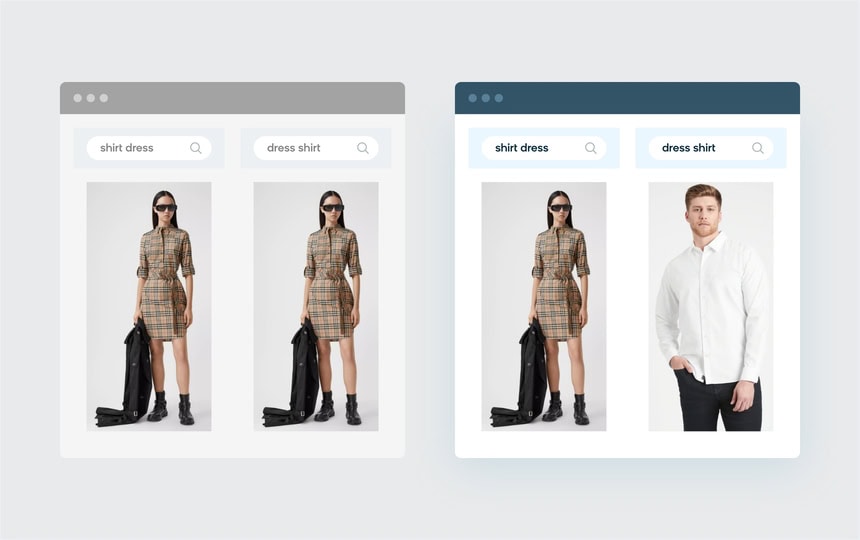
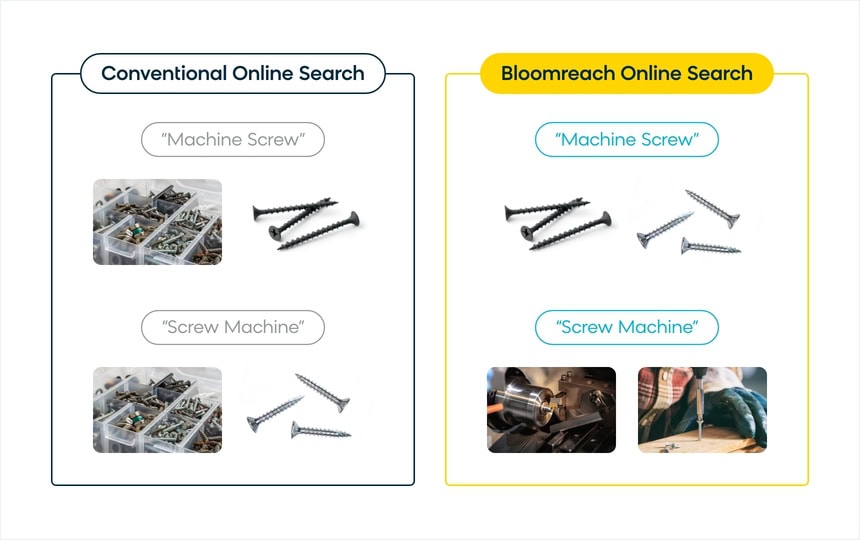
Semantic vs Keyword Search: Traditional keyword search relies on exact word matching, where “red shoes” will only return products containing those specific terms. Semantic search understands that “crimson footwear” or “burgundy sneakers” might be what the customer actually wants, even without exact keyword matches.
Semantic vs Lexical Search: Lexical search focuses on the literal meaning of words and their dictionary definitions. Semantic search goes deeper, understanding context, synonyms, and conceptual relationships. When someone searches for “business attire,” lexical search looks for those exact words, while semantic search understands they might want suits, blazers, dress shirts, or professional accessories.
Semantic vs Vector Search: This distinction is more technical. Vector search refers to the mathematical approach of comparing numerical representations of data. Semantic search is the application of vector search specifically for understanding meaning and intent. All semantic search systems use vector search, but not all vector search is semantic.
|
Search Type |
Strengths |
Limitations |
Best For
|
|---|---|---|---|
|
Keyword |
Fast, precise for exact matches |
Misses synonyms, context |
Simple product lookups |
|
Semantic |
Understands intent, handles variations |
More complex, requires training data |
Discovery, exploration |
|
Lexical |
Good for technical terms |
Limited by dictionary definitions |
Specification matching |
|
Vector |
Flexible similarity matching |
Requires proper embedding training |
Recommendation systems |
Why Does Semantic Search Matter for Your Users?
You want your customer or buyer to feel understood through the search experience. Semantic search works to ensure that they feel heard. While the end goal for any commerce business is to finalize a transaction (again and again), prospects cannot be made to feel as though that’s the only emphasized aspect of the purchase journey.
Even though some customers will want to browse and explore search results, most want to find what they’re looking for immediately. If they easily find the product or service along with the information they need, then they’ll use that extra browsing time on actionable steps that add up in a big way, such as discovering new products or services that speak to them or match their tastes. Your brand will experience more than just an increase in conversions with a lift in average order value (AOV) and revenue per visitor (RPV).
Semantic understanding also matters in terms of personalization or making every user’s experience feel unique. For example, if a customer has shown interest in women’s clothing and searches for generic terms, like “tank top,” “swimwear,” or “running shoes,” an intelligent ecommerce search engine should return relevant results that take their gender identity into account based on past search intent and history.

And if they make a typo in the search bar, semantic understanding will step in to identify the words and separate product types from their attributes, like colors, brands, and sizes. Since semantic search seeks to understand the customer above all else, red retail products should still appear even when misspellings (e.g., “rde” vs. “red”) occur, for example.
Query Expansion and Synonym Understanding
Semantic search excels at expanding customer queries beyond their literal wording. When someone searches for “workout gear,” the system understands this encompasses athletic wear, fitness equipment, activewear, gym clothes, and exercise accessories. This query expansion happens automatically, without requiring customers to think of every possible synonym or related term.
The technology also handles seasonal context and trending terminology. A search for “holiday party dress” in December will prioritize festive, formal attire, while the same query in July might surface lighter, summer celebration options. This contextual awareness comes from analyzing patterns in customer behavior, seasonal shopping trends, and cultural events.
Semantic Search Examples in Action
Consider these real-world scenarios where semantic search demonstrates its value:
Multi-intent Queries: When a customer searches “gifts for runners,” traditional keyword search might return products with those exact words. Semantic search understands the gift-giving intent and surfaces running shoes, fitness trackers, moisture-wicking apparel, and recovery tools, all positioned as gift-worthy items with appropriate presentation.
Descriptive Product Searches: A query like “something to keep my coffee warm” should return travel mugs, thermal carafes, mug warmers, and insulated tumblers. The system interprets the functional need rather than requiring customers to know specific product categories.
Style and Aesthetic Queries: When someone searches for “boho chic accessories,” semantic search connects the aesthetic concept to relevant products like fringe bags, layered jewelry, wide-brim hats, and flowing scarves, even if those products aren’t explicitly tagged with “boho” or “chic.”
Problem-Solution Matching: A search for “my feet hurt at work” can surface comfortable work shoes, orthotic insoles, anti-fatigue mats, and compression socks. The system recognizes the pain point and suggests multiple solution categories.
At Bloomreach, we believe that the search bar should return the most relevant, revenue-driving products based on how people search and browse. This reduces the time ecommerce teams spend on creating manual rules, tweaking search results, and optimizing their chosen platform for a high-quality search experience.
Why Is Semantic Search Important for Your Business?
Ultimately, providing a good search experience that’s rooted in a deep understanding of your prospect contributes to creating a no-nonsense digital experience that garners brand trust. Your customers will remember how efficient it was to shop on your website; in many instances, they will even convince them to come back.
When customers can’t find what they’re looking for in the first few results, they leave. Semantic search directly addresses this by improving result relevance from the first query, keeping shoppers engaged instead of sending them to a competitor.
The business impact extends beyond immediate conversions. When customers find relevant products quickly, they’re more likely to explore additional items, leading to higher average order values. They’re also more likely to return for future purchases, improving customer lifetime value. A frustrating search experience, on the other hand, can damage brand perception and send customers directly to competitors.
Modern Semantic Search Technologies
Today’s semantic search systems use large language models (LLMs) alongside traditional NLP and machine learning. LLM integration allows search to understand nuanced, conversational requests and handle follow-up questions. When a customer searches for “sustainable clothing,” the system returns eco-friendly apparel and understands follow-ups like “what makes these sustainable?” or “do you have this in organic cotton?”
Real-time personalization takes semantic understanding further by considering individual customer context, purchase history, browsing behavior, and current session activity to tailor results. The same search query can yield different results for different customers based on their preferences and needs. Self-learning AI powers this continuous improvement without manual intervention.
These systems do have limitations. They require significant computational resources, substantial training data, and ongoing maintenance. Edge cases like highly technical jargon, brand-new products without sufficient description data, or culturally specific references can still challenge sophisticated semantic search systems.
Semantic Search With Bloomreach
Brands like Sur La Table and N Brown Group use Bloomreach’s search to power semantic product discovery across their catalogs, connecting shoppers with the right products regardless of how they phrase their query.
We built our search solution to handle the complexity of real product catalogs, where AI-powered personalization adapts results based on individual customer behavior, not static rules. See how Bloomreach’s search can transform your site into a revenue-driving experience.
Frequently Asked Questions
What’s the difference between semantic search and keyword search?
The fundamental difference lies in understanding versus matching. Keyword search looks for exact word matches between a query and product descriptions. If you search for “red shoes” in a keyword system, it will only return products that contain both “red” and “shoes.” Semantic search understands meaning and intent, so it can return crimson sneakers, burgundy boots, or scarlet sandals because it recognizes these as semantically related to your original query. Semantic search also considers context, such as your browsing history, location, and the time of year, to provide more relevant results.
How do semantic search algorithms work?
Semantic search algorithms operate through several key processes. First, they convert text (both queries and product descriptions) into mathematical vectors using models trained on vast amounts of language data. These vector embeddings capture the semantic meaning and relationships between words and concepts. When you search, the algorithm calculates similarity scores between your query vector and product vectors using mathematical techniques like cosine similarity. The system then ranks results based on semantic relevance rather than just keyword frequency. Machine learning continuously improves these algorithms by analyzing user behavior, click-through rates, and conversion patterns to refine future search results.
What are some semantic search examples?
Semantic search excels in scenarios where traditional keyword matching falls short. For instance, searching “cocktail dress for outdoor wedding” returns appropriate semi-formal dresses suitable for garden parties, even if products aren’t tagged with all those specific terms. A search for “laptop for college” surfaces computers with features relevant to students, study requirements, and budget considerations. “Winter gear for hiking” returns layered clothing systems, waterproof boots, and cold-weather accessories, understanding the activity context and seasonal needs. These examples show how semantic search interprets intent and context rather than just matching words.
How does semantic search improve SEO?
Semantic search significantly impacts SEO by changing how search engines understand and rank content. Instead of focusing solely on exact keyword matches, search engines now prioritize content that comprehensively covers topics and answers user intent. This means your product pages and content should address related concepts, synonyms, and questions your customers might have. Semantic SEO involves creating content clusters around topics rather than isolated keyword-focused pages. It also emphasizes user experience signals like time on page, bounce rate, and engagement metrics, as these indicate whether content satisfies search intent.
What role does AI play in semantic search?
AI is the backbone of modern semantic search systems. Natural Language Processing helps computers understand human language nuances, while machine learning algorithms continuously improve result relevance based on user interactions. Deep learning models, particularly transformer architectures like BERT, enable systems to understand context and word relationships in ways that mimic human comprehension. More recently, Large Language Models and techniques like Retrieval Augmented Generation allow search systems to handle complex, conversational queries and provide more intelligent, contextual responses. AI also powers real-time personalization, adapting search results to individual user preferences and behavior patterns.
How can businesses implement semantic search?
Businesses can implement semantic search through several approaches depending on their technical resources and needs. Many ecommerce platforms now offer built-in semantic search capabilities or compatible plugins that can be configured without extensive technical knowledge. For more advanced implementations, businesses can use APIs from providers like Google Cloud AI, Amazon Comprehend, or specialized ecommerce search solutions. The key is ensuring your product catalog has rich, descriptive content that semantic algorithms can understand. This includes detailed product descriptions, proper categorization, attribute tagging, and customer review integration. Success also requires ongoing optimization based on search analytics, user behavior data, and conversion metrics to continuously improve the search experience.