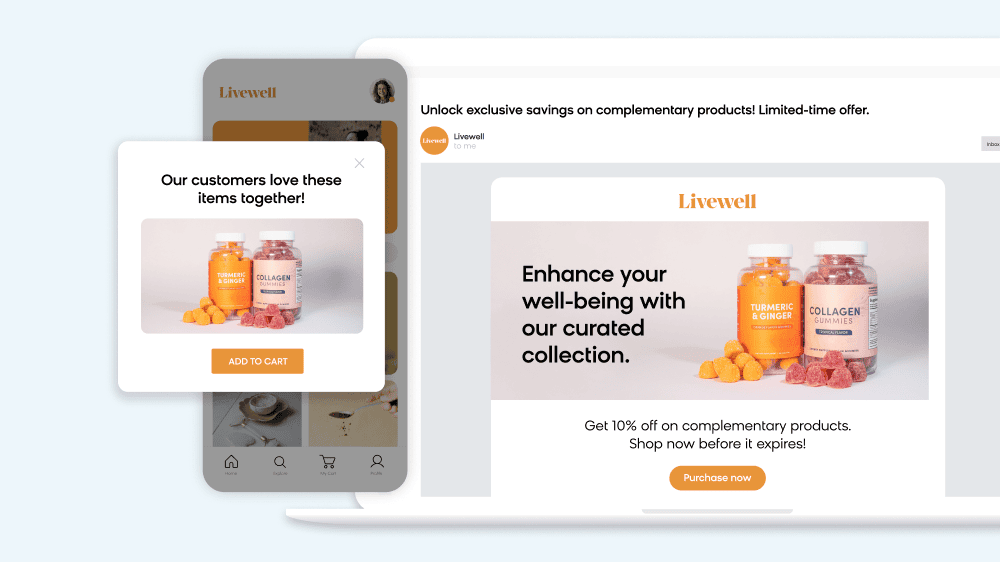

Google’s integration of Gemini directly into the Gmail experience isn’t just a product update — it’s a structural shift in how consumers interact with email. And for marketers, the implications are massive.
With Gemini now capable of summarizing messages, surfacing offers on demand, and acting as an intelligent intermediary between brands and buyers, the inbox is no longer a passive channel. It’s an AI-mediated environment where only the most relevant, well-crafted, and trustworthy messages will earn attention.
We asked some of the sharpest minds in email marketing and deliverability what this means. Their answers should be a wake-up call for every brand still relying on legacy playbooks.
The Inbox Is Now an Interface You Query
Jacqueline Freedman, Founder of Monarch Advisory, put it best: “Google’s latest rollout moves Gmail from an inbox you scan to an interface you query: an AI-mediated inbox.” That distinction matters. Marketers have spent years optimizing for opens, clicks, and conversions within a linear flow. That flow is breaking.
“For marketers, that’s the disruption,” Freedman continued. “You’re no longer optimizing for opens and conversions as much as earning a place in Gemini’s shortlist, where relevance, proof, and clarity beat frequency. Privacy concerns aside, this is another consumer win, but it’s also a warning that deliverability is becoming desirability.”
That last line deserves to be printed and pinned above every email marketer’s desk. Deliverability is becoming desirability. The technical act of reaching the inbox is table stakes. The new challenge is whether an AI agent decides your message is worth surfacing at all.
Legacy Engagement Metrics Are on Borrowed Time
If Gemini is summarizing and triaging messages before a subscriber ever sees them, what happens to the signals marketers have relied on for decades?
Chris Marriott, President & Founder of Email Connect, sees two critical fault lines emerging:
“Traditional click signals may degrade as engagement proxies, requiring ESPs to consider new engagement models such as scroll, dwell, and interaction,” Marriott explained. “AI-driven filtering will likely evolve continuously, potentially increasing reputation volatility.”
For brands running on legacy email platforms — many of which still treat opens and clicks as the gold standard of performance — this is a serious problem. Marriott went further, warning that “for ESPs, this will make monitoring more challenging, impact adaptive warmup, and put a bigger focus on the ability to deliver ISP escalation.”
In other words: if your email platform can’t adapt its measurement and deliverability models in real time, you’re flying blind into this new era.
Design Is Your New Competitive Moat
Here’s an angle that might surprise teams still treating email design as an afterthought. LoriBeth Blair, Head of Compliance at SendPost, argues that Gemini actually elevates the importance of visual craft.
“I think that the inclusion of Google Gemini in the mailbox means good email design is going to be more important than ever,” Blair said. “You will need to send things people actually want to engage with, versus just search through the message for a discount code.”
Her reasoning is compelling — and simple: “Gemini can summarize the text, but they can’t summarize the design.”
If AI can extract and repackage your written content, your visual experience is the one thing that can’t be commoditized. “If you have a good email design and development team, that is now going to be a source of competitive advantage for your brand,” Blair added. “It is going to be more important than ever that your designs stand out in the inbox. The age of “one big image” emails is officially dead. If your email isn’t readable by Gemini, your deliverability may suffer if Gmail decides to take a dim view of emails it cannot scan and summarize.”

The Tactical Playbook: Adapt Now or Get Filtered
Sal Tripi, 20+ year email veteran and industry contributor offered a practical, immediately actionable framework for marketers looking to get ahead of this shift:
- Front-load your value statement. Lead with the value proposition or call to action using clear, concise language that both consumers and AI agents can understand.
- Prioritize relevance over volume. Promotional emails with low engagement have the potential to be downgraded if Gemini deems they lack context or prior engagement.
- Make content discoverable by AI. Consumers can now ask Gmail to “Get other offers from [your brand]” and issue similar commands. Include explicit, scannable elements like clear CTAs and deadlines.
- Test how emails appear in AI summaries. Consider how they may trigger actions like “View Offer” or “Add to Calendar.”
- Double down on authentication. Utilize SPF, DKIM, and DMARC to ensure your emails are not subject to additional filtering as Gmail gets more proactive.
Tripi’s bottom line? “If mailers quickly adapt and embrace Gemini in their content creation, impact may be muted. Failure to act or adjust emails will, no doubt, lead to emails being filtered or downgraded.”
How Bloomreach Is Already Responding
The experts painted a clear picture of what’s changing. But what matters just as much is what platforms are doing about it right now.
Juraj Mojik, Product Lead for Email at Bloomreach, shared where our team’s head is at:
“It’s still early days and we at Bloomreach are exploring new ways to enable marketers to a) understand how well they’re appearing in AI overviews and b) boost their coverage. This might take the form of an AI ‘overview’ score or even automatic content ‘touchups’ from Bloomreach.”
That’s not a roadmap item buried in a backlog — it’s an active area of investment. And Mojik offered practical guidance for marketers navigating this shift today:
“For now, the general recommendation would be to make sure that the emails are well readable by AI agents and LLMs. This can follow the same guidelines as AEO — agentic engine optimization for web pages — so things like clear markup, tables, bullet points, and structured content.”
It’s a telling signal. The same principles that are reshaping SEO for an AI-driven web are now arriving in the inbox. Brands that recognize this convergence early — and have a platform partner already building for it — will have a significant head start.
What This Really Means: The Era of Intelligent Email Has Arrived
Let’s zoom out.
Every shift Google makes to its inbox experience raises the bar for what it means to be a credible, high-performing email sender. And each of those shifts exposes a widening gap between modern, AI-native marketing platforms and the legacy systems that were built for a simpler era.
The brands that will thrive in an AI-mediated inbox are the ones that can do what Freedman, Marriott, Blair, and Tripi are collectively describing: deliver hyper-relevant content, adapt to evolving engagement signals in real time, invest in design as a strategic asset, and maintain pristine sender reputation — all at enterprise scale.
That’s not a capability set you bolt onto a 15-year-old email platform. It’s the foundation of a modern marketing engine.
At Bloomreach, this is exactly the future we’ve been building toward. Loomi AI is designed for a world where relevance isn’t optional — it’s the price of admission. From real-time personalization and predictive send-time optimization to advanced deliverability intelligence, we help brands earn their place in the inbox, no matter how smart that inbox becomes.
The question isn’t whether the inbox is changing. It already has. The question is whether your platform — and your strategy — can keep up.
Want to see how Loomi AI helps enterprise brands stay ahead of key shifts like this? Chat with our team today.